
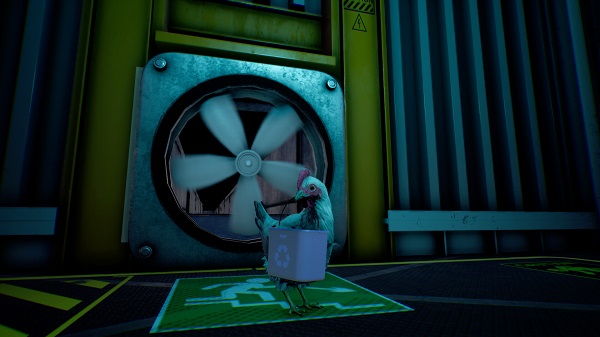
High Room Studio’s Saborus, published by QUByte Interactive, opens on an audacious conceit: the player inhabits a single, terrified chicken attempting to flee a functioning slaughterhouse. That premise – equal parts satire and bleak parable – gives the project a clear moral edge and a distinctive identity that few contemporary indies dare to wear so openly. The decision to limit the avatar’s capabilities to what a real bird might plausibly manage (running, hiding, pecking at small objects) is central to the game’s intended tension: vulnerability becomes the mechanic, and dread is meant to follow.
Mechanically Saborus sits awkwardly between stealth, puzzle and platforming design. The core loop – scurry, hide, manipulate small items with the beak, reroute power, and time a dash to safety – yields moments of genuine cleverness where the bird’s limitations become interesting problem-solving constraints. The game rewards inventive use of verticality and concealment: taking high ground, momentarily confusing pursuers, or improvising by using environmental devices can feel satisfyingly subversive.

Regrettably, those promising mechanical bones are undercut by inconsistent implementation. Collision and hitbox oddities, slippery surfaces, and finicky platforming turn otherwise tense sequences into tests of patience – jumps and landings that ought to feel fair instead become lottery tickets, and small design lapses (notably items that can fall through geometry) can dead-end progression and break immersion. Checkpoint spacing compounds the issue: long sections between saves amplify the cost of those mechanical failures, transforming suspense into repetitive slog.
The game’s pacing and structure reflect both ambition and confusion. Early sequences sell the novelty of the concept and establish a creeping dread, but later areas swell into sprawling, maze-like factory spaces where fetch-and-carry tasks and long treks dilute momentum. Where the slaughterhouse’s grotesqueries and oppressive corridors could escalate into sustained horror, too many stretches feel padded – extended walks through largely empty rooms and repeated circuit tasks that outstay their welcome. That said, the second half’s turn toward darker, more visceral setpieces does land at points, introducing new adversaries and scenarios that briefly justify the thematic escalation.
Visually and aurally Saborus is a study in contrasts. On technical merit, the lighting, shadowing and textured environments punch above the game’s apparent budget, creating oppressive, tactile interiors that sell the slaughterhouse as a hostile environment. Yet the soundscape and some voice work betray limitations: looping or misapplied effects and synthetic-sounding vocal lines occasionally fracture atmosphere rather than deepen it, and the mismatch between the game’s dark intentions and some cheapened audio moments is jarring. These production-level inconsistencies blunt emotional beats when the game most needs to be immersive.
There is also a tonal friction at the heart of Saborus. The premise clearly intends to provoke thought about animal treatment and the ethics of meat production, but the messaging sometimes reads as heavy-handed; the game elects largely to play events straight rather than lean fully into satire or absurdist exaggeration, which narrows the range of emotional responses it can sustain. In practice this means the concept’s provocative potential is frequently stifled by a play experience that feels brittle – earnest in intent, inconsistent in delivery.
Ultimately, Saborus is a game of real nerve and visible aspiration: the decision to place players in the skin of an animal destined for slaughter is brave and speaks to a designer willing to take risks. Those risks, however, are not yet matched by the polish required to make the experience rewarding across a full playthrough. When the atmosphere, clever setpieces and unique viewpoint align, Saborus can be compelling; when glitches, awkward mechanics and pacing issues dominate, the result is frustration rather than enlightenment. For now, the title is best recommended to players intrigued by daring premises and willing to tolerate quite a few rough edges – and to those who want to support indie experimentation — but it falls short of the robust, cohesive statement it aspires to be.
Score: 5.6/10
 Press Play Media