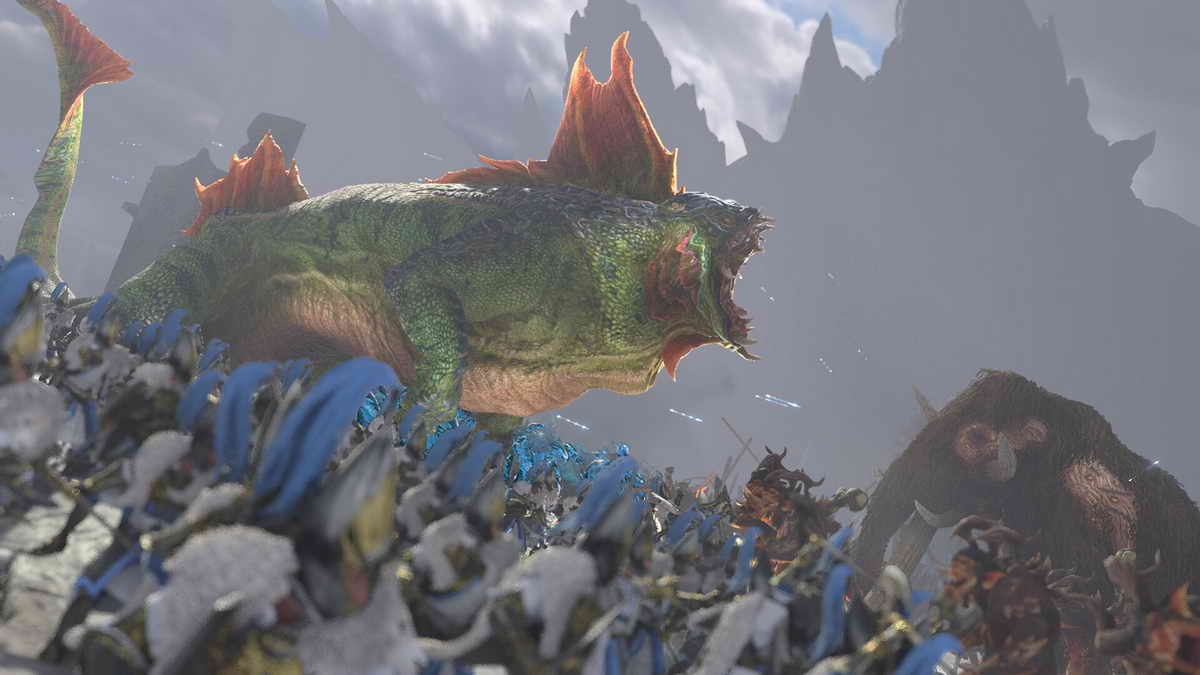
The Tides of Torment DLC for Total War: Warhammer III arrives as another ambitious expansion from Creative Assembly and SEGA, adding three new Legendary Lords who tap into very different corners of Warhammer’s world. It’s a character-driven pack that aims to broaden campaign variety rather than deliver a new unified narrative, with each Lord leaning heavily into mechanical identity. The result is a bundle where flavour and thematic cohesion land well, even if the mechanical depth and pacing vary across its components.
Dechala the Denied One offers the most overtly aggressive playstyle, pushing players toward a fast, raiding-centric loop built around her Thrall Camps, Pleasure Palaces and the Decadence meter that rewards ever-greater indulgence. The rhythm of constant expansion has an immediate appeal and brings plenty of colour to Slaanesh campaigns, with her battlefield roster reflecting that same feverish momentum. Yet the reliance on consuming Thralls introduces repetition over longer sessions, and some balance quirks keep this from feeling as refined as it could be. It’s a strong thematic fit, but the mechanics don’t always sustain the tempo players might expect from her premise.

Aislinn, by contrast, leans into something far more strategic and far less familiar: a naval-focused High Elf campaign built around Dragonship Fleets. These floating strongholds can operate independently, expand across coastlines and redistribute conquered territories among fellow Asur, offering a mobile form of empire-building that stands apart from most Immortal Empires starts. The fantasy of commanding Dragonships is compelling, especially when supported by flavorful units like Sea Elementals and Merwyrms. Still, the fleet economy introduces a steep learning curve, and the campaign’s pacing sometimes struggles to keep momentum as players juggle logistics and the unique settlement model. It’s an intriguing shake-up, but one that may feel niche depending on how much you enjoy sea-bound play.
Sayl the Faithless rounds out the trio, and his campaign weaves subterfuge, ritual progression and monstrous allies into a satisfying long-game of manipulation. The ability to sabotage diplomacy and logistics through Manipulations adds a different kind of agency to the campaign map, creating ripples across nearby factions long before battles begin. Progressing through Dark Rituals brings meaningful spikes in power, and units like the Curs’d Ettin and Nightmaw reinforce his identity as a schemer who wields corruption as both method and consequence. The trade-off is that leaning too heavily on manipulations can draw penalties, which encourages a measured approach rather than unchecked mischief.
Across all three Lords, the DLC’s strengths sit in how distinct the campaigns feel. Each one pushes players into unfamiliar rhythms, whether that’s resource consumption, naval projection or long-term trickery. Visually, the new units add welcome variety: the serpentine silhouettes of Slaanesh, the ethereal gleam of High Elf constructs and the grim bulk of Norscan beasts all broaden the battlefield’s flavour. Audio design enhances this diversity as well, especially in combat where faction identity comes through clearly in unit barks and effects. The flip side is that the DLC occasionally wrestles with consistency. Campaign pacing can falter, and not every mechanic lands with the same clarity, especially for those less inclined toward more experimental systems.

Performance on PC remains stable, though some of the more visually dense units – particularly the larger monstrosities – can stress older hardware during chaotic engagements. Controls and interface interactions stay familiar, ensuring none of the new mechanics feel unwieldy in moment-to-moment play. Instead, most of the challenge lies in understanding the distinct rulesets each Lord introduces, and that learning curve may be steeper for Aislinn’s fleets or for players unused to ritual-driven campaigns. Still, the framework of the base game supports these additions well enough that they integrate smoothly once their logic clicks into place.
In the end, Tides of Torment succeeds most when it embraces experimentation. Sayl’s cunning, Aislinn’s maritime discipline and Dechala’s decadent aggression all broaden the strategic canvas, even if they don’t land with equal weight. The bundle feels worthwhile for those eager to explore new campaign identities and stretch beyond familiar faction patterns, though the uneven balance and varying accessibility mean not every Lord will resonate equally. For PC players looking to add three distinct flavours to their Immortal Empires toolbox, this is a varied – if slightly inconsistent – collection that rewards curiosity and a willingness to dive into new rhythms.
Score: 7.0/10
 Press Play Media