
Stepping into ROUTINE feels less like launching a blockbuster survival horror, and more like unsealing a time capsule buried deep on the lunar surface – it’s a bit dusty, unsettling, and entirely bereft of comfort. From the opening moments, the game draws you into its retro-futuristic nightmare with such conviction that you almost hear the flick of a VHS tape. The decrepit lunar base, with its scratched metal bulkheads, bulky CRTs, and cold corridors bathed in sickly fluorescent light, isn’t just a backdrop – it’s almost like it’s the main character. Developers Lunar Software and publisher Raw Fury have embraced minimalism: no glowy objective markers, no intrusive HUD, no hand-holding. You navigate, you observe, you survive – and in that discipline and sense of immersion, ROUTINE finds its grim power.
The core of the game – its atmosphere, audio-visual design, and environmental storytelling – is extraordinary. The moon base feels legitimately lived-in, then abandoned long ago under dark circumstances. Every corridor hums with tension. You don’t know when the hulking Type-05 robots will emerge – sometimes you only realize they were nearby when you hear that thud of heavy footsteps behind a wall, or a door sliding open somewhere ahead. Sound design here isn’t a decorative layer – it’s the very pulse of fear. Doors creak, ventilation grates sigh, cables hiss, and every ambient clang reverberates with dread. The retro-tech aesthetic is perfectly realized: dusty analog monitors, clunky control panels, and flickers of broken signage evoke an old timey sci-fi film that went horribly wrong. Playing it on Xbox, these details shine, and loading times rarely interrupt immersion.
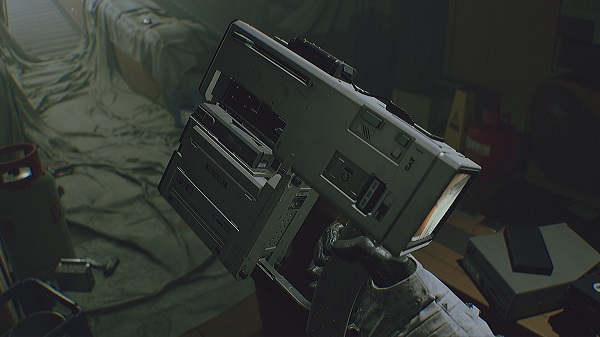
Gameplay is deliberately slow, methodical – and sometimes frustrating. Your main tool, the Cosmonaut Assistance Tool (C.A.T.), is both your lifeline and your only edge: you use it to hack terminals, power up old electronics, unlock doors, or scan for clues; sometimes to briefly incapacitate a pursuing robot. There’s no flashy combat, no over-the-top action; mostly it’s run, hide, and hope you don’t stumble into the wrong corridor at the wrong time. Puzzles hinge on observation, environmental detail, searching for codes and deciphering logs. That design fits the mood – you must earn every step forward, and be careful pushing forward. But the trade-off is a pacing that may feel glacial and, if you miss a clue or mismanage stealth, punishing. The controls for C.A.T. are responsive, but toggling menus, inspecting terminals or toggling functions can feel fiddly – part of the weight of survival, but also a potential drag. The stealth-horror loop is effective early, but in the later stages becomes repetitive: once you’ve tasted the fear, the repetition can dull it.
Narrative and story delivery mirror the game’s overall philosophy: sparse, fragmented, and subtle, for better or worse. Rather than cinematic cutscenes, ROUTINE tells its tale via scattered logs, audio diaries and environmental clues – you assemble what happened from scraps. That approach rewards patience: when the final revelations arrive, they resonate. On the other hand, by the time you reach the end, many details remain vague. Characters are mostly unnamed, motivations unclear, and certain plot threads – while conceptually intriguing – feel thin or underdeveloped. Some may appreciate the ambiguity; others might see it as underwhelming. Those expecting a clear story arc or emotional anchor may be frustrated.
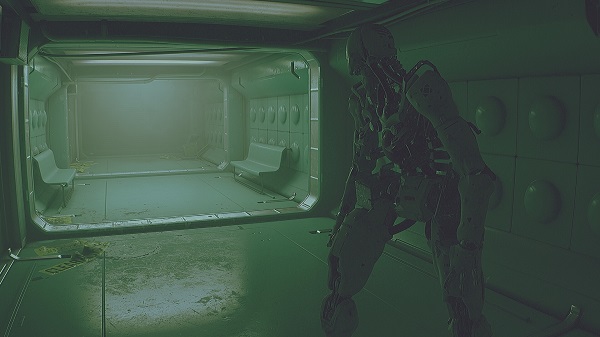
From a technical and presentation standpoint, the game holds up admirably. There are no glaring performance hitches, and the visual fidelity underscores the retro-futuristic decay with convincing grit. The lack of intrusive interface, combined with diegetic UI design, deepens immersion: interacting with a terminal feels like you’re really there, leaning over dusty equipment under harsh fluorescent lights. Audio remains a centerpiece – often the only guidance, sometimes the only warning – and the interplay between silence and sudden sound jolts keeps tension taut, especially with the volume up.
Still: ROUTINE isn’t for everyone. Its slow pace, minimalism, and emphasis on discomfort over spectacle means it demands patience and a tolerance for unease. The short runtime – a single run through the game takes roughly 6–8 hours – may leave those looking for deeper or more replayable experiences wanting more. Once you finish, there’s little to pull you back in: puzzles and codes are generically randomized on replay, but the emotional weight and novelty fade. For those chasing adrenaline-pumping action or complex combat systems, ROUTINE will feel too quiet. But if what you seek is dread, atmosphere, and a slow burn creeping under your skin, this lunar ghost-base is a hard one to shake off.
Ultimately, ROUTINE is a bold, uncompromising horror experience – one that trusts the player’s sensory perception, patience, and willingness to be unsettled. It doesn’t pander. It doesn’t rush. And because of that, when it hits, it hits hard. It may not reinvent horror, but it refines the fundamentals: atmosphere, dread, isolation, and the shivers that come from lurking just outside the beam of your flashlight. For those willing to wander through the dusty halls of a lonely lunar base, ROUTINE delivers a haunting journey worth taking.
Score: 8.3/10
 Press Play Media