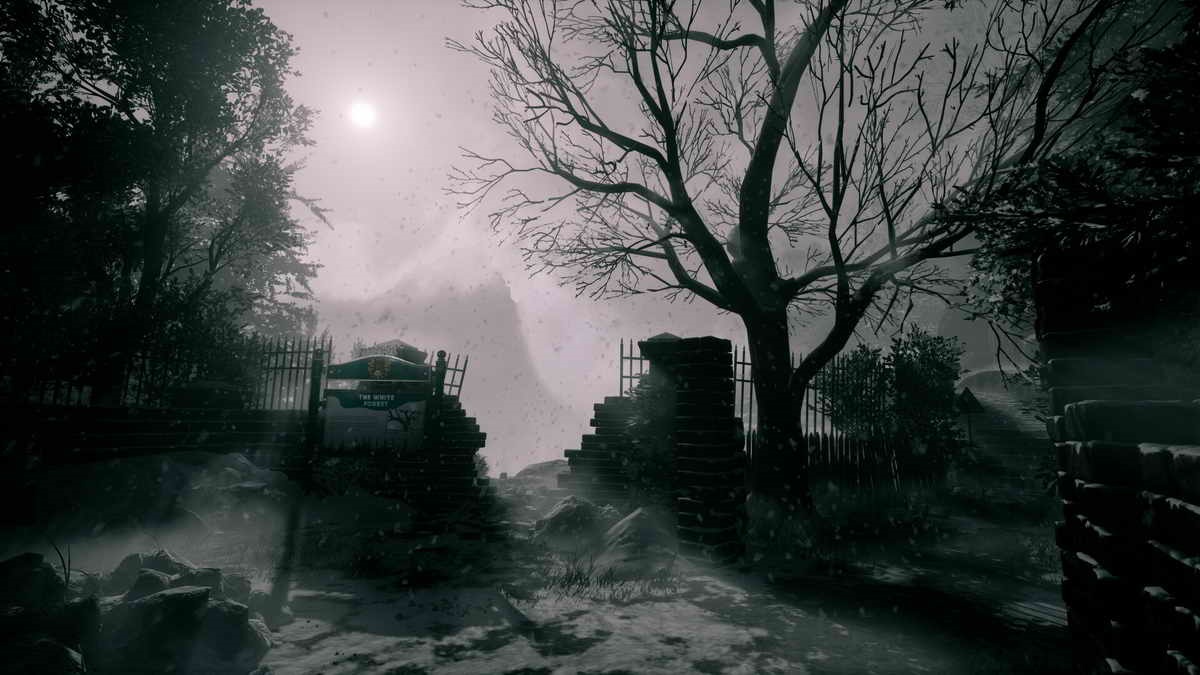
Blue Hat Studio’s She’s Leaving arrives on PlayStation 5 as an intimate, mid-budget horror title that’s as much about creeping dread and meticulous observation as it is about fleeing the shadows. From the outset, the game’s premise – placing players in the shoes of Charles Dalton, a forensic analyst chasing clues through the mist-shrouded House Haywood – promises something distinct: a horror experience grounded less in combat and more in investigation and unease. That ambition largely succeeds in giving the game a voice of its own, though the execution oscillates between thoughtful and undercooked in equal measure.
Narratively, She’s Leaving leans into its mystery with a surprising degree of seriousness. The writing gives Dalton a professional weight uncommon in indie horror, bounding his motivations to real forensic inquiry and a personal stake in the missing persons case that brought him to Haywood. The script’s pacing tends toward fragmented reveals – diaries, documents, and blood-spatter analysis snippets gradually piece together backstory – and while this can sometimes feel disjointed, it often rewards patient players with a genuine sense of discovery. The voice acting, especially in English, helps anchor these moments and adds emotional texture that supports the tone.
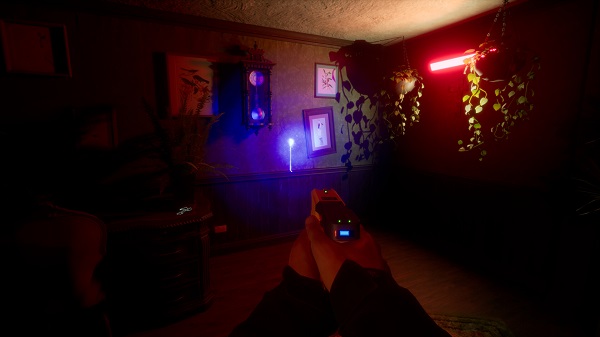
From a mechanical perspective, the heart of the experience is its forensic analysis. Searching for evidence with UV light and carefully categorizing blood spatter feels like a clever twist on the genre’s usual “find and use keys” loop, and it initially injects real purpose into exploration. Unfortunately, as with many standout ideas here, the novelty wears off sooner than one would hope; the mechanic itself is relatively shallow and starts to feel repetitive as the game progresses. This diminishing return is compounded by moments where the stalker – the game’s version of a pursuing threat – shifts from source of dread to more of an obstacle that you mostly dodge rather than fear.
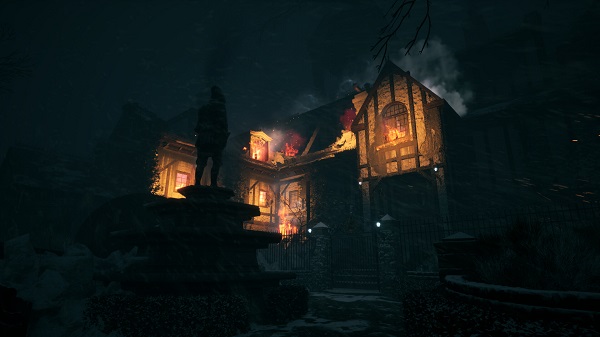
Gameplay flow also reflects a quiet tension that’s both a strength and a weakness. She’s Leaving rarely throws jump scares or frantic action at the player; instead, it opts for muffled footsteps, subtle audio cues, and the slow pressure of isolation. This makes for strong atmospheric moments where the Tudor-era mansion and snow-dusted docks feel oppressive and vividly realized. The environments, while not groundbreaking visually, are meticulously crafted and paired with sound design that often elevates the unsettling vibe – creaking floorboards and distant thuds sustain a consistent unease.
However, this deliberate pacing sometimes hamstrings the playability. Tight corridors and frequent backtracking between rooms can make navigation feel more like busywork than suspenseful discovery. Some interactions can feel finicky, and objectives aren’t always signposted clearly enough, which slows momentum further and undercuts moments that should feel urgent. The tension that the stalker is meant to inspire is diluted by these roadblocks and by the limited ways you can respond – mostly sprinting away or briefly stunning him with a taser that never evolves into anything more strategic.
On the technical front, She’s Leaving is competent if unremarkable on PS5. The visuals are consistent with its indie scope: moody lighting and atmospheric set pieces create memorable backdrops, but character models and certain animations lack polish, creating contrasts between atmospheric environments and less refined presentation elements. Frame rates remain stable, and load times are generally reasonable, though transitions between areas occasionally feel longer than they should for a game built around tight pacing. Still, for a title with a modest price tag, these shortcomings never feel game-breaking.
Ultimately, She’s Leaving is a testament to what indie horror can achieve when it leans into concept over spectacle. It crafts an intriguing world, stitches a thoughtful narrative around a forensic expert’s dark journey, and reinforces its themes through quiet atmosphere rather than flashy mechanics. But in trying to be subtle and cerebral, it sometimes slips into aimless exploration and repetitive tasks that dilute the impact of its best ideas. For players seeking a short, narrative-driven horror experience and who appreciate mood-driven storytelling, it provides a worthwhile, if uneven, journey. Those expecting a more consistently gripping survival horror experience may find it a compelling premise that cannot always sustain itself.
Score: 6.8/10
 Press Play Media