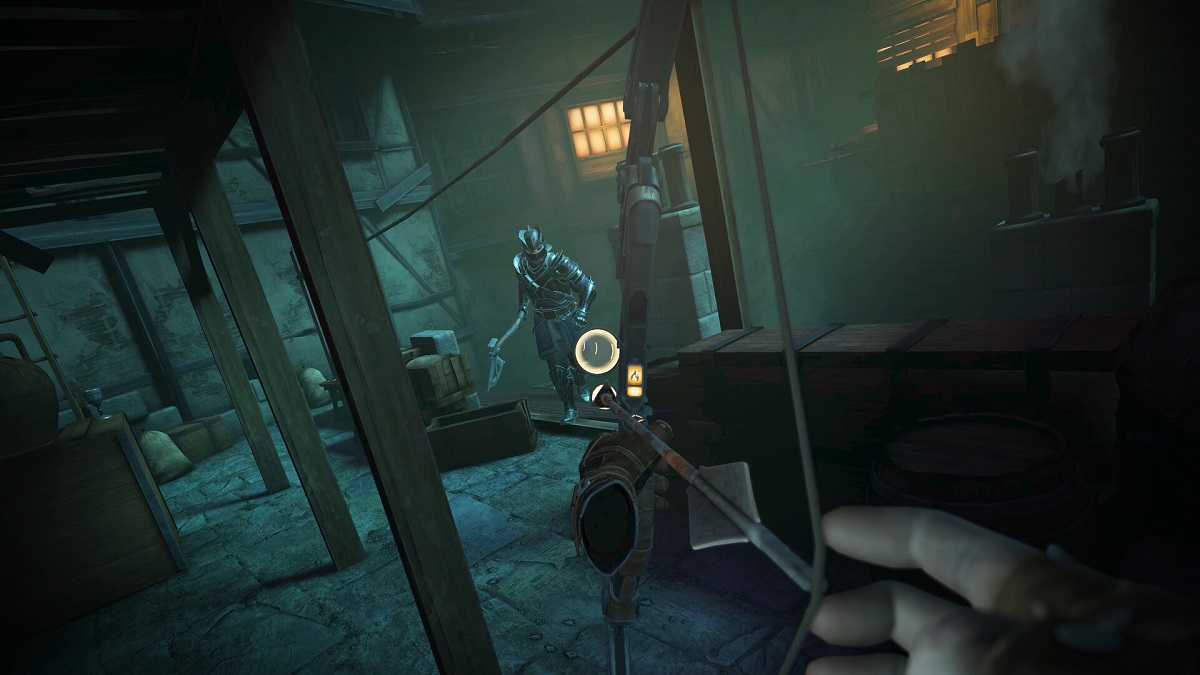
Stepping into Thief VR: Legacy of Shadow feels like opening a familiar door into a world built on stealth and secrets – only this time, that world envelops you rather than sits before you. Vertigo Games and Maze Theory have crafted a virtual-reality incarnation of the long-running Thief franchise that faithfully evokes its roots while exposing a few rough edges. As Magpie, the streetwise orphan turned thief, you slip through the atmospheric sprawl of The City, living out the core fantasy of a shadowy infiltrator. That sense of place and tactile engagement is perhaps the title’s greatest achievement; moves like picking locks, slipping through windows, and looting eyes-only treasure chests are conveyed with a physicality that flat-screen titles can never deliver.
Narratively the game is leaner and more straightforward than many fans of the series will remember. There is a clear thread – exposing a tyrant’s plot and uncovering secrets of an artifact – but it rarely ventures into truly memorable territory. Where classic Thief titles wove lore and environmental storytelling with subtlety, Legacy of Shadow tends toward functional setup and progression that serves the next mission more than the overarching tapestry. The cast, including the nostalgic return of voice talent associated with the franchise, does good work in grounding the experience, but the story beats don’t always crescendo with the impact they ought to. There are highs, but the finale especially can feel anticlimactic in how quickly it wraps up relative to the buildup.

Gameplay mechanics are where Legacy of Shadow earns its stripes and stumbles in equal measure. Maze Theory’s implementation of VR controls is intuitive more often than not. Drawing a bow, swinging a blackjack, and sneaking through shadows are all delivered with convincing physicality, and innovations such as nearly instinctive lock-picking make stealth feel earned. The freedom of approach – multiple infiltration paths, optional objectives, branching routes – gives each mission a sandbox feel that rewards exploration and improvisation. However, some aspects of the systems remain surprisingly basic. Guards exhibit limited AI, often reverting to predictable patrols or losing interest once you’ve ducked out of sight; this reduces tension in encounters that ought to feel perilous. Similarly, some mechanics introduced early never evolve into deeper systems, leaving segments of play feeling repetitive rather than progressively richer.
On both PlayStation VR2 and Meta Quest platforms, the visuals serve the game’s mood admirably. The steampunk-inflected environments – dim alleyways, lantern-lit rooftops, damp interiors – create a convincing world that rewards careful observation. PSVR2’s OLED contrast accentuates shadows effectively, while Quest holds its own with solid performance and lighting that consistently conveys depth and atmosphere. Yet the graphical ambition doesn’t always match the promise; texture quality and environmental detail can feel modest by 2025 standards, and some visual polish feels held back by multi-platform development priorities.

Audio, too, is a mixed bag. The directional sound design meaningfully supports stealth gameplay – you can often tell where a guard is by the rustle of boots or distant conversation. The voice acting, particularly from familiar franchise talent, adds gravitas. On the flip side, spatial audio cues are occasionally inconsistent, with certain sound transitions and occlusions undermining the suspense that stealth should demand. For a game heavily reliant on listening and timing, these shortcomings, though not game-breaking, are noticeable.
Thief VR: Legacy of Shadow is neither the imperfect misfire some feared nor the definitive stealth masterpiece many hoped for. It sits comfortably in the space of “solid and sincere,” delivering satisfying bursts of sneaking and looting that VR excels at, without the depth or polish that would make it essential. Players drawn to methodical, tactile stealth will find plenty to enjoy, even if occasional AI quirkiness or narrative pacing holds the experience back from greatness. In that respect, it’s a commendable first step for the franchise into VR, but one that leaves room – and expectation – for evolution in future entries.
Score: 8.0/10
 Press Play Media