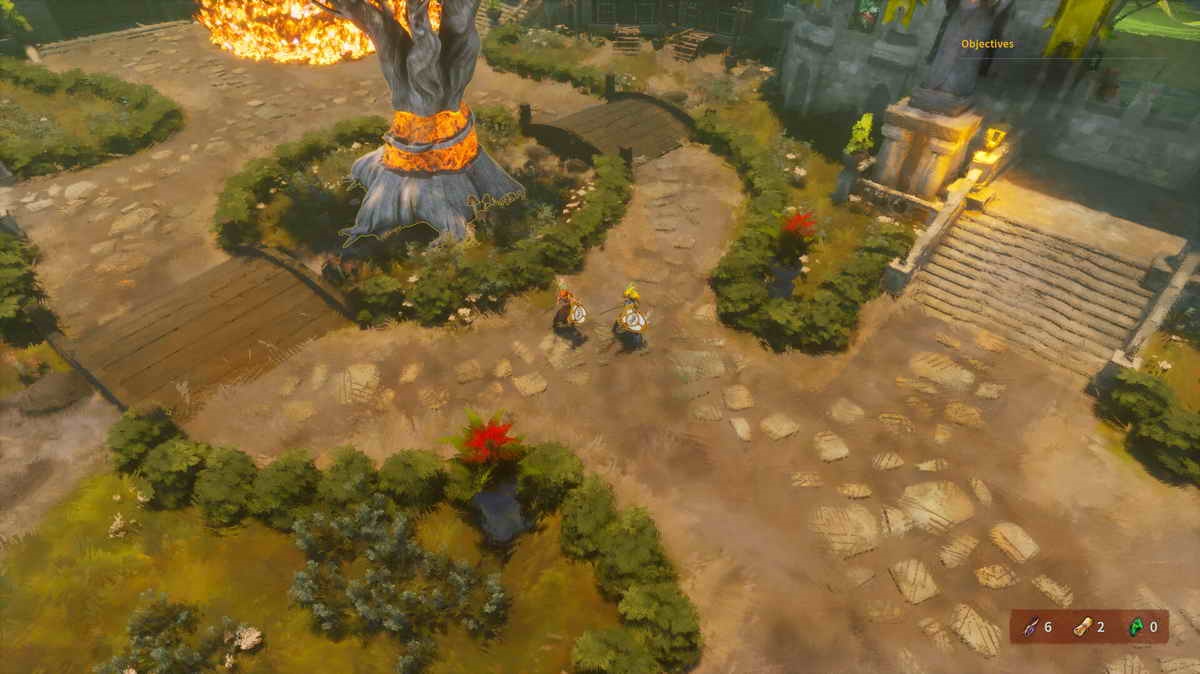
Wartorn begins with a narrative premise that is refreshingly earnest: two sisters, Yara and Elani, cast adrift from their home and journeying through the shattered archipelago of Talaur, striving to reach the sanctuary of their ancestral fortress. From the outset, the game blends storytelling with its central systems so that progress through the world map feels like a lived experience rather than merely a sequence of tactical encounters. The roguelite structure is tightly interwoven with the lore – failed runs reset with narrative justification and yield heirlooms and story revelations that both expand the sisters’ journey and enhance future attempts. This approach gives Wartorn’s narrative arc a compelling pull, even as it occasionally struggles to balance exposition with gameplay flow.
Mechanically, Wartorn’s greatest strength is its systemic elemental combat. Drawing inspiration from chaotic classics of the tactical genre, the elemental interactions come alive in battle: fire, water, tar, plant, and lightning each interact with one another and the environment in emergent ways that reward experimentation and strategic thinking. Combustive combinations and weather dynamics make each encounter feel kinetic and unpredictable, a quality that invigorates the core loop and mirrors the thematic turmoil of the world. This dance of elements is one of the most rewarding parts of combat, where positioning, timing, and the right squad mix can turn seemingly unwinnable engagement into triumph.
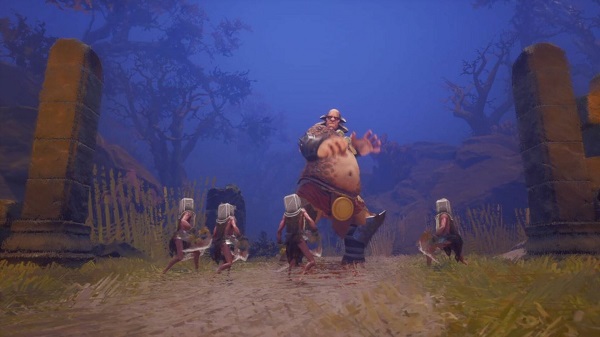
Yet, the emergent quality that makes combat exciting also exposes some of Wartorn’s design tensions. While the elemental system contributes depth, the meta-progression loop and difficulty curve can at times feel misaligned. Progression often hinges on long-term upgrades and heirlooms that only meaningfully impact later playthroughs, creating a sense of grind in the early hours and occasionally muting moment-to-moment decisions in favor of long-term stat gains. This has the effect of making runs sometimes feel less like tactical experiments and more like incremental number accumulation to overcome steep difficulty spikes. Where narrative events and map choices should feel serendipitous, they can instead sometimes feel like gates you must grind through to unlock incremental advantage.
The execution of the tactical layer itself oscillates between brilliance and frustration. On the positive side, real-time skirmishes with elemental synergies and environmental play carry a visceral thrill, and slower time mechanics offer meaningful ways to manage chaos. But underlying pathfinding issues and occasional unit behavior quirks can rupture the immersion and inject moments of aggravation into what is otherwise rich tactical design. Units sometimes fail to reliably execute orders or choose inefficient paths, robbing players of agency at critical junctures. This interplay between satisfying systems and technical rough edges defines much of Wartorn’s identity: a game that often feels on the cusp of strategic clarity but slips into confusion when execution falters.
Art direction and audio presentation are among Wartorn’s most immediate strengths. Visually, the game leans into a painterly aesthetic that is gritty without being muddy, with detailed maps and creature designs that give the world a lived-in texture. Camera framing and battlefield layouts elevate the spectacle of engagements, making even routine battles feel cinematic. The soundtrack and sound design further reinforce the game’s ambiance, carrying a melancholic tone that resonates with the plight of the caravan and its weary participants. While not every environment or asset bursts with variety, the overall presentation enhances the narrative mood and emphasizes the high stakes of each run.
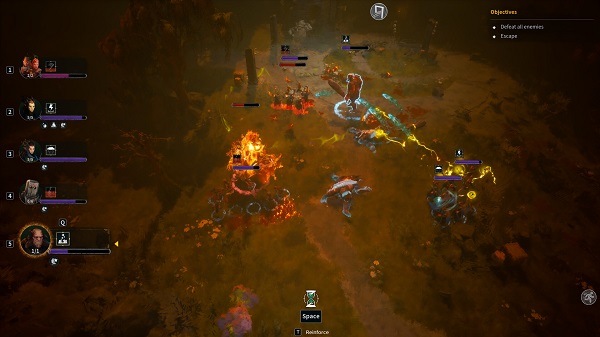
Controls and interface design sit at a functional crossroads. Wartorn’s UI generally succeeds in conveying necessary information and options with clarity, but it rarely ventures beyond utility to offer delight or personality. Pauses and menu navigation are frequent given the complexity of commanding squads and managing the caravan, and some players may find these layers burdensome or less intuitive than they ought to be. This pragmatic but uninspired interface design reflects a broader theme: Wartorn’s systems are often intelligent and capable, but their delivery sometimes lacks refinement or streamlining.
Ultimately, Wartorn is a title defined by contrast. Its narrative drive and emergent elemental combat mark it as a bold and imaginative entry in the squad-based roguelite space, yet its balance of challenge, progression, and tactical polish occasionally overshoots into frustration. For those willing to embrace its difficulty and sift through its deeper systems, there is a satisfying strategic core waiting to be mastered. For others, the grind and technical rough spots that persist even at launch may impede the journey toward Beynun more than the hostile foes of the Isles of Talaur ever will. In sum, Wartorn offers flashes of tactical brilliance and narrative resonance, even if its execution occasionally feels as battered as the world it depicts.
Score: 7.1/10
 Press Play Media