This roundup gathers four recent DLC releases that each extend their respective base games in markedly different directions, from atmospheric world-building and creative sandbox expansion to focused narrative tension and mechanical experimentation. Across park builders, simulations, and tactical RPGs, these add-ons aim to refine established systems rather than reinvent them, offering targeted injections of theme, challenge, or storytelling for existing players. Whether it is wetlands bringing new behavioural nuance to dinosaur exhibits, toy-themed creativity reshaping a theme park sandbox, character-driven pressure testing a firefighting sim, or a cursed forest pushing an RPG into darker territory, these DLCs highlight how incremental content can meaningfully reshape familiar experiences.
Jurassic World Evolution 3: Wetlands review (PS5)
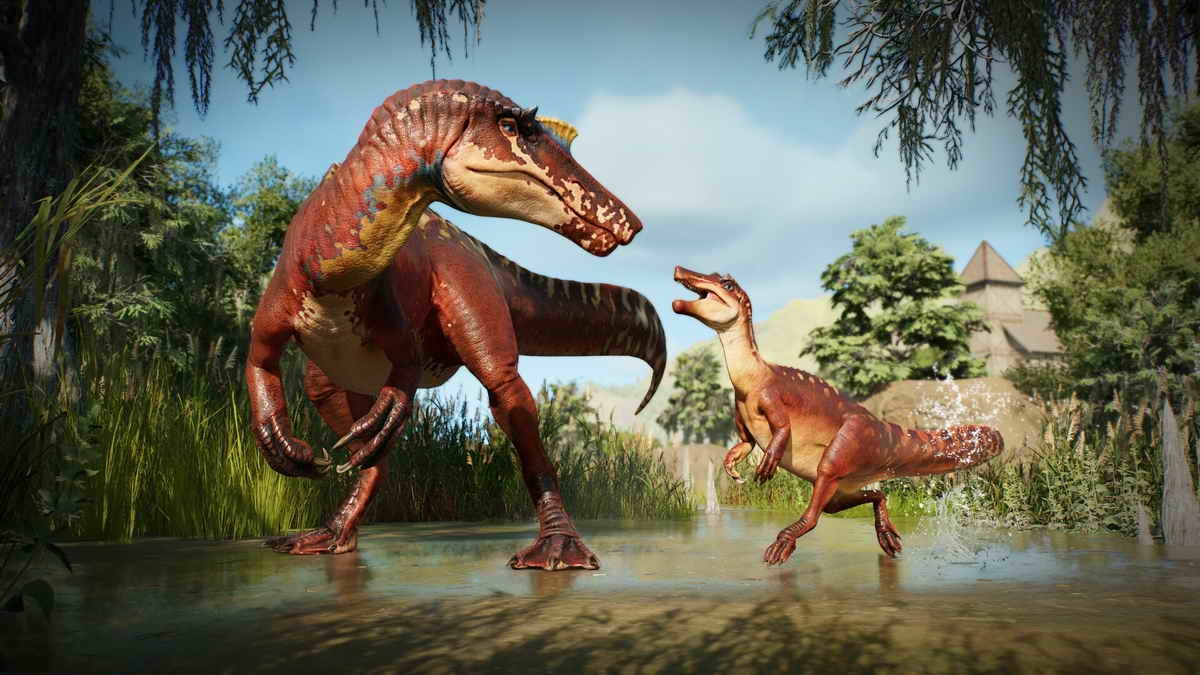
Jurassic World Evolution 3: Wetlands extends Frontier’s park-building sim with a clear thematic focus on watery habitats and the creatures that might dwell and thrive in them. The DLC’s premise invites players to craft swampy enclosures rich with mist, reeds, and bespoke scenic elements that immerse guests in bayou-like biomes while introducing three new dinosaur families to enliven exhibits. Irritator and Austroraptor anchor the pack with semi-aquatic and fish-oriented behaviours that add dynamic movement to water margin exhibits, and Hypsilophodon brings social herbivore diversity, though its fit within the wetland theme feels looser compared to its carnivorous counterparts.
Mechanically, the Wetlands Pack delivers robust tools for customization. A substantial suite of scenery items and thirteen prebuilt blueprints encourages creativity, from submerged feeders and jetties for aquatic predators to lantern-lit clearings for herding herbivores, deepening the base game’s ecosystem construction possibilities. These additions make thematic enclosure design more satisfying than a simple checklist of new content, and the interplay between terrain, water, and animal behaviours often yields compelling park moments.
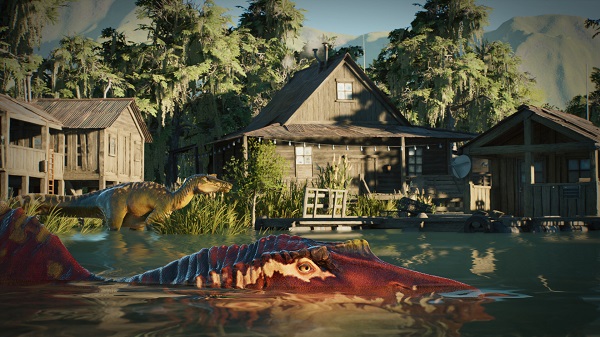
Controls and performance on PS5 maintain the high standard set by the base game, with stable frame pacing and intuitive placement mechanics that do not appreciably differ from the main title. Visuals are rich and atmospheric, with wetland scenery conveying dense foliage and ambiance, though none of these scenic pieces individually steal the show; they are collectively effective without standing out as singular highlights. Sound design around the new species and environments complements the visual mood somewhat, but they’re not very distinctive.
The DLC’s strongest asset is its headline dinosaurs: Irritator and Austroraptor are rewarding additions that justify the pack’s purchase for fans eager to diversify exhibit behaviour and visual palette. Because of these two, wetlands enriches Jurassic World Evolution 3 with just enough content and atmosphere to feel like a meaningful DLC offering for builders on PS5.
Planet Coaster 2: Toybox Pack review (PS5)
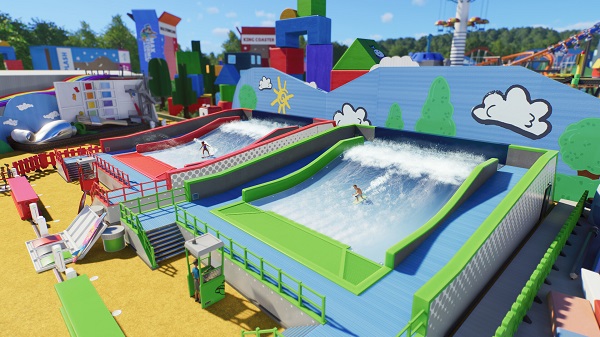
Planet Coaster 2’s latest expansion, the Toybox Pack from Frontier Developments, slips into the sandbox with a light-hearted twist on the base game’s signature creative freedom. Rather than adding new narrative arcs or structured progression, this content pack invites players to transform their parks into a whimsical, oversized toy world built from an impressive assortment of block-like scenery elements, pre-made blueprints, and animated props. The five new attractions – from the free-flying thrills of the Vector suspended coaster to the family-friendly Kid Coaster, the dizzying Highroll, the waterpark-ready WaveSim and the landmark-style Airdrop – offer variety, though none fundamentally alter the core simulation mechanics already familiar to Planet Coaster 2 veterans. On PS5, the controls and UI feel as responsive as they do across other platforms, letting builder-managers place and tweak details without undue friction, but, as with prior DLC, this is very much more a creative toolkit than a narrative or gameplay revolution.
Visually and aurally, Toybox Pack leans into its theme with gusto. The colourful, nostalgia-tinged pieces – from bright plastic skyscrapers to wooden block motifs – inject parks with a vibrancy that contrasts richly against Planet Coaster 2’s more utilitarian elements from the base game. The PS5’s graphical fidelity highlights these details smoothly, and the new animatronics and decals give life to themed areas in ways that feel both playful and substantial. However, this celebration of colour comes with trade-offs: some may find the palette and design language too overtly “childlike,” limiting how seamlessly these assets blend into more serious or diverse park builds – though this will be a non-issues if you’ve divided your park up into themes areas. Audio feedback remains solid across rides, with the cheerful soundscape fitting the DLC’s mood rather than delivering anything distinctly memorable on its own.
Gameplay wise, the Pack succeeds as a creative extension. The lack of new career modes or objectives means that long-term players seeking deeper simulation layers might feel short-changed, but the breadth of customization and ride variety enriches the sandbox experience for those focused on park design and thematic storytelling. On PS5, placing and manipulating pieces feels natural, and the expanded scenery library invites experimentation whether you’re crafting a dedicated toy-land or weaving these bright elements into existing zones. That said, while the additions are cheerful and versatile, there’s an absence of genuinely new flat rides or guest interaction mechanics that would elevate the DLC beyond visual and decorative expansion.
In its essence, Planet Coaster 2: Toybox Pack is a robust thematic collection that rewards imagination and offers a wealth of visually striking options for park creators. The five attractions are solid additions to any roster, and the volume of scenery and props gives imaginative builders room to explore colourful concepts with relative ease. While the DLC may not redefine the base game’s mechanics or deliver narrative depth, it stands as a worthy creative resource that enhances what’s already a rich sandbox on PS5 – particularly for players who enjoy thematic expression and bright, joyful design.
Firefighting Simulator Ignite – Parker’s Story review (PS5)
Parker’s Story is a compact narrative add-on for Firefighting Simulator: Ignite that shifts the focus from procedural emergency response toward character-driven tension. Set around a high-risk operation led by veteran firefighter Parker, the DLC introduces interpersonal strain and leadership pressure as central themes, giving the two new missions a stronger sense of purpose than the base game’s largely functional briefings. The added dialogue and story framing help anchor objectives emotionally, even if the overall arc is necessarily limited by the small scope of the package.
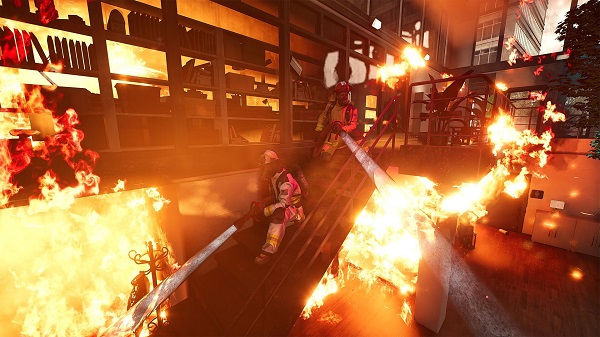
From a gameplay perspective, these missions are among the most demanding Ignite has offered so far. Fire behavior is aggressive, victim counts are high, and success often hinges on rapid prioritization under pressure. On higher difficulty settings, the scenarios become genuinely tense, rewarding careful coordination and an understanding of how exterior and interior fires interact before rescues can safely proceed. That challenge is compelling, but it also exposes long-standing issues with AI-controlled teammates, whose inconsistent decision-making can undermine the sense of command during critical moments.
Controls remain familiar and largely unchanged, which is a double-edged sword. Veterans will appreciate the lack of new complexity, yet the narrative structure occasionally clashes with player agency. During early story beats, command inputs can be restricted while dialogue plays out, freezing tactical control at precisely the moment when decisive action matters most. Combined with AI quirks – such as ignored orders or inefficient fire targeting – this can make failure feel less like a consequence of strategy and more like a systemic limitation.
Visually and sonically, Parker’s Story aligns closely with the base game, delivering dense smoke, escalating fire effects, and convincing environmental destruction that sell the urgency of each call. Voice work for Parker adds personality, but presentation is not without blemishes, including cluttered screens during dialogue-heavy moments. In the end, this DLC succeeds as a tough, story-focused diversion for established players, though its value depends heavily on tolerance for AI frustrations and acceptance of a modest content offering.
Wartales – The Curse of Rigel review (PC)
The Curse of Rigel attempts to steer Wartales into darker narrative and mechanical territory, imbuing the open-world tactical RPG with an oppressive, survival-horror sheen. At the heart of the DLC is Rigel’s cursed county and its sunless forest, the Weald, a locale that constantly threatens both flesh and mind. This setting plays to the expansion’s strongest suit: its atmosphere. Traversing dense groves where light is a scarce resource and sanity a dwindling stat creates a palpable tension that distinguishes Rigel from previous regions, with the ever-present need to manage light and sanity anchoring exploration and giving each progression a risk-laden weight. Shiro Games also introduces new systems such as graft-born powers and scientific research tied to these discoveries, an alchemical layer that adds narrative and tactical depth by encouraging players to leverage mechanical rewards born of danger.
Into this murky tableau steps the Thaumaturge, a new class with a blend of offensive and support roles who manipulates concoctions to buff allies or debilitate foes. Although technically not limited to DLC owners – the Thaumaturge arrives in the base game concurrently – the framework for its combat identity is woven through Rigel’s encounters, giving players new strategic tools to leverage against the region’s tougher foes. Combat encounters within the Weald are thematically aligned with the DLC’s premise: corrupted, once-human enemies serve as both narrative and mechanical foils, reinforcing the idea that the forest preys on both body and psyche. Visually and audibly, the DLC’s design supports its mood, with gloomy backdrops and eerie soundscapes that underscore the peril of each mission, making exploration and combat feel weighty and often grim.

That said, the expansion is not without flaws. Technical stability and optimization could be better, with bugs and performance issues. Also, the new region and mechanics, while intriguing, don’t quite yield the same volume of unlockables or replayability as past DLC releases. These issues complicate what might otherwise be another universally celebrated addition to Wartales.
Overall, The Curse of Rigel stands as a compelling, if imperfect, chapter in the Wartales saga. Its evocative setting, atmospheric direction, and mechanical experimentation with light, sanity, and alchemy make for some of the most conceptually ambitious content the game has seen. However, the launch’s rough edges and questions about comparative content value temper its impact. For players drawn to mood-driven challenges and tactical nuance – and willing to weather a few pre-patch warts – Rigel’s forest offers a memorable, if unsettling, journey. Conversely, those prioritizing robust stability or maximum content for dollar may wish to delay their expedition until post-launch refinement.
 Press Play Media