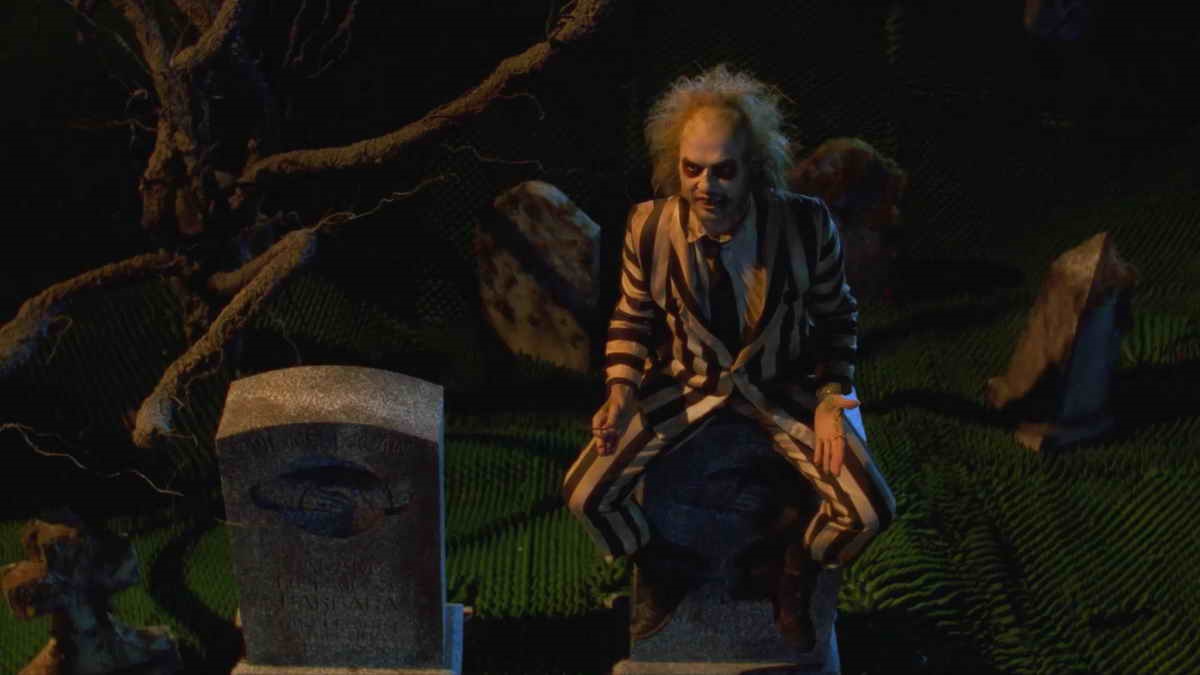
Tim Burton’s Beetlejuice films have always occupied a peculiar corner of mainstream cinema, blending macabre humour, anarchic fantasy, and a handcrafted visual sensibility that feels increasingly rare in contemporary studio filmmaking. Warner Bros.’ 4K UHD boxed set brings together Beetlejuice (1988) and its long-awaited sequel Beetlejuice Beetlejuice (2024), offering a generational snapshot of Burton’s aesthetic evolution while inviting direct comparison between analogue-era creativity and modern digital polish.
The original Beetlejuice remains a triumph of imagination and tonal confidence. Its story of recently deceased homeowners navigating the bureaucracy of the afterlife while contending with Michael Keaton’s gleefully unhinged bio-exorcist still balances dark comedy and heartfelt weirdness with remarkable ease. The 4K restoration benefits enormously from its source elements: grain is present but well resolved, textures in costumes and set design are more tactile than ever, and the colour palette – often intentionally garish – looks richer without becoming artificially inflated. Occasional softness and optical limitations remain visible, but they feel inherent to the production rather than flaws of the transfer. High Dynamic Range adds depth to shadows and highlights without undermining the film’s handmade effects work, which continues to charm precisely because it resists realism.

Audio on the original film is presented in Dolby Atmos, expanding Danny Elfman’s iconic score with greater spatial presence while keeping dialogue and effects firmly anchored. The mix is respectful rather than aggressive, prioritising clarity over spectacle, and while it never feels like a modern remix designed to overwhelm, it subtly enhances key moments with added dimensionality. The limitations of the original recording remain audible, but the presentation is clean and stable, offering the most refined home-video version of the film to date.
Beetlejuice Beetlejuice approaches its legacy from a different angle, embracing nostalgia while attempting to justify its existence with expanded lore and contemporary spectacle. The narrative revisits familiar characters and themes, sometimes leaning heavily on recognition, yet it also introduces new ideas that broaden the afterlife mythology without entirely diluting its oddball spirit. Not all of the humour lands with the same anarchic bite as the original, and the pacing occasionally sags under the weight of exposition, but the film largely succeeds in recapturing Burton’s playful morbidity while adapting it for a modern audience.
Visually, the sequel is a showcase for the UHD format. Shot digitally, it offers a cleaner, sharper image with precise detail and bold contrast. HDR is used more assertively here, enhancing neon accents, supernatural effects, and stylised lighting schemes without veering into excess. The image can feel slightly clinical compared to the textured warmth of the 1988 film, but the clarity suits the production’s elaborate production design and effects-driven set pieces. The Dolby Atmos track is similarly more demonstrative, delivering a wider soundstage, more active overhead effects, and deeper low-frequency impact, particularly during large-scale supernatural moments. Elfman’s musical callbacks are given room to breathe, reinforcing continuity while benefiting from modern mixing techniques.
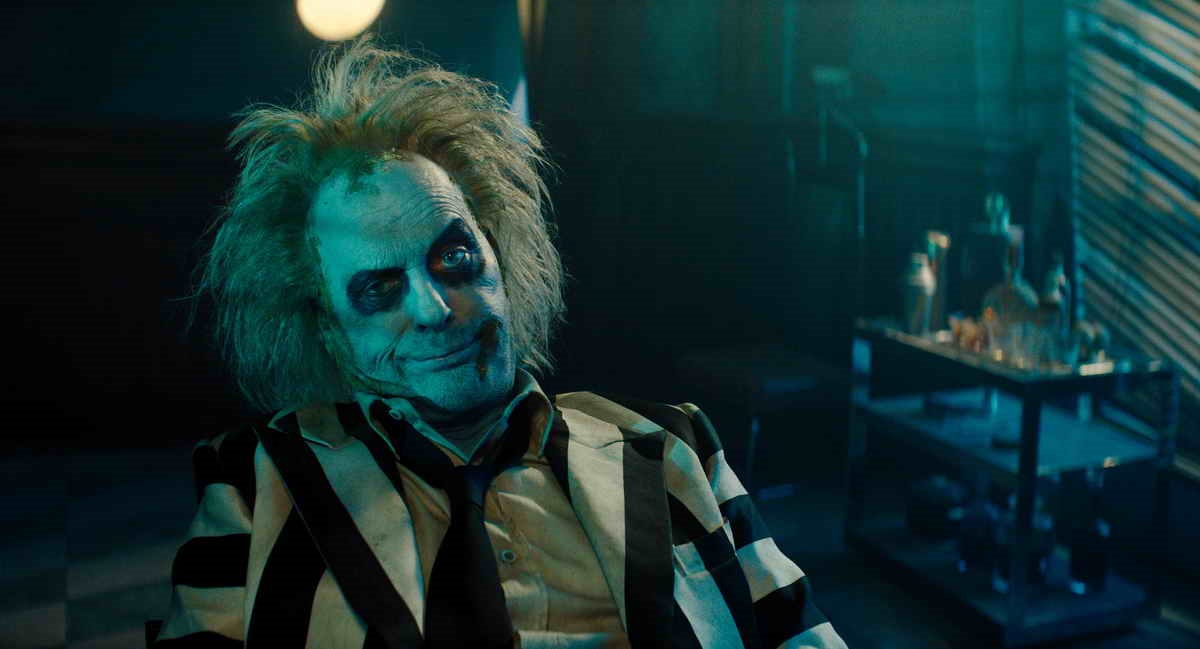
Special features across the set are solid rather than exhaustive. The original Beetlejuice carries over archival extras that explore its production design, effects work, and Burton’s early creative identity, providing valuable historical context even if some materials show their age. The sequel includes more contemporary featurettes focused on cast, legacy, and world-building, though they tend toward promotional framing rather than deep technical analysis. Collectively, the extras complement the films without fully interrogating their contrasting approaches to fantasy filmmaking.
As a boxed set, the pairing is compelling. Experiencing both films back-to-back highlights not only shifts in technology and filmmaking priorities, but also how Burton’s sensibilities have adapted – and softened – over time. Warner Bros.’ presentation underscores that contrast with two strong 4K transfers that respect their respective eras. For fans, collectors, and anyone interested in the evolution of stylised studio filmmaking, this set offers tangible value beyond simple nostalgia, even if the magic of the original remains difficult to replicate.
 Press Play Media