Deadzone: Rogue begins with a familiar sci-fi premise – you awaken alone aboard the derelict ISS-X with no memory of how you arrived, immediately thrown into an escalating battle for survival against swarms of mechanical foes. This opening sets the stage for a narrative that, while intriguing at first, ultimately takes a back seat to the game’s relentless action. The sparse environmental storytelling and data logs peppered through the ship provide context, but the story never evolves into a deeply engaging arc; it is functional, atmospheric, and suitable for a roguelite, but not the emotional anchor some players may hope for.
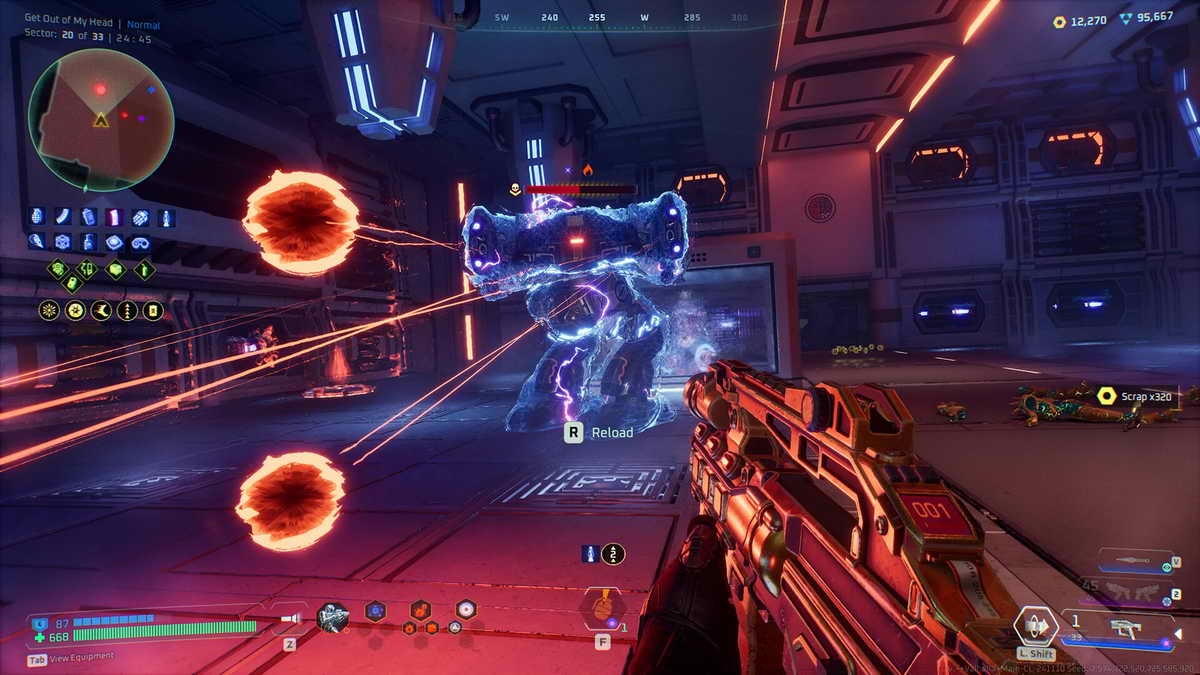
Where Deadzone: Rogue truly finds its rhythm is in its gameplay loop. This title marries roguelite progression with first-person shooting in a way that rewards both tactical thought and quick reflexes. Each run has you selecting augments and perks that meaningfully shape your playstyle; elemental weapon affixes, permanent upgrades, and strategic choices empower you to tailor your build toward high-impact firefights. The core combat – shooting, dashing, throwing grenades, and choosing when to engage or reposition – remains engaging through repeated runs, a testament to the game’s solid mechanical foundation.

The game’s roguelite structures strike an effective balance between randomness and control. Rooms (or sectors) are procedurally selected, and rewards – be they weapons, augments, or perks – inject variety into subsequent attempts. This randomness keeps each run feeling fresh, though it occasionally comes at the cost of environmental coherence; the shifting sector layouts can feel less intentionally designed and more modular, which can impact the pacing of exploration. Still, the variety of builds you can craft and the satisfaction of seeing those builds come together in high-octane combat keeps the loop compelling.
Control responsiveness and the overall feel of combat are among Deadzone’s strongest qualities. Weapons handle crisply, with elemental effects that give each class of armament a distinct personality, and the dash mechanic adds an extra layer of mobility that elevates both defensive and offensive play. However, not all elements are perfectly balanced – melee weapons can feel underpowered compared to ranged options, and enemy AI occasionally resorts to repetitive or predictable behavior. These issues seldom derail combat’s momentum but are noticeable in extended play.
Visually, Deadzone: Rogue leans into a clean sci-fi industrial aesthetic. The environments, while not groundbreaking, use lighting and particle effects to create mood-rich corridors and combat arenas that support the action without distraction. Enemy designs range from simple drones to larger biomechanical foes, lending visual weight to encounters. That said, some repetition in enemy placement and environmental features can make later runs less striking than earlier forays into the Deadzone. The audio design supports the action with clear weapon sound signatures and impactful hit feedback, though the music itself is functional rather than memorable.

On the technical front, the Xbox version performs reliably, maintaining stable frame rates even during chaotic encounters. Occasional minor AI quirks appear, and the procedural room generation can diminish the sense of handcrafted pacing, but overall the experience feels polished and consistent for both solo and co-op play. The cooperative mode, allowing up to three players, extends the game’s appeal and introduces emergent moments that solo runs do not capture as consistently.
Deadzone: Rogue doesn’t reinvent genre conventions, but it does deliver a very polished and addictive roguelite FPS experience. Its accessible narrative supports – but never overshadows – its core loop of build variation and combat intensity. While some design choices, such as room randomness and occasional AI oddities, dilute the sense of bespoke level design, the overall package remains engaging and fun, especially for players who appreciate twitch-driven action and tactical progression. With robust core mechanics and strong cooperative play, it represents a good new entry in the roguelite shooter space.
Score: 8.2/10
 Press Play Media