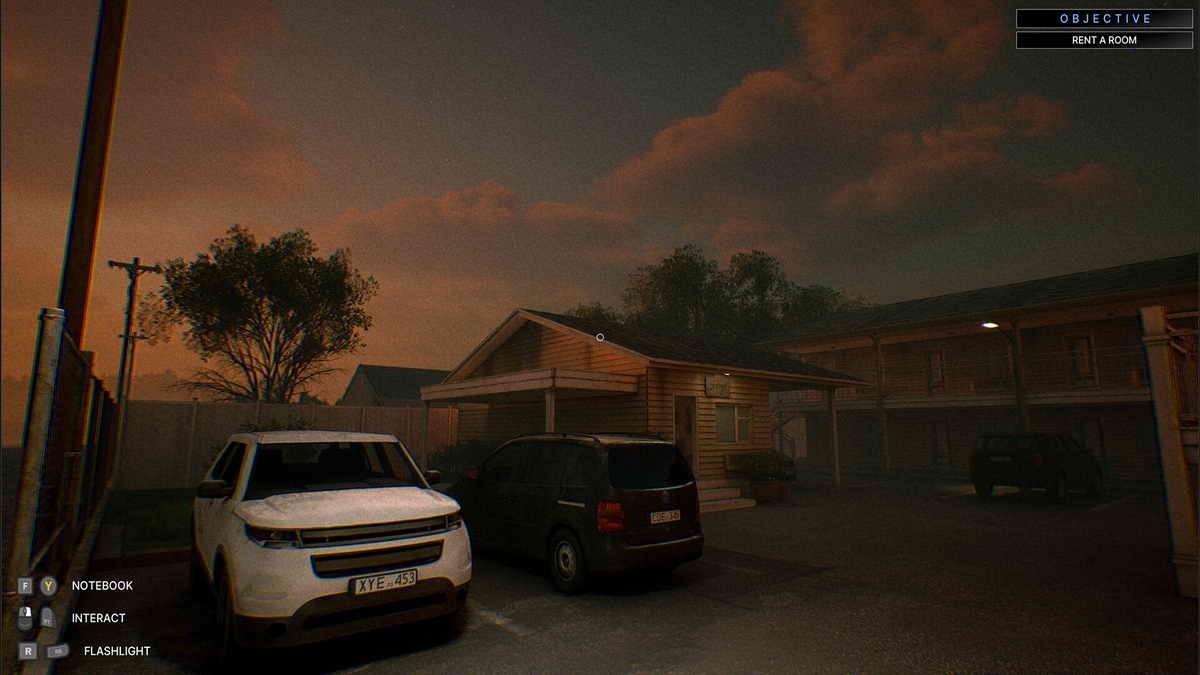
DETECTIVE – Rainy Night begins with a premise that promises a slow descent into psychological mystery: playing as veteran police officer Iker Carmona, you check into the isolated Holiday Motel after investigating local disappearances, only to wake trapped by endless rain, incommunicado electronics, and a series of bizarre deaths and disappearances among your fellow guests. Over the course of its 12 chapters spread across five days, the game unfurls a narrative focused on survival, suspicion, and unraveling what – or who – is behind the escalating paranoia. This setup, rich with atmospheric promise, anchors the experience and serves as the strongest pillar in its design, consistently drawing players deeper into its storm-bound world.
As a narrative experience, Rainy Night largely delivers on its atmospheric narrative goals. Dialogue and character interactions reveal enough about the cast to generate genuine interest in their fates, and the interplay of mysterious symbols, escalating deaths, and cryptic events often lands with eerie effectiveness. The motel setting and ceaseless rain contribute meaningfully to immersion, with the sound design in particular reinforcing the oppressive isolation at the heart of the story. However, beneath this compelling shell lies a pacing challenge: the narrative frequently progresses at a measured, sometimes glacial rate, undercutting tension with sequences that feel more like guided chores than deductive investigation. The detective elements – the promise of deduction and clue synthesis – rarely require as much analytical engagement as the premise suggests, leaving players with little more than following scripted objectives rather than actively uncovering the truth.
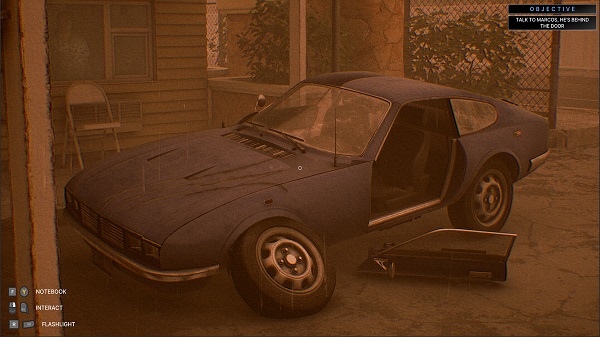
Mechanically, the game adheres to a familiar adventure template. Interactions largely involve walking through pre-set scenes, speaking with motel guests, and triggering story beats through simple prompts. The in-game notebook collects important details automatically, which mitigates the need for manual note-taking while simultaneously lessening the satisfaction of active clue management. This automatic system feels like a missed opportunity to deepen the detective mechanics; rather than feeling like a true sleuth, players are often shepherded from one scripted moment to the next with minimal agency. Additionally, pacing issues – exacerbated by lengthy dialogue sequences and limited choice outcomes – can make the progression feel repetitive or padded, diminishing momentum for players anticipating a more dynamic mystery unraveling.
Controls and interface on the PS5 conform to adventure norms but are not without hiccups. While the transition between exploration and interaction is generally smooth, the lack of voice acting combined with text that unveils at a deliberate pace can make conversations feel protracted. The absence of more robust feedback or control nuances – such as adjustable text speed or more interactive puzzle elements – leaves the experience feeling a bit too constrained for a genre that thrives on engagement. These design choices reinforce the narrative at the cost of interactivity, a trade-off that will resonate positively with some players and frustrate those seeking richer gameplay depth.
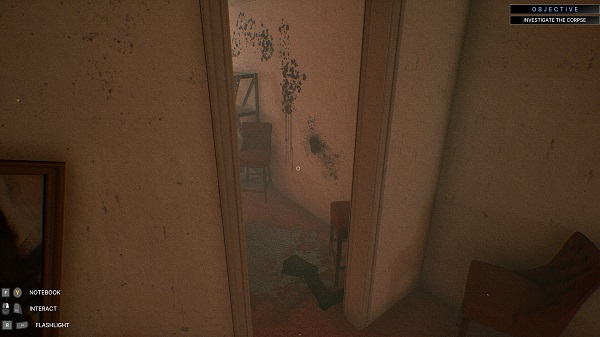
The aesthetic leans toward a modest, slightly retro style that complements the game’s indie roots, situating players within an environment defined more by mood than high-fidelity spectacle. While visuals don’t push technical boundaries, the environmental detail – especially the relentless downpour and subtle lighting shifts throughout the motel – works effectively to reinforce the narrative’s claustrophobic tone. Sound design likewise stands out as a consistent strength: rain, thunder, and ambient cues often heighten unease in ways that visual elements alone cannot, making the audio landscape one of the clearer highlights of the experience.
Where Rainy Night stumbles most conspicuously is in how its detective trappings are balanced with its narrative ambitions. Though the game is marketed around deduction and investigation, true detective work – where observation, inference, and deduction coalesce into meaningful player-driven discovery – is largely substituted with guided steps and automatically compiled information. This design choice results in a story that is more passive to experience than active to decode. While some players will enjoy the unfolding mystery for its own sake, others will likely feel shortchanged.
Ultimately, DETECTIVE – Rainy Night stands as a narrative adventure with palpable atmosphere and a compelling central mystery, but one that is held back by pacing constraints, limited gameplay complexity, and an overreliance on scripted progression. For those who prize atmospheric storytelling and are content to be guided through a tense, rain-soaked narrative, the game offers an experience worth exploring. For players seeking deeper detective mechanics or a more interactive mystery experience, this outing may feel more like a fleeting shadow of its own potential.
Score: 7.0/10
 Press Play Media