In this VR roundup, the medium’s remarkable range is on full display, spanning chaotic management sims, meticulously crafted leisure experiences, and tightly focused psychological horror. From the relaxed yet detail-rich rhythms of mini golf on a sun-soaked island, to the slapstick pressures of running a virtual supermarket, and finally to the suffocating dread of First World War–era trenches, these three releases showcase how varied VR design philosophies can be even within relatively contained experiences. Each title leans heavily on immersion and physical interaction, but they pursue that goal in strikingly different ways, highlighting both the strengths and growing pains of contemporary VR across Meta Quest and PlayStation VR2.
Walkabout Mini Golf – Tiki à Coco DLC review (Quest)
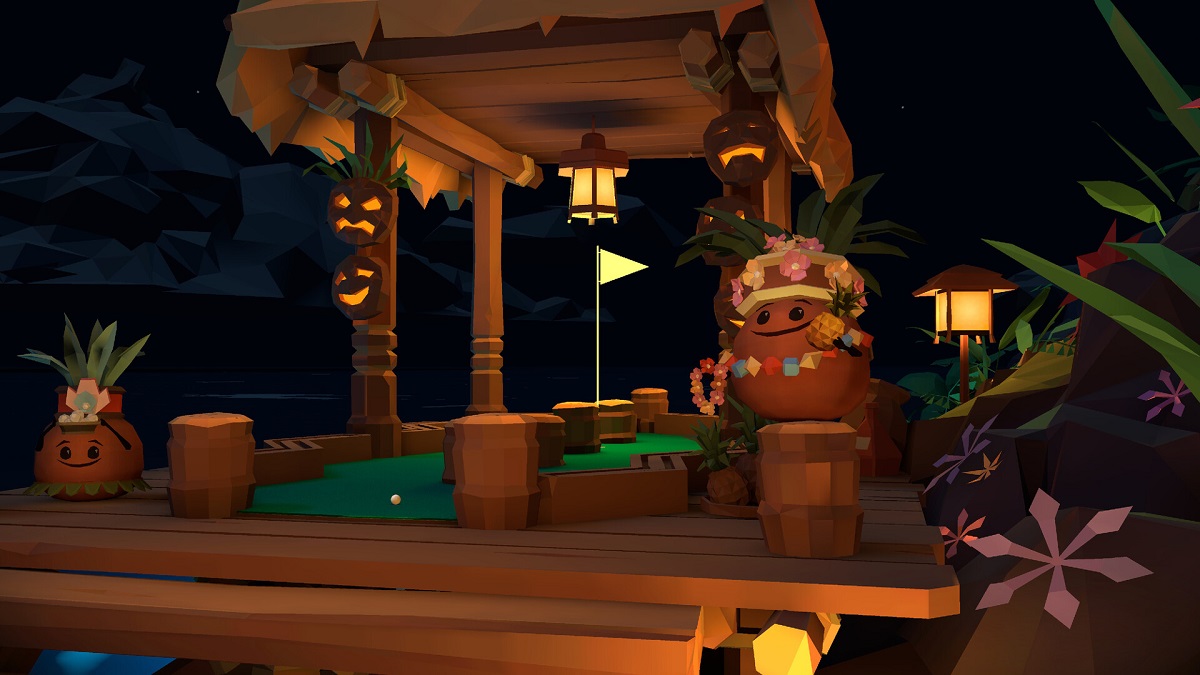
Tiki à Coco feels like one of Walkabout Mini Golf’s most confident expressions of what the game does best: turning a simple round of mini golf into a space worth lingering in. Set on a volcanic island inhabited by an invented coconut society (yes, you read that correctly), the course leans heavily into environmental storytelling, encouraging players to explore rather than rush from hole to hole. The framing is playful and surprisingly cohesive, with visual gags, animated characters, and environmental clues that quietly flesh out the setting without ever interrupting play. That sense of place is strengthened by how the island gradually opens up and reveals its personality as you progress.
Mechanically, Tiki à Coco sticks close to Walkabout’s established formula, which works both in its favor and occasionally against it. There are no dramatic new gimmicks, but elements like lava hazards and fire obstacles are integrated cleanly and behave exactly as expected, keeping frustration low. Hole design is where the course shines, mixing straightforward putts with trickier bank shots and elevation changes that reward careful reading of surfaces. Some holes might push the difficulty level a bit, but the challenge rarely feels unfair, making this one of the more satisfying courses to play clean rounds on, especially in multiplayer sessions.
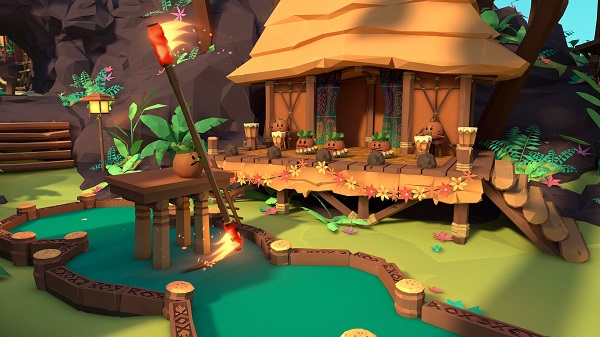
The presentation does some of the heavy lifting as well. Bright tropical lighting, layered soundscapes of waves and wildlife, and some of the most expressive character animation the game has seen to date give the island a lively, welcoming tone. Interactive elements like drums and animated NPCs enhance immersion, while the night variant meaningfully alters both atmosphere and difficulty through lighting changes and adjusted layouts. That said, minor technical blemishes such as occasional visual artefacts or environmental details blending into the background during fox hunts can slightly detract from an otherwise polished experience.
As a package, Tiki à Coco reinforces Mighty Coconut’s reputation for delivering high-value DLC. The fox hunt, themed club reward, and playful cosmetics offer strong incentives to explore every corner of the island, and while it doesn’t reinvent Walkabout’s mechanics, it refines them with confidence and charm, resulting in a course that feels approachable, replayable, and easy to recommend to both longtime fans and newcomers alike.
Shop & Stuff: Supermarket Simulator review (Quest)
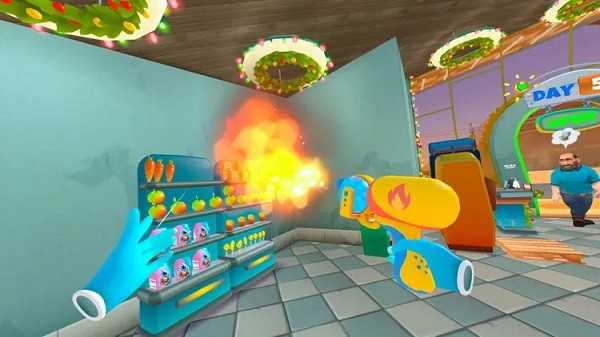
Shop & Stuff: Supermarket Simulator on Meta Quest delivers exactly what its somewhat chaotic title implies: a VR simulation that thrusts you into the unpredictable world of running a roadside market with more slapstick moments than serious retail strategy. The premise is straightforward – stock shelves, handle checkout, clean up messes and fend off shoplifters – but the tone skews toward rambunctious play rather than methodical management, making it feel more like a sandbox of silliness than a strict simulation. Visually, its cartoony aesthetic leans into that playful identity, with colorful environments that suit spontaneous customer antics even if they lack the visual depth seen in more polished VR titles. Audio design follows suit with functional effects and lighthearted cues that support the experience without elevating it into something immersive or memorable.
Gameplay mechanics are where Shop & Stuff both shines and stumbles. The core loop of stocking and serving is inherently satisfying – dragging goods from boxes to shelves and scanning items at the register feels tactile and engaging thanks to responsive motion controls. Expansion and progression offer a sense of growth that hooks you in the early hours, and there’s genuine enjoyment in watching your shop evolve from a modest corner store into a bustling business. At the same time, the mechanics can feel repetitive once the initial novelty wanes, and some current features – most notably the new “boss” character – introduce unpredictable disruptions that can undermine the gameplay rather than enhance it, becoming a source of frustration rather than tension.
Balance and polish are ongoing concerns in this Early Access build. While the controls are generally intuitive, a notable relative absence of in-game comfort or accessibility options means some players must manually adjust headset settings to feel comfortable, particularly those sensitive to VR motion. Bugs and NPC behavior issues – customers bumping into each other, errant shopliftings, and occasional progression blockers – dilute the otherwise addictive loop, especially when a day won’t complete because of unintended AI interactions. Nonetheless, the underlying systems show great promise, and the act of juggling multiple responsibilities at once still captures the frantic energy the game is clearly aiming for.
In its current state on Meta Quest, Shop & Stuff: Supermarket Simulator stands as a promising and playful VR sim that leans into its chaotic charm. It may not deliver deep retail strategy or polished simulation depth yet, but the core gameplay loop is fun, the visual style is inviting, and the freedom to make your store your own gives it genuine replay value. Players willing to embrace its quirks and tolerate occasional rough edges will find a title with clear potential as it continues to evolve toward a more refined experience.
Trenches VR review (PSVR2)
Trenches VR returns on PSVR2 as a lean, tension-driven horror experience that once again places players in the mud-choked corridors of a fractured First World War psyche. The premise remains deliberately minimal: a lone soldier trapped in the trenches, driven by fragmented memories of home while something unnatural stalks the fog ahead. As with the Quest version previously reviewed, the narrative is more implied than told, relying on environmental cues, unsettling audio, and repetition to convey psychological decay. That ambiguity works in its favor early on, but the limited thematic connection between the paranormal threats and the historical setting still feels underexplored, leaving the World War I backdrop more atmospheric than meaningful.
Gameplay continues to revolve around stealth, sound awareness, and trial-and-error progression. Enemies cannot be killed, only delayed or distracted, forcing a cautious rhythm built around slow movement, object throwing, and physical hiding. The one-save structure reinforces tension, as death resets the entire run, but it also exposes the simplicity of the loop once the maze-like layout and objectives become familiar. Early moments thrive on uncertainty, while later encounters drift into repetition as enemy behavior becomes predictable and the fear of the unknown fades. The whistle mechanic remains a clever risk-reward tool for navigation, though its usefulness diminishes once players learn the layout through repeated failures.

On PSVR2, controls are functional but uneven. Physical leaning enhances immersion, particularly when squeezing into narrow hiding spaces, yet the absence of a dedicated crouch button may frustrate some players. Smooth locomotion is available but not immediately obvious, and movement sensitivity options feel limited. The backpack system and item management add a modest layer of interaction, though weapons lack depth, with firearms serving more as panic tools than meaningful tactical options. Haptics and adaptive triggers are largely absent, making the PSVR2 feature set feel underutilized despite solid core tracking.
Visually, Trenches VR presents a sharp but restrained image on PSVR2, aided heavily by dense fog that both supports the horror tone and masks environmental simplicity. The game runs with reprojection, introducing mild ghosting that is noticeable but mitigated by the dark color palette. Where the experience truly excels is audio: distant sirens, echoing footsteps, labored breathing, and sudden alarms create sustained tension that consistently outperforms the visuals. As a budget-priced, solo-developed horror title, Trenches VR delivers effective atmosphere and moment-to-moment stress, but its limited mechanical depth and loose thematic cohesion prevent it from fully realizing the potential of its setting.
 Press Play Media