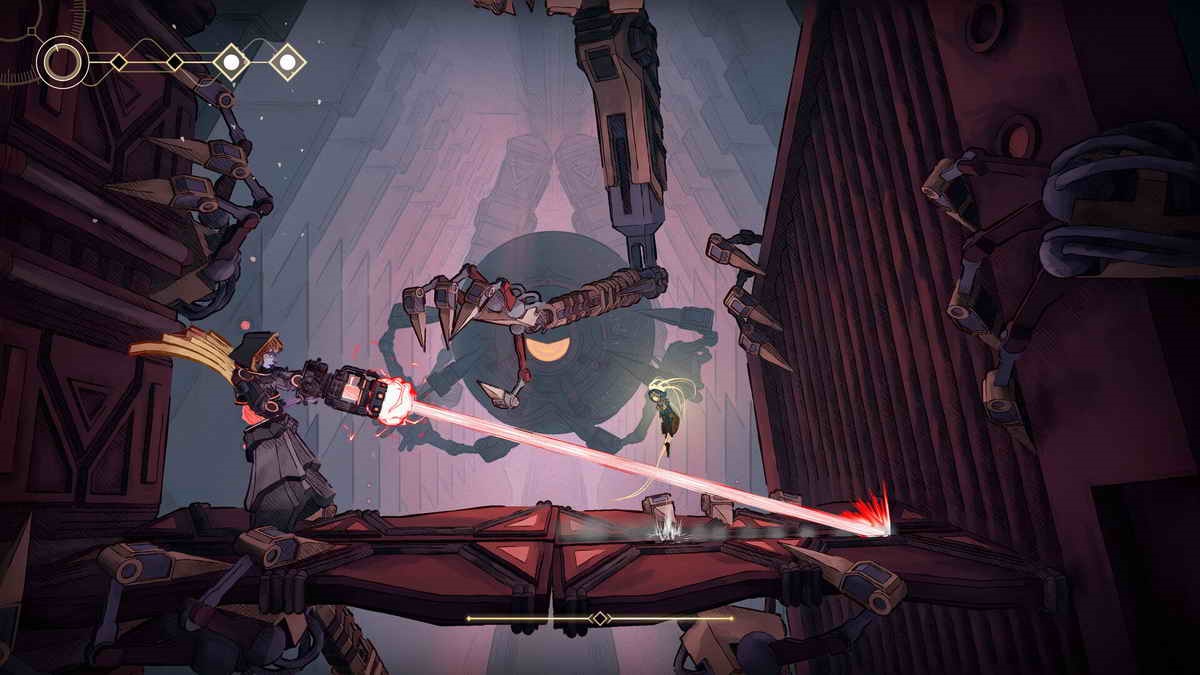
From its opening moments aboard the mysterious Vessel, MIO: Memories in Orbit presents itself not simply as another metroidvania but as an artful blend of exploration and melancholic world-building. You awaken as MIO, a small robot with an inscrutable past, in a sprawling, decaying ark overtaken by malfunctioning machines and lush overgrowth. The narrative here is subtle and atmospheric rather than bombastic – story beats arrive through environmental cues, NPC encounters, and fragments of lore the player pieces together. This under-stated storytelling suits the ethereal aesthetic of the world but may not grip players seeking more explicit plot direction.
Where MIO immediately impresses is in its visual identity. Across every biome of the Vessel, hand-drawn backgrounds, watercolor-inspired palettes, and layered artistic textures give each area a unique personality that feels more like a moving graphic novel than a traditional platformer. The interplay of mechanical ruin and organic resurgence, from frozen caverns to overgrown halls, reinforces the sense of narrative decay and wonder. This art direction translates into crisp performance and fluid animation, allowing traversal and exploration to feel purposeful and immersive. The soundtrack supports this vision as well, alternating between contemplative atmosphere and kinetic energy during encounters, underscoring the game’s emotional tone without overpowering it.
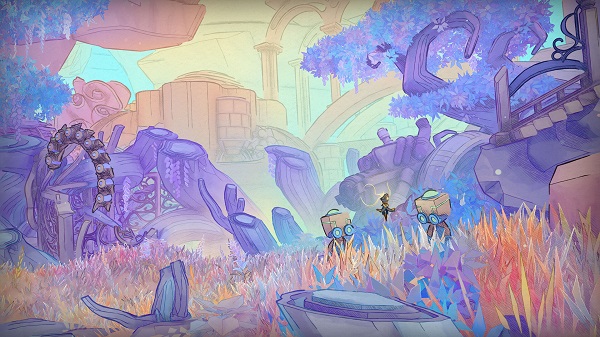
Gameplay in MIO revolves around exploration and movement, and here the game often feels most inspired. MIO’s traversal toolkit – ranging from agile airborne maneuvers to wall clinging and grappling actions – is designed to be both expressive and functional, rewarding precision and experimentation. The interconnected world layout encourages players to revisit earlier regions with newly acquired abilities, a staple of the genre that MIO executes with thoughtful placement of secrets and shortcuts that add genuine satisfaction to each discovery. Customization through modifiers further deepens engagement, providing avenues to tailor playstyle rather than enforce a single optimal path.
Yet challenge and accessibility occupy a complex intersection in MIO. The difficulty level is deliberately severe, with early segments lacking sufficient guidance and checkpoints that are spaced far enough apart to make repeated deaths feel like long stretches of trial and error. Combat, while featuring a variety of enemy types and boss encounters, can at times feel constrained in its options and reliant on learning patterns rather than dynamic engagement, which may frustrate players who prefer a broader tactical palette. Coupled with design decisions that occasionally punish progression, such as resource loss on death, this elevates the sense of friction more than excitement for some, at least until you find the right rhythm.
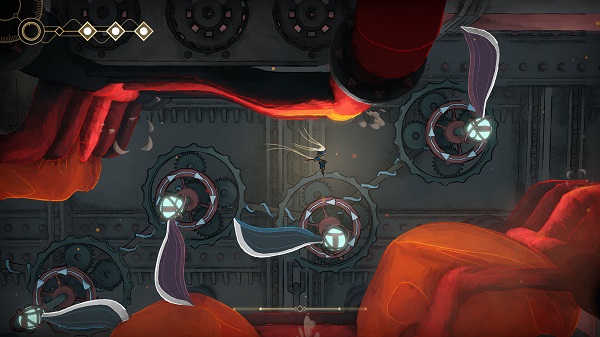
Control responsiveness and fluidity are among the title’s strengths, where solid 60 fps performance enhances the tactile feel of platforming. Precise inputs and quick character responsiveness allow the myriad traversal options to feel intuitive and satisfying once mastered. Nevertheless, this same demand for precision can act as a barrier for less experienced players, particularly in sections where environmental hazards and enemy attack timing converge. This emphasis on exactitude reinforces the game’s identity as a title for players who relish challenge, though it may alienate others seeking a gentler pace.
Despite these challenges, MIO’s world consistently delights with its artistic ambition and unique tone. The way visual and auditory elements weave together delivers a sensory experience that few indie metroidvanias attempt, and in many areas, the game achieves a poetic quality that aligns strongly with its themes of memory, loss, and discovery. Even when the design leans toward the unforgiving, there remains a core sense of wonder that draws the player deeper into the Vessel’s mysteries.
Ultimately, MIO: Memories in Orbit is a bold and evocative entry in the genre: one that prioritizes artistic identity and expressive movement over hand-holding and accessibility. It may not redefine metroidvania conventions, but it certainly stands alongside its inspirations with confidence and flair. For players willing to embrace its difficulty and deliberate pacing, this voyage across a fractured technological world offers profound rewards and lingering impressions well after completion.
Score: 8.0/10
 Press Play Media