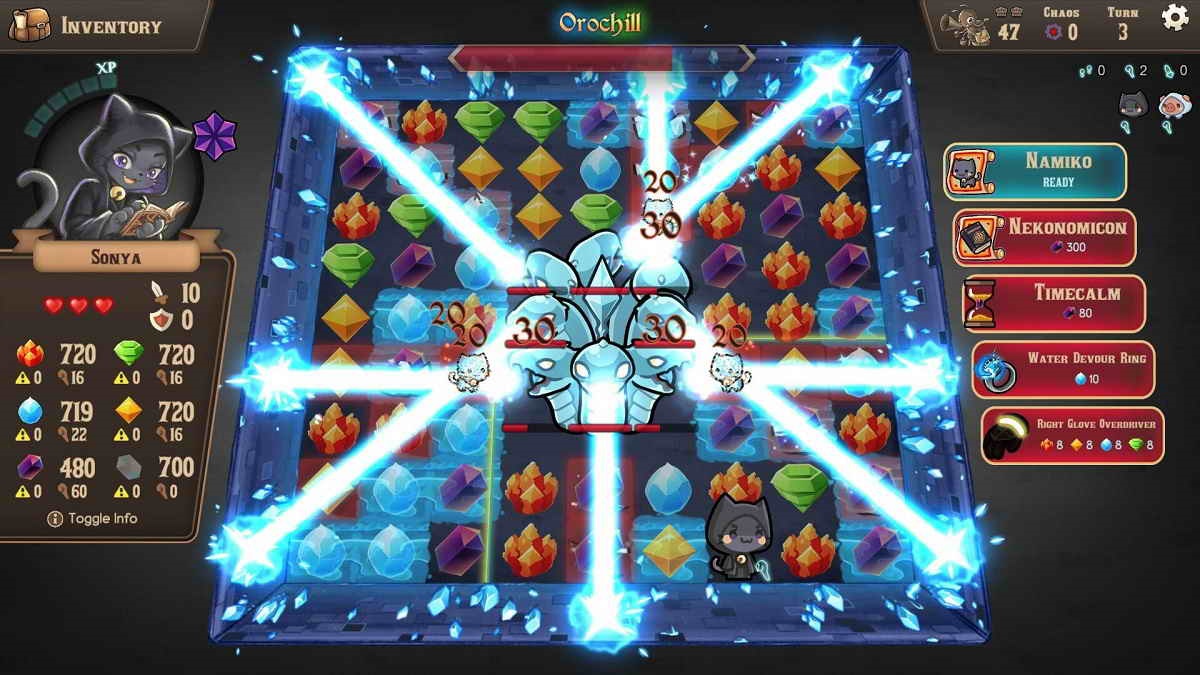
Roguematch: The Extraplanar Invasion on PlayStation 5 marks an ambitious and conceptually inventive entry into the tactical puzzle-RPG space. At its core, Starstruck Games has dared to fuse turn-based dungeon crawling with match-three mechanics in a blend that often feels more like a crafted hybrid than a simple crossover. The resulting experience places players in the enchanted, trap-laden corridors of a besieged castle, forcing choices that pivot between melee strikes, spellcasting, and planned match efforts to exploit enemy weaknesses. While the premise is unabashedly whimsical – a chase for the fabled Nekonomicon gone catastrophically wrong – the underlying design is surprisingly nuanced, with combat and board manipulation tightly interwoven in almost every encounter.
From the outset, Roguematch’s ambition becomes evident in its gameplay loop. Each room presents a grid where your hero’s movement and mana matching serve as both positioning tools and primary systems for offense and defense. The strategic weight of matching mana next to foes – especially when higher-order matches trigger powerful effects – elevates what might have been a trivial mechanic into a core tactical consideration. This often feels reminiscent of deep puzzle titles where forward planning and pattern recognition are paramount, especially as enemy attack patterns and positional threats evolve with each turn. At higher difficulties and later floors, these decisions become even more consequential as the board’s chaos grows and the corruption timer threatens to overwhelm you if you linger too long without clearing decisive matches.
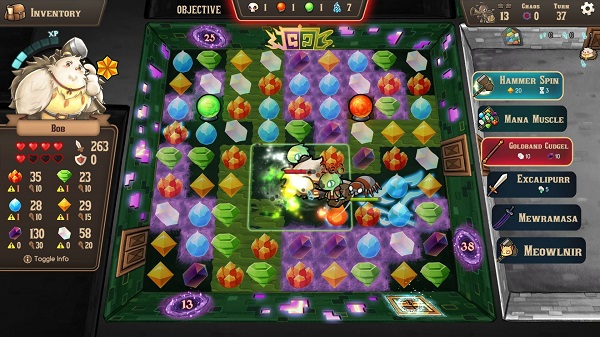
The game’s pacing and accessibility reflect its dual identity as a roguelike and puzzle RPG. On one hand, the procedurally generated layouts and variety of elemental hazards – from freezing ice to sticky mud and fiery lava – introduce environmental strategy that enriches each run. On the other, some runs can feel deceptively long, and the lack of extensive tutorials or layered informational feedback means newcomers may initially struggle to grasp deeper systems quickly. That said, the design often rewards experimentation; even when deaths reset progress, that reset doesn’t feel punitive so much as instructive, nudging players to recalibrate their approaches as they learn intricate enemy behaviors and combinations.
Visually and aurally, Roguematch leans into a charming aesthetic that juxtaposes cute character design with more serious tactical underpinnings. The distinctive art style and character animations imbue the experience with personality, helping soften moments that might otherwise feel dry if presented in a purely mechanical context. This charm extends to the varied enemy designs and boss encounters, each with their own elemental themes and combat quirks that require readjusted tactics rather than rote repetition. While the soundtrack tends toward simple loops, it generally complements the mood without overwhelming the board-focused gameplay; for some players, though, this may become repetitive over extended sessions.
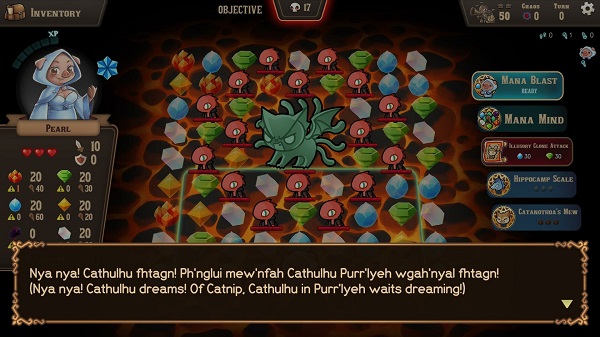
Controls on the PlayStation 5 are serviceable, and the game’s transition from its original formats onto Sony’s hardware is competent overall. The directional pad paired with thumbstick management of the match grid works but can take some time to feel intuitive, especially when the match cursor resets abruptly after character movement. These small UI quirks do not derail the experience, but they highlight areas where polish could further enhance responsiveness and fluidity. It’s a reminder of the game’s indie roots – where ambition sometimes outpaces refinement, but never to the point of breaking immersion.
Despite its creativity and compelling systems, Roguematch is not without its detractors. Some players may find the balance uneven, as there are occasions where dominant strategies emerge that trivialize certain encounters once uncovered, potentially diminishing the incentive to explore alternative approaches. Others might see the match-three component as either over-bearingly strategic or somewhat light on explanatory depth, particularly for players accustomed to more traditional roguelikes or those coming from casual puzzle backgrounds. Nevertheless, the overall package remains a uniquely rewarding experience that demands attention, adaptation, and often, a willingness to return for just one more run.
In sum, Roguematch: The Extraplanar Invasion stands as a testament to what can happen when disparate genres are blended with intention. It is a game that will especially resonate with players who appreciate cerebral tactical decision-making wrapped in a fresh, whimsical coat – even if it occasionally stumbles in the details. Its fusion of match-three and turn-based roguelike elements makes it one of the more distinct titles in its class, and a recommendation for those seeking a puzzle RPG that challenges as much as it entertains.
Score: 7.5/10
 Press Play Media