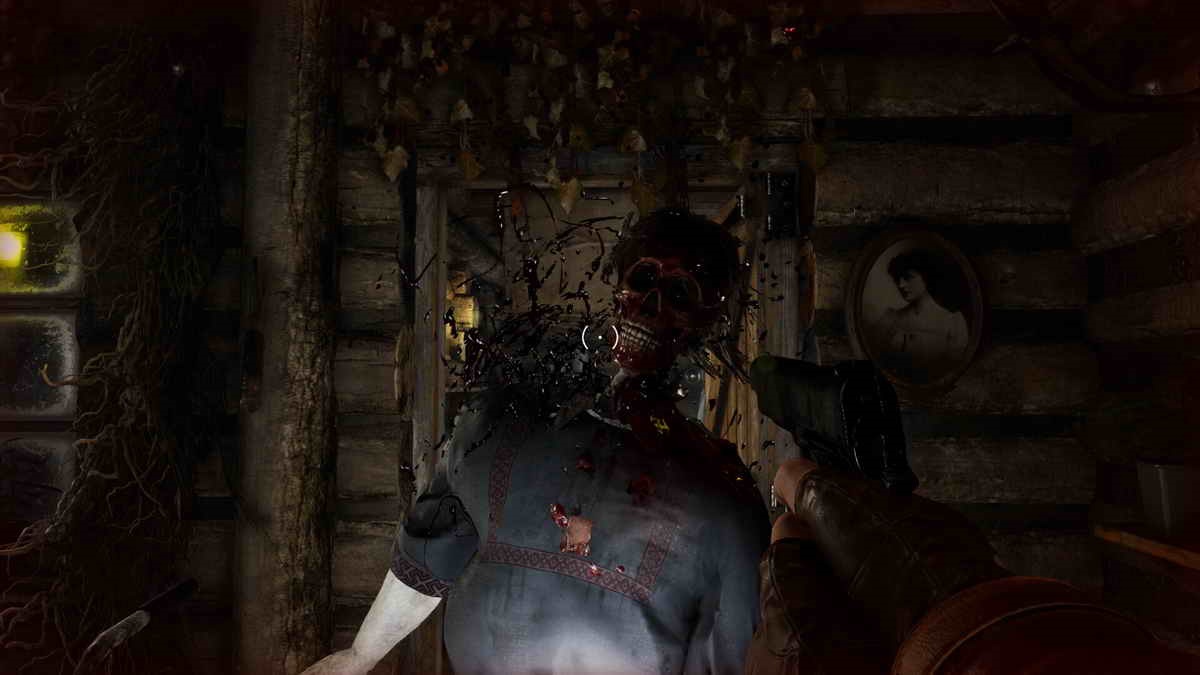
From the moment Maria’s mundane apartment life is violently interrupted by a broadcast about an outbreak and she heads toward a desolate USSR village, Ebola Village signals its intention to wear its influences on its sleeve. This PlayStation 5 release from Axyos Games trades in the polished tension of genre benchmarks for an unvarnished throwback to ’90s survival horror, embracing claustrophobic spaces, limited resources, and an almost tactile dread of what might lurch from the shadows. The narrative setup has undeniable genre pedigree, and for a time the oppressive sense of isolation works in its favor, making each abandoned shack and overgrown path feel like a threat waiting to pounce. That said, the underlying story often feels thin and undercooked, with character moments and plot beats that don’t cohere into something as compelling as its premise deserves.
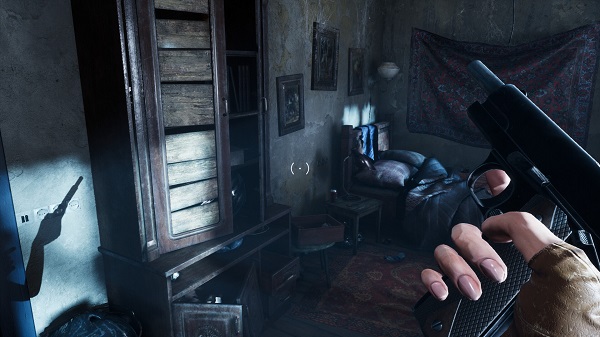
Mechanically, Ebola Village is a curious blend of homage and awkward design. Inventory management and puzzle-solving evoke the survival classics of old, complete with chest storage and a reliance on scarce supplies that reinforce the sense of vulnerability. These systems, when they work, provide satisfying tension and a welcome break from constant combat. However, the implementation frequently reveals its age: item interaction prompts can be fiddly, chest management becomes tedious over long stretches, and quality-of-life conveniences common in modern design are largely absent. The result is a gameplay loop that can feel at once evocative of retro survival thrills and frustratingly dated in its execution.
Combat sits at the heart of this duality. On its best moments, swinging a shotgun or watching an enemy ragdoll into gore offers a visceral, satisfying burst of carnage that underscores the game’s raw, brutal aesthetic. Weapon variety and dismemberment physics add a gruesome spectacle that can be genuinely fun in short doses. But the foundations beneath that spectacle often creak: aiming feels janky, enemy movement is inconsistent, and close-quarters engagements can devolve into frustration rather than fear. Some of this seems tied to systems originally tuned for keyboard-and-mouse play, which don’t always translate cleanly to DualSense controls, leaving encounters feeling clumsy instead of cinematic.
Visually and aurally, Ebola Village is equally mixed. The environments lean into a grime-ridden palette of peeling paint, rusted metal, and oppressive shadows that do effectively build atmosphere, especially when paired with the sporadic environmental audio cues like distant knocks and creaking floorboards. These design choices create unsettled spaces that feel convincingly lived-in and neglected, enhancing the fear of what might be around the next corner. Yet, the visual fidelity is inconsistent: some character models and asset work verge on generic or rough, betraying the limitations of its art direction, and occasional technical awkwardness pulls players out of immersion. The audio design’s focus on ambience over musical score is a bold choice that mostly pays off, though voice work being delivered entirely in Russian with uneven subtitles can make narrative beats harder to follow for non-Russian speakers.

Where Ebola Village stumbles most is in its identity. Its heavy reliance on the hallmarks of genre forebears – inventory screens, puzzles, eerily quiet hallways – begs comparison to the very franchises it channels. For some players, this familiarity will be the charm, a sandbox of retro survival tropes to explore and survive through. For others, it risks feeling derivative, with borrowed pieces never quite coalescing into a uniquely compelling whole. Instances of awkward design choices and patchy storytelling often overshadow the moments where the game seems to want to carve its own niche.
At roughly three to five hours for a full playthrough, Ebola Village is brief – a compact experience that won’t overstay its welcome but also doesn’t offer much depth beyond its core loop. For fans of old-school survival horror willing to embrace rough edges and occasional jank, it can be a worthwhile detour; the oppressive vibe and selective tension hooks do justify the trip for a niche audience. But for those seeking a more refined or narratively rich horror adventure on PS5, Ebola Village may more often feel like a curiosity – a nostalgic throwback with flashes of promise rather than a standout in its genre.
In the end, Ebola Village is an unabashed throwback with grit, gore, and homage in equal measure, but one that rarely transcends the sum of its influences. While its core atmosphere and survival loops can be engaging, the uneven execution and occasional frustration make for a bumpy ride. Whether you see it as a love letter to survival horror’s roots or as an imperfect imitation will largely determine your enjoyment of this odd, unsettling journey.
Score: 6.4/10
 Press Play Media