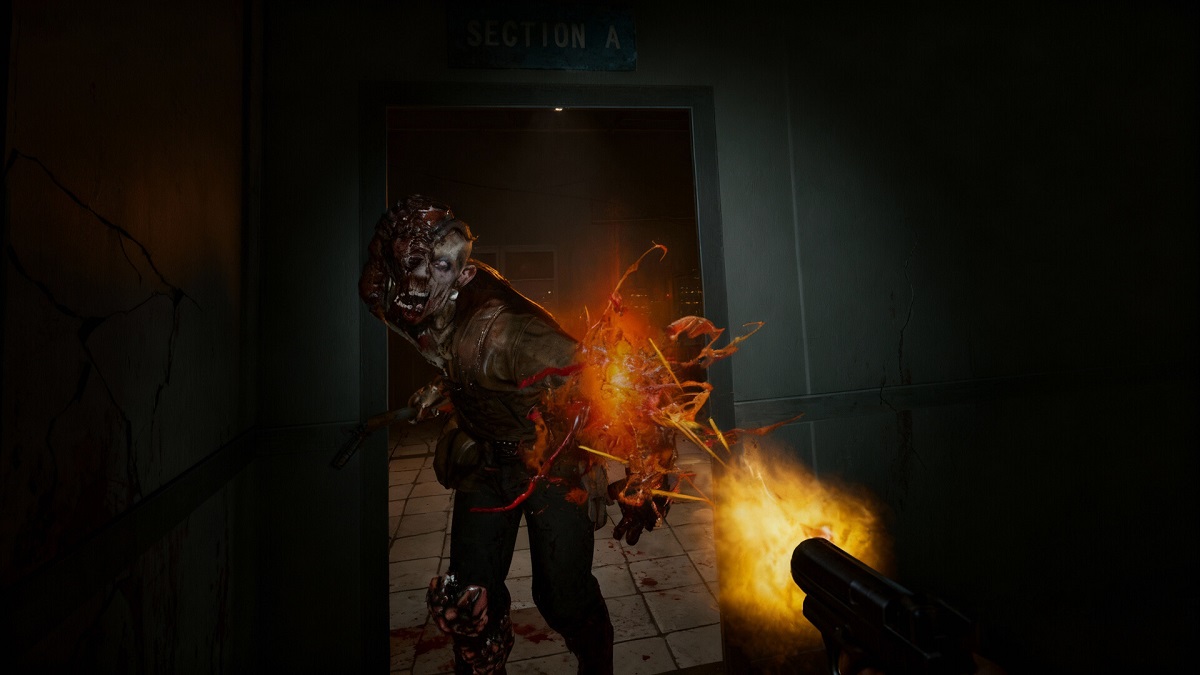
From its frozen opening steps across the blasted wasteland of Oglanbyen, Dread Meridian seeks to pull VR horror out of the cliched trenches and into the uncharted cold of cosmic dread. The premise – Daniella’s desperate search for her twin amid Lovecraft-tinged madness – carries the promise of evocative storytelling and immersive worldbuilding tailored for VR. When the game locks into place – the oppressive winds, the haunting audio murmurs, and the palpable silence between footsteps – it hits emotional beats that many VR horror fans crave. This is a setting that feels alive with unseen threat, and exploration here frequently rewards curiosity with eerie environmental storytelling rather than cheap frights.
Yet that promise is shallow when it collides with the game’s rough technical execution. Across both Quest and PCVR, the survival mechanics often feel undercut by janky physics, inconsistent hitboxes, and immersion-breaking quirks in the inventory and interaction systems. Enemy encounters sometimes degenerate into awkward melee flails because gunplay is imprecise and ammo scarcity paradoxically reduces tension rather than heightening it – a dynamic that can be a bit frustrating.
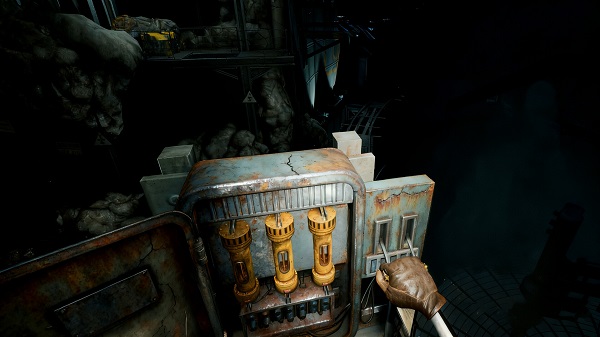
Combat exemplifies the broader contradiction at the heart of Dread Meridian: its design ideas are bold, but their implementation often feels half-baked. Weapons exist, upgrades are theoretically meaningful, and environmental puzzles are sprinkled throughout the island, yet it’s common to engage more with the weapon mechanics than the enemies themselves – not because the foes are terrifically frightening, but because the systems around them are awkward. In practice, the knife frequently becomes the go-to tool, not out of design intent but because it registers hits more reliably than the firearms.
The contrast between platforms is noticeable. On PCVR headsets, textures, lighting, and environmental detail coalesce into a more cohesive picture, delivering a visually arresting – if claustrophobic – playground of dread. On Quest hardware, the visual fidelity slips toward muddier textures and simpler geometry, though performance tends to remain stable. None of this compensates for the underlying design inconsistencies, but it does mean that the two versions offer slightly different experiences: sharper tension and aesthetic clarity on PCVR, versus more subdued atmospherics on Quest.
Narratively, the threads of Lovecraftian influence and Daniella’s quest are intriguing, but their delivery is uneven. Environmental cues and scattered documents often tell a richer tale than the voiced dialogue, which sometimes suffers from awkward lip sync and delivery. Checkpoint placement is sparse, leading to repetitive traversal after failed encounters, and inexplicably large subtitles – which players must rely on – disrupt immersion rather than enhance understanding.
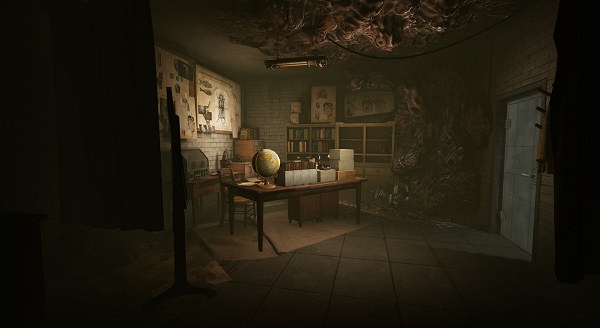
Audio – one of the game’s strongest suits in terms of atmosphere – is a double-edged sword. When ambient effects, windswept groans, and distant creature calls are firing on all cylinders, the frozen world feels truly alive. Music swells and sudden silence are used judiciously to build dread, but inconsistent environmental cues and occasional audio dropouts erode that atmosphere.
All of this has led to a mixed feeling about the game. On the one hand we can praise the eerie mood and narrative beats, while there’s also frustration with pervasive bugs, unrefined combat, and missing features that were hinted at before launch. This reflects a feeling that Dread Meridian has genuine potential – but might have benefited from additional polish before release.
In the end, Dread Meridian is a title of ambition and promise rather than consistent delivery. Its evocative world and narrative hooks are strong enough to justify your time if you’re a dedicated VR horror fan willing to weather its technical storms. But for those seeking a tightly executed survival experience, the game’s rough edges and jank might feel more like obstacles than thrills.
Score: 6.4/10
 Press Play Media