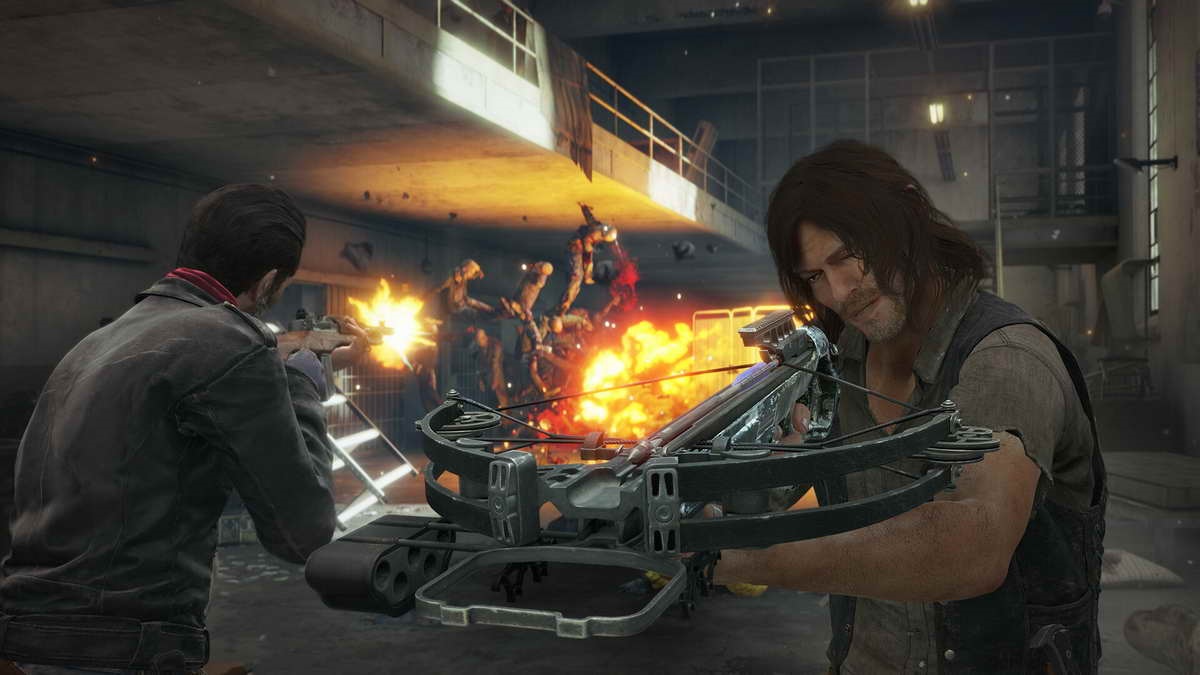
Fresh DLC often lives in the margins – an extra playlist here, a side story there – but this latest batch of releases shows just how elastic post-launch content can be when developers lean into tone, identity, and mechanical intent rather than simple expansion. From crossover storytelling that deliberately reshapes a familiar co-op shooter, to a single-song rhythm add-on that trades quantity for emotional impact, and a deckbuilding expansion that knowingly piles complexity atop an already dense foundation, these new drops explore very different ideas of what meaningful DLC looks like.
World War Z – The Walking Dead review (PS5)
World War Z x The Walking Dead makes an immediate impression by marrying Saber Interactive’s frantic cooperative shooter framework with the brooding, survival-oriented tone of AMC’s flagship undead drama. The three new chapters – set in The Prison, Alexandria, and Grady Memorial Hospital – are rich with atmosphere, leaning heavily into claustrophobic setpieces and the narrative weight of pushing through environments that look and feel lived-in. For fans of the TV series this crossover is a thrill, placing Rick, Daryl, Michonne, and Negan – complete with signature weapon skins and melee tools – into scenarios that evoke familiar despair and determination more so than the punchier action of the base World War Z campaign. It’s a compelling premise that sells the mash-up without pretending to remake either franchise.
Mechanically, the DLC makes interesting adjustments that differentiate it from typical World War Z swarm play. In place of sprinting hordes, the undead here shuffle and herd like classic Walkers – slow but unrelenting – which forces squads to rethink positioning and engagement rhythm. The introduction of tougher special enemies requires more tactical headshots and careful use of choke points, upping tension in ways that regular base game missions seldom do. This shift doesn’t disrupt the core Swarm Engine feel, but it does temper the usual high-octane pace with dread and patience, a design choice that many players will find refreshing – even if it occasionally slows momentum in solo sessions.
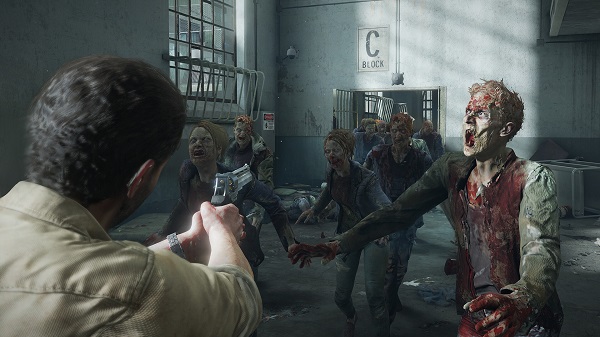
On PlayStation 5 specifically, the controls feel tight and responsive, with weapon handling and melee strikes landing with satisfying weight, though polish varies slightly between character animations and enemy collisions. Audio design plays a big role in this, too: the ambient groans, distant cries, and sparse music cues amplify unease far beyond what simple visuals convey. Visually the DLC leans on existing World War Z assets, but location redesigns and lighting tweaks give each chapter a distinct mood, even if some textures and models fall short of the highest current generation standards. A handful of technical rough edges – occasional clipping or voice-over disparities – remind you this isn’t a full-scale next-gen overhaul, yet they rarely derail the experience.
Ultimately, World War Z x The Walking Dead delivers more than fan service. It thoughtfully reshapes what World War Z can be by leaning into survival horror beats without abandoning the co-op foundations that make the base game fun to begin with. The amount of content is on the lighter side – three chapters at a modest price point – and objectives sometimes lean toward familiar shooter tropes, but the tone and pacing changes deepen the game’s emotional texture. For fans of either franchise, this crossover is a strong, entertaining detour that justifies its existence, even as it leaves room for bigger, bolder expansions down the line.
Synth Riders – We Are The Champions review
From the moment We Are The Champions launches on Meta Quest, it feels less like an add-on and more like a celebration – not just of rhythm gaming, but of an anthem that practically defines victory laps. The foundational mechanics that have kept Synth Riders engaging through previous packs remain intact here: intuitive motion controls that translate physical movement into expressive beats, and stage visuals that serve the music without getting in the player’s way. But with Queen’s legendary track at its core, the DLC leans into a more triumphant energy, inviting players to move with confidence rather than pure precision. While other music packs have balanced audio flair with visual spectacle with varying success, this release underscores how a single, iconic song can carry a whole session if the integration is done well.
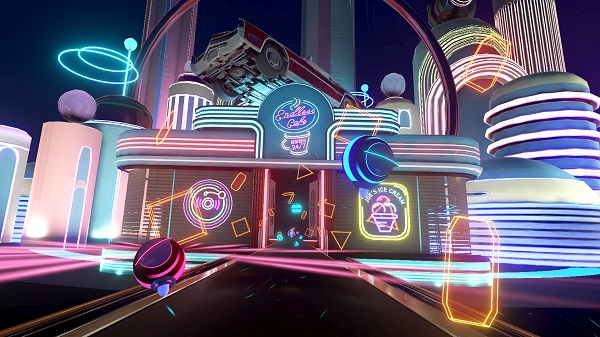
Mechanically, the DLC doesn’t reinvent Synth Riders’ flow – and that’s part of its charm. The familiar beat-mapping and responsive controls continue to reward rhythm awareness, a throughline across earlier releases where pacing and track selection defined enjoyment. Visually, the environments may not push the hardware in new directions, but they echo the track’s anthemic momentum, pairing visual flourishes with beat cues in a way that feels cohesive rather than disjointed. That said, players seeking extended length or multiple tracks might find this DLC’s single-song focus limiting when compared to larger collections. Still, for what it sets out to do – embody the sheer exhilaration of Queen’s rallying cry – it succeeds with polish and joyous immediacy.
In a landscape where rhythm VR continually experiments with both high-concept visuals and expansive playlists, We Are The Champions stands as a reminder that prowess lies not only in quantity but in the emotional punch of the right song delivered in the right format.
Monster Train 2: Destiny of the Railforged review (PS5)
Monster Train 2’s first paid expansion, Destiny of the Railforged, pushes Shiny Shoe’s already densely packed roguelike deckbuilder into even more ambitiously choreographed chaos. At its core is the Railforged clan, a faction thematically rooted in industrial ingenuity that leans hard into resource conversion and equipment coordination rather than brute force. Their central “Forge” mechanic reshapes decisions on every turn, making the pace feel more cerebral and mid-combat choices weightier, though it doesn’t radically reinvent the base game’s rhythm. This new clan adds welcome mechanical depth, but also ramps up cognitive load, especially on standard runs where understanding the many synergies between units, equipment, and floor placement becomes essential.
The Soul Savior mode is the other headline addition, a gauntlet of boss encounters that reframes the progression loop into a concentrated succession of brutal confrontations. Here, powerful meta-upgrades called Souls define your growth: these unlockable and levelable artifacts can utterly warp your deck’s capabilities, turning regular cards into absurd powerhouses. While this system shines as a compelling carrot that rewards repeated play and experimentation, its imbalance at higher levels can make certain builds feel “auto-win” situations once you hit the right combination, blunting some of the tension that makes Monster Train 2 so addictive.
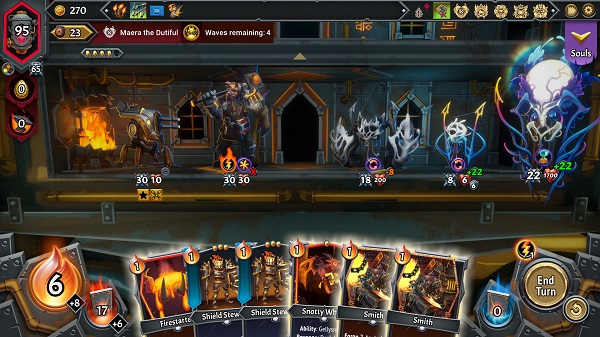
Narrative and thematic elements remain peripheral at best, with story beats framing the Lifemother and her cohort more as obstacle than character. There’s a sense of spectacle in the cosmic settings of Soul Savior and the wilder enemy designs, but these moments rarely coalesce into a motivating narrative arc. Visually and aurally, Monster Train 2 continues its quirky, brightly drawn style – the screens are busy but readable, and sound cues help differentiate the growing pile of statuses and effects – though relative newcomers might feel overwhelmed by the sea of icons and triggers before them.
Despite occasional frustration with its steep difficulty spikes and the feeling that the expansion sometimes deepens an already crowded design ethos, Destiny of the Railforged succeeds in making Monster Train 2 feel newly alive. The Railforged inject fresh tactical identity into standard runs and offer satisfying payoff to inventive play, while Soul Savior’s intense, high-stakes pacing makes veteran players reconsider familiar strategies. It is the kind of expansion that may not win over every hesitant strategist, but for those already invested in the deckbuilder’s loop, it’s a hefty dose of combustible fun that justifies its presence alongside the base game.
 Press Play Media