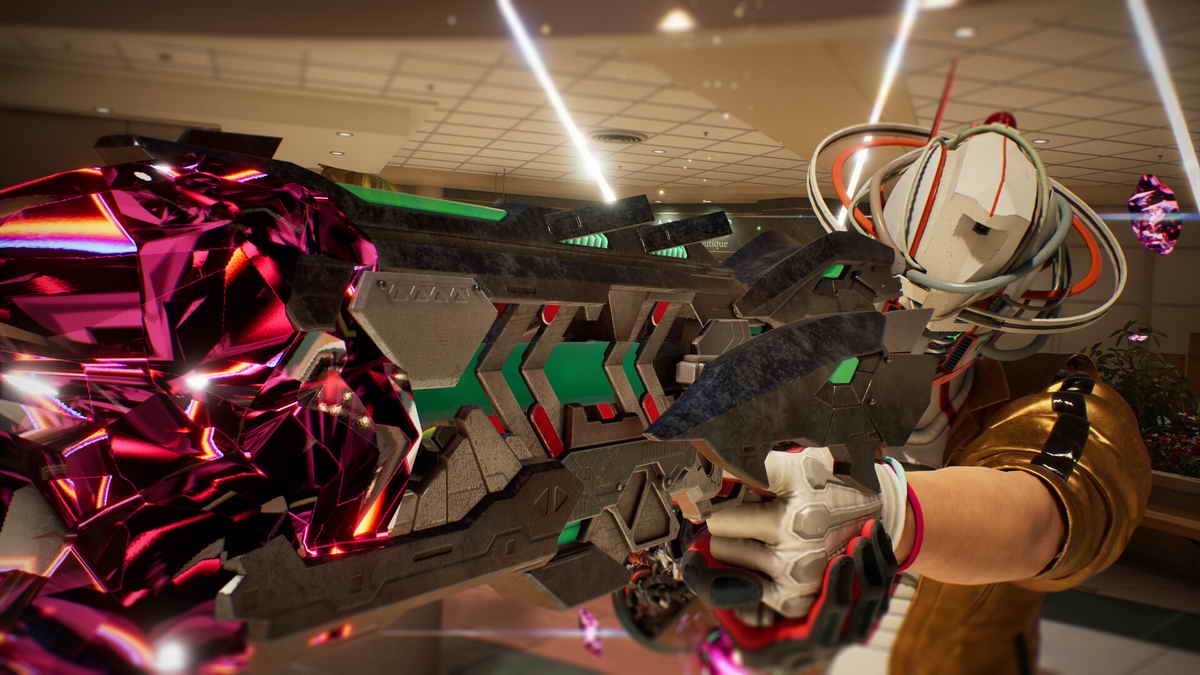
From the moment you take control of Romeo Stargazer, Romeo Is A Dead Man announces itself as a game unconcerned with conventional structure – both narratively and mechanically. Grasshopper Manufacture’s latest PS5 outing, under the direction of iconic developer Suda51, blends an eccentric love story with a sprawling hunt across fractured space-time for Romeo’s missing Juliet. The core conceit – a romance tangled with cosmic justice – is far more imaginative than most action titles, and this creative ambition is woven through the game’s episodic chapters and chaotic tonality. This isn’t a tight narrative in the traditional sense; it’s a kaleidoscope of pop-culture nods, weird humor, and unabashed genre mashups that will delight some and confound others.
The strength of Romeo lies in how it leans into that creative chaos. The universe it presents feels lived-in and occasionally astonishing, with set pieces that range from macabre pulp to outright surreal. Characters like Romeo himself, his chatty grandfather sidekick, and the menagerie of foes – from grotesque zombies to bizarre bosses – give the adventure a memorable cast. The visual presentation on PS5 jumps between diorama-like scenes and fully 3D environments, punctuated by comic-style panels and animated vignettes, demonstrating a striking aesthetic variety that supports the game’s thematic disarray. The soundtrack and voice performances further elevate these set pieces, providing a surprisingly robust audio identity that underscores the game’s punk-ish personality.
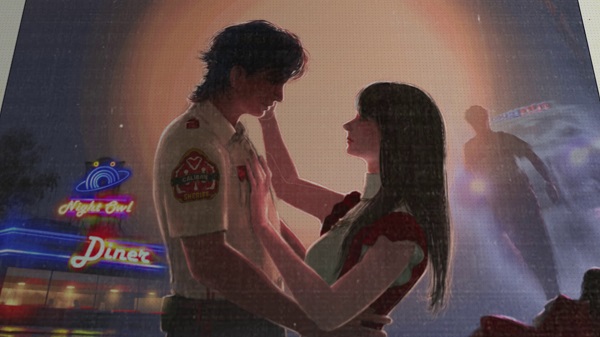
Yet, as with many of Suda51’s past works, Romeo’s narrative ambition is a double-edged sword. Where the creative vision is strongest, the storytelling occasionally becomes opaque, with plot threads and genre jumps that can feel too abrupt or underdeveloped. The result is a tale that’s distinctive and vivid but doesn’t always cohere in service of a compelling emotional arc for its protagonist. Players looking for narrative clarity might find themselves lost in the rapidly shifting tones and interdimensional logic. This is a stylistic choice, and one that will feel on-brand for long-time devotees of Grasshopper’s weirdness, but it can be polarizing.
If the narrative is a fragmented fever dream, the gameplay often mirrors that sensation. Combat in Romeo Is A Dead Man blends swords and guns across varied arenas with brutal, splashy results. There’s a visceral satisfaction in landing combos and unleashing the brutal “Bloody Summer” special attacks that convert enemy blood into devastating power. The weapons are upgradable and offer some tactical variety, and the inclusion of quirky systems – such as minigames aboard the ship or bonus survival scenarios – gives the experience unexpected breadth. There are moments of genuine creativity in how these systems interact and break up the core loop of hack-and-slash chaos.
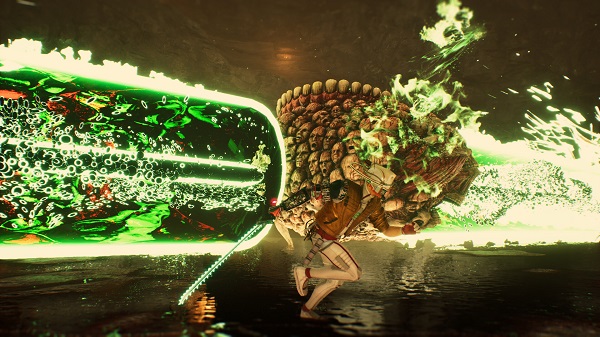
However, this breadth doesn’t always translate into depth. The combat, while flashy and energetic, lacks refinement and can devolve into repetitive encounters, especially outside of key boss battles. The level design occasionally feels uninspired, with environments that lean heavily on style over functional clarity – a design philosophy that makes some encounters feel unfair or overly cluttered. The challenge curve is uneven: some segments rush forward with invigorating intensity, while others stall with filler content that neither enriches nor meaningfully expands the core mechanics.
Technically, the experience on PS5 is similarly mixed. The game’s ambitious visual direction and multi-style presentation are impressive, but performance can struggle under the weight of that ambition. Several technical issues – notable frame rate dips and resolution scaling – detract from combat’s kinetic punch and hamper immersion during the most chaotic moments. While the PS5 version generally runs and loads predictably, these hitches are conspicuous enough to pull attention away from otherwise compelling spectacle, and they serve as a reminder that even high-end hardware can struggle with the title’s maximalist tendencies.
This rough-edged nature is both Romeo’s greatest allure and its most persistent flaw. At its best, the game is a testament to Grasshopper Manufacture’s willingness to take creative risks and build something that refuses to be polished into bland conformity. Its bold aesthetic shifts, unapologetically bloody combat, and off-kilter storytelling make it a title that will stick with you – for better or worse. For fans of Suda51’s distinctive brand of irreverent action and narrative weirdness, there’s a deeply satisfying core experience here. For others, the uneven pacing, technical rough spots, and narrative opacity may make Romeo Is A Dead Man feel like a potential masterpiece that didn’t quite find its footing.
In the end, Romeo Is A Dead Man is unmistakably a Grasshopper Manufacture game – imperfect, unorthodox, and defiantly original. It’s an experience that demands patience and openness to artistic eccentricity, and those who meet it on its own terms will find a unique journey that stands apart from the predictable mainstream. Whether it stands the test of time may depend as much on the player’s tolerance for beloved creator quirks as on the game’s many audacious ideas.
Score: 7.5/10
 Press Play Media