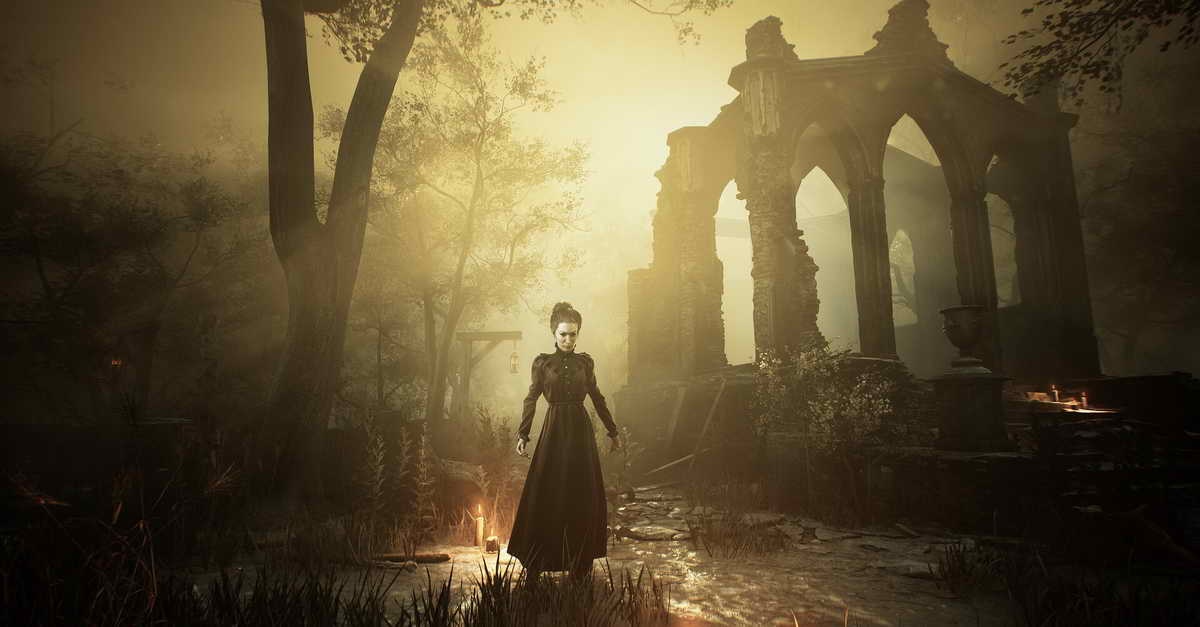
Soulslinger: Envoy of Death is a bold gamble from Headup and Elder Games that strives to carve out a unique identity where western pulp, fantasy, and roguelike FPS action collide. At its narrative heart sits a protagonist resurrected into Limbo by Death itself, tasked with confronting a soul-harvesting cartel and ultimately its cursed king – a setup that promises thematic depth beyond ordinary genre fare. This narrative framing, while occasionally treading familiar ground, invests players in an emotional arc of loss and obsession that unfolds through encounters with memorable NPCs and shifting stakes as the story progresses. The world of Haven feels lived-in, and its blend of eerie atmosphere and western motifs gives Soulslinger a cinematic weight that few indie shooters match.
Mechanically, Soulslinger pulls from well-worn roguelike and arena shooter traditions, but bolsters them with enough distinct elements to sustain curiosity through initial hours. Combat is fast, visceral, and centered on frenetic gunplay – merging elemental enhancements, dual weapon loadouts, and active/passive abilities that reshape each run. The loop of entering Limbo, accruing essences and Tears, and returning to Haven to unlock permanent upgrades embeds a satisfying sense of progression, even as setbacks remind players of the genre’s inherent challenge. This design keeps runs brisk and unpredictable, ensuring that each foray feels distinct, especially as weapon crafting and build experimentation deepen strategic engagement over time.
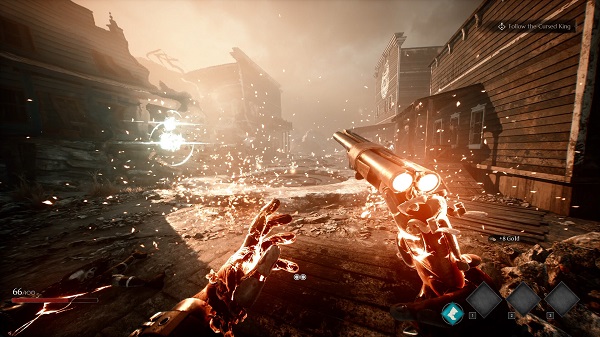
Yet that very momentum the game cultivates is undermined at times by execution that feels rough around the edges. Performance remains inconsistent – with frame rate dips and technical hitches undermining pacing in otherwise tight arenas – and enemy design often leans toward repetition, leaving encounters to feel familiar rather than escalating in menace. These hiccups, particularly when mixed with frequent reload penalties and repetitive arena layouts, can dilute what should be relentlessly kinetic combat into something more stodgy and predictable after extended play.
Control responsiveness on PlayStation 5 generally supports the game’s breakneck pace, but not without quirks. Aiming and movement feel serviceable – the dash and melee options add tactical variety – yet certain targeting behaviors and menu navigation issues can distract from what should be seamless engagement. These minor frustrations, while not deal-breaking, accumulate over prolonged sessions and demand patience from the player, particularly in a genre where responsiveness is paramount.
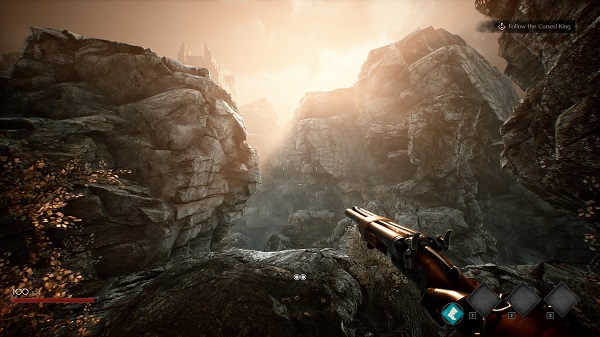
Visually, Soulslinger is at its best when it leans into its thematic fusion of dusty frontier and eldritch horror. The environments often crackle with personality, and the use of dynamic lighting and detailed effects imbues arenas with character. The visual identity is complemented by an ambitious audio design: aggressive soundtracks, punchy weapon effects, and expressive voice performances layer together to craft an atmosphere that feels cinematic even amid chaos. These elements help anchor the player in the relentless turmoil of Limbo, drawing attention back to the world even when gameplay loops reiterate familiar patterns.
Ultimately, Soulslinger: Envoy of Death is a game defined by promise more than polish. Its core ideas – a story-driven loop of death and rebirth, a rich thematic fusion of genre tropes, and a combat system that rewards experimentation – are compelling. Yet inconsistent pacing, technical roughness, and design redundancies hold it back from achieving the fluid excellence it hints at. For players drawn to audacious worldbuilding and tough, thoughtful roguelikes, it offers enough to keep firing rounds into the void; for those seeking unrelenting refinement out of the box, this is a project that peeks at brilliance while still polishing its edges. Soulslinger demands perseverance, but within its haunted halls lies the skeleton of a truly remarkable shooter should further refinement arrive.
Score: 6.9/10
 Press Play Media