
Recent downloadable content drops have taken markedly different routes to extend their respective base games, yet all three that we’re checking out today underscore how post-launch support has become less about padding and more about sharpening identity. From the iconic grind of Diablo II: Resurrected to the dust-choked tactical rigor of Dustwind: Resistance and the high-stakes pugilism of Fatal Fury: City of the Wolves, these DLC packs don’t attempt wholesale reinvention. Instead, they probe the strengths of their foundations – whether that’s systemic depth, unforgiving combat design, or legacy-driven spectacle – and ask how far those pillars can be pushed.
Diablo II: Resurrected – Reign of the Warlock review (PS5)
Blizzard’s Reign of the Warlock DLC for Diablo II: Resurrected feels like both a celebration and a compromise. On the one hand, this is the first truly new content the 26-year-old (!) classic has seen in decades, anchored by the Warlock – a class built on taboo academia and demonic manipulation that injects fresh life into Sanctuary’s familiar bones. The premise of wielding forbidden magic and commanding demonic forces carries real narrative and mechanical weight, even if the expansion doesn’t extend the core story with a fully fleshed act or cinematic arc to contextualize why this power emerges now.
In practice, the Warlock plays distinctly from the original roster: its builds range from strategic demon binding and resource management to hybrid melee-caster schemes and chaos-centric screen-clearing magic. This breadth gives long-time players new toys to tinker with, and as such the class reshapes endgame possibilities. However, the balance feels a bit raw at launch, with certain skill combinations overshadowing others and making the learning curve feel uneven compared to more seasoned classes.
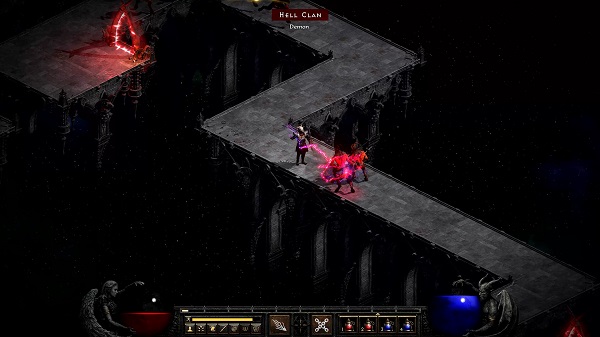
Mechanically, Reign of the Warlock does a lot right. Outside of the Warlock itself, quality-of-life improvements – most notably a built-in loot filter, expanded stash tabs that finally stack items meaningfully, and the Chronicle system to track and reward collection – modernize the experience without diluting its classic identity. Terror Zones and the gauntlet-style Colossal Ancients encounters give veterans fresh challenges to master, and these additions feel engineered to keep the late game feeling active rather than repetitive. Even so, this DLC is best appreciated by those already invested in grinding and optimizing; the lack of a narrative centerpiece or wholly new exploration content makes it less compelling for more casual players or those who have been away from the game for a long time.
On PlayStation 5, the controls and audiovisual presentation still uphold Diablo II’s dark, gothic atmosphere while smoothing over many of the earlier interface and clarity frustrations. The audio cues and visual effects for Warlock abilities have enough weight to feel satisfying, and the new endgame encounters look and sound appropriately brutal. Still, there are some technical inconsistencies and occasional visual glitches – issues that may be resolved over time but underscore how polished the experience feels in some areas and a little rough in others.
In the end, Reign of the Warlock chiefly succeeds where it matters most to its core audience: it expands the sandbox with genuinely new content and systems that reward mastery, and it refines the base game in ways many fans have wanted for years. That said, its narrative under-delivery and uneven balancing remind you that this is an update rooted in celebration rather than reinvention. Fans of deep ARPG systems will find plenty to love; those hoping for an epic new chapter in the Diablo II saga may feel the need for more.
Dustwind: Resistance – Canyon Cross review (PS5)
The Canyon Cross DLC for Dustwind: Resistance sees developer Dustwind Studios and publisher Z-Software double down on the base game’s brand of deliberate, squad-based tactical combat. Set after the fall of the Warlord, the expansion shifts focus to defending an allied settlement threatened by a new raider general, weaving its narrative through sun-scorched battlefields and the discovery of a sealed military bunker. The premise doesn’t dramatically reshape the world, but it effectively reinforces the grim, survivalist tone that defined the original, leaning into tension rather than spectacle. It’s a continuation rather than a reinvention, and that consistency works in its favor.
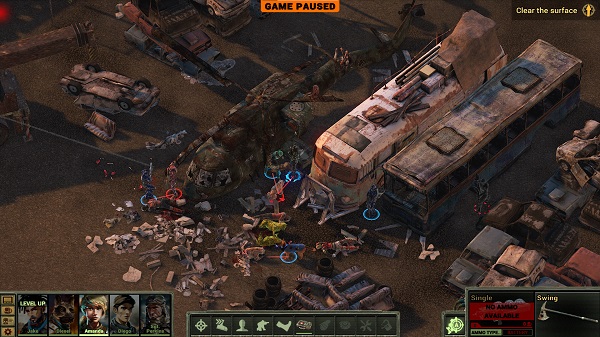
Gameplay remains rooted in tight positioning, careful resource management, and short but punishing firefights. Canyon Cross intensifies that formula by dramatically increasing enemy presence; ambushes are frequent, and encounters often escalate just when you think you’ve regained control. Robot snipers, heavily armed Titans, and multi-directional assaults force constant reassessment of tactics, making retreat and regrouping legitimate strategies rather than signs of failure. The trade-off is pacing: missions can stretch long, with individual operations demanding sustained concentration and occasionally testing endurance more than tactical creativity. On PlayStation 5, the control scheme still translates the methodical squad commands competently to a controller, though the inherent complexity of managing positioning under pressure can feel slightly less precise than with a mouse, particularly during chaotic multi-angle attacks.
The DLC introduces new weapon options and set-piece elements such as bunker exploration and high-powered military hardware, which inject welcome variety into the combat sandbox. These additions encourage experimentation with loadouts, reinforcing the idea that success stems from preparation and adaptability rather than raw firepower. Visually, the expansion retains the bleak, dust-choked aesthetic of the base game, with environments that emphasize tactical readability over flamboyance. Audio design supports the tension effectively, from the sharp crack of gunfire to the mechanical menace of robotic adversaries, though it doesn’t significantly expand the sonic palette established in the base game.
Ultimately, Canyon Cross is tailored for players who appreciated Dustwind: Resistance for its unforgiving combat loop and tactical rigor. It delivers denser encounters, sharper spikes in difficulty, and enough new tools to justify another deployment, but it rarely pauses to offer narrative breathing room or mechanical evolution. For those seeking a concentrated challenge that amplifies what already worked, this DLC is a solid and gritty addition. Players hoping for a more story-driven or mechanically transformative expansion, however, may find its relentless tempo and extended missions somewhat exhausting.
Fatal Fury: City of the Wolves – Nightmare Geese review (PS5)
Even within a title as robust as Fatal Fury: City of the Wolves, the Nightmare Geese DLC takes the established world of South Town and imbues it with a haunting edge that both honors and intensifies the series’ legacy. The spectral incarnation of Geese Howard drips menace from every frame, backed by a moveset that mixes old-school punch-and-counter fundamentals with eerie, supernatural flair – from air-based projectiles to bone-crushing grabs that keep you guessing. The narrative framing dovetails appropriately with the DLC’s theme: you’re not just fighting a boss, you’re confronting the echo of a legend whose legacy refuses to fade.
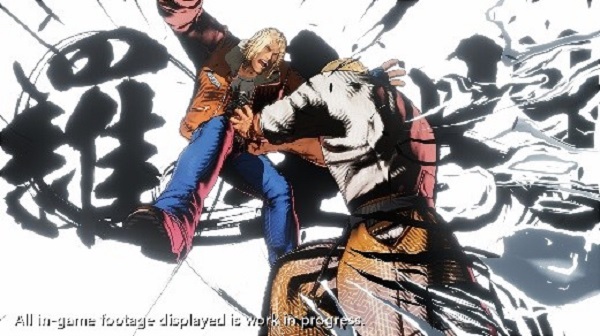
What truly defines this DLC, however, is how Nightmare Geese functions as a character and encounter. His revised toolkit amplifies his trademark pressure game with faster projectile recoveries, oppressive counter options, and punishing command grabs that make defensive hesitation costly. The fight itself is deliberately gated behind specific modes and requirements, turning him into more than just another roster addition – he feels like a challenge meant to be sought out and conquered rather than casually sampled. That partial exclusivity enhances his mystique, but it also limits accessibility; players looking for immediate integration into every mode may find the structure restrictive. Still, when the mechanics click, the new duels become a tense exercise in spacing and timing that rewards patience and clean execution.
Audio and visual presentation reinforce that tension without gimmickry. A spectral palette and authoritative voice performances give Geese’s darker persona weight, while the sharper animation beats and impact effects sell the brutality of his enhanced techniques. There are moments where the difficulty spike and narrow encounter parameters verge on frustration, especially for less experienced players, but that severity also aligns with the character’s mythic status. As DLC, Nightmare Geese succeeds not by expanding breadth, but by sharpening intensity – a focused addition that turns South Town’s most infamous figure into its most oppressive trial, for an experience that is very distinct from the previous DLC character.
 Press Play Media