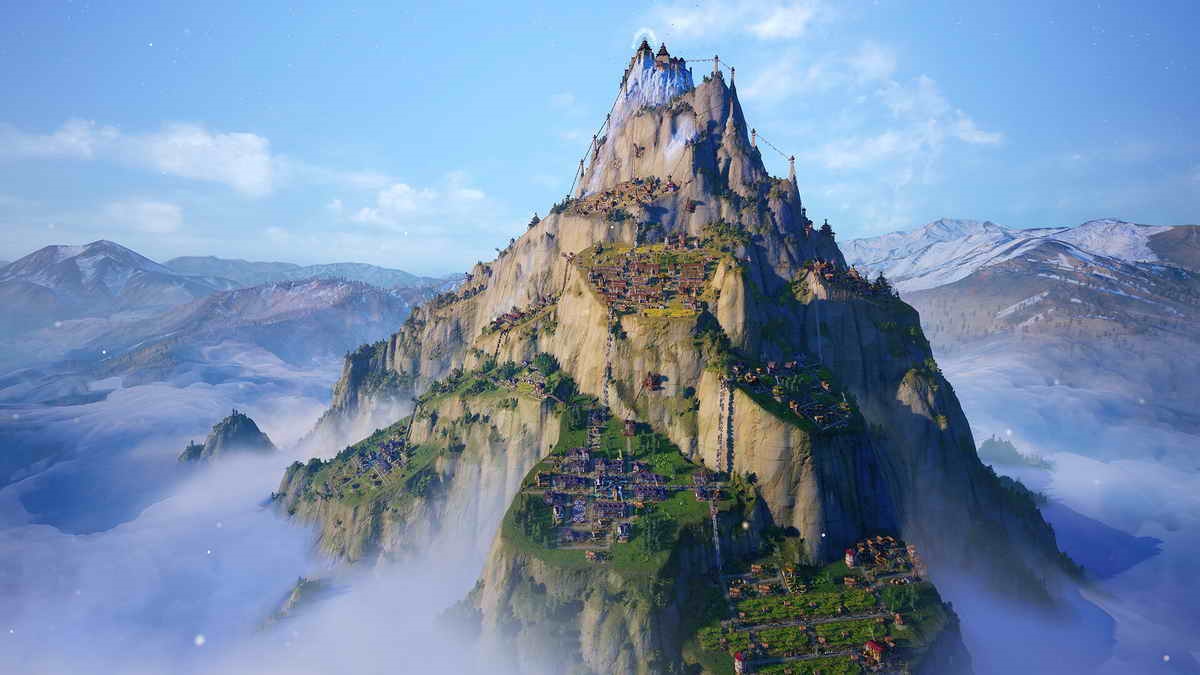
Laysara: Summit Kingdom’s lofty premise promises a fresh spin on the city-building genre: not sprawling plains or temperate valleys, but vertiginous cliffsides and snow-scarred ridges where every decision echoes through your fragile settlement. On PlayStation 5, this mountain-bound saga from Quite OK Games and Future Friends Games frames its challenge around environment, altitude, and logistics rather than warfare, thrusting you into the role of architect, planner, and risk manager for a people forced from the lowlands and dependent on your economic foresight. This conceptual leap is the game’s most compelling hook, and in many ways it succeeds: the towering peaks, cultural palette, and the constant tension between survival and expansion imbue a strong sense of context and identity that many city builders lack.
Gameplay in Laysara is a careful subversion of genre expectations. At its heart, it’s about the challenge of building up rather than out – managing narrow terraces, planning road networks across impossible terrain, and synchronising production chains that flow vertically as much as horizontally. This spatial constraint turns every new mountain into a strategic puzzle: where to position homes, how to keep yaks and workers moving efficiently, and how best to channel goods over cliffs and ravines. That intensifies the satisfaction of solving a tricky layout, even if it also invites frequent redesigns and retooling, especially when logistics go awry. The transport mechanics – bridges, shafts, and long roads – are inherently enjoyable when they click, but the long climb toward optimal efficiency occasionally saps momentum when routes fail or production stalls.
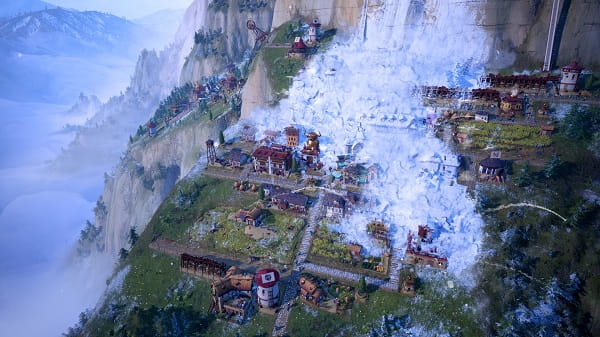
It’s worth noting that Laysara’s pacing and learning curve are significant hurdles. The game can feel daunting to newcomers, with limited tutorial clarity and a tendency for early missteps to wobble into systemic breakdowns hours later. Casual players or those expecting the gentler progression of other city builders may find themselves frustrated by the constant micromanagement and intricate chain dependencies. The absence of combat or dynamic external conflict – intentionally omitted to focus on economy and environment – means the gameplay loop depends entirely on internal challenge and the risk of environmental hazards like avalanches and harsh weather rather than enemy threats. This is a double-edged sword: it reinforces the thematic singularity of mountain survival, but it also highlights the repetitiveness that can creep in, where the core cycle doesn’t evolve dramatically after the first few hours.
Narrative and thematic presentation are handled with restraint rather than spectacle. The campaign provides structured objectives that help guide new players through the systems, and while the story framework isn’t the emotional centerpiece it might be in a narrative-driven strategy title, it does give context to your ascent and offers a sense of purpose beyond efficiency for efficiency’s sake. The cultural and aesthetic palette – drawing on Himalayan-inspired motifs and a soundtrack that underscores the serene but unforgiving altitude – sets Laysara apart visually and aurally from its peers, giving it a distinctive identity that feels calming and evocative even amid logistical frustration.
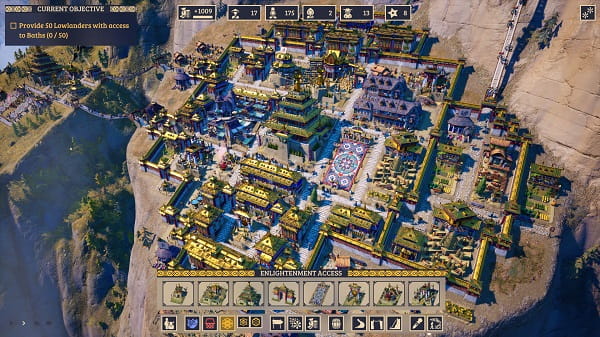
On PS5, controls and interface design are another area of nuanced success and occasional irritation. The gamepad adaptation works competently for navigating menus and placing structures, and the option to adjust UI size is a thoughtful touch for living room play. That said, complex networks and detailed transport links can feel fiddly on a controller compared to mouse and keyboard, particularly when managing overlays or checking connection paths.
In visual terms, Laysara doesn’t chase hyper-realism, but its clear, colourful terrains and atmospheric vistas make the climb worthwhile. The juxtaposition of lush lower slopes with stark snowfields gives each mountain its own personality, and units moving along cliffside roads lend your settlements a sense of life even as you fret over lack of space or looming avalanches. Audio complements this well: music and sound cues underscore the mood without ever dominating, though a bit more variety in the soundtrack would have been welcome.
Ultimately, Laysara: Summit Kingdom is a city builder that demands patience, thoughtfulness, and a willingness to embrace its idiosyncratic challenge. Its rewards are real – a satisfying sense of progression as a transport network finally hums, or when a refurbished settlement withstands a wild storm – but they’re earned with effort. For dedicated strategists who relish optimisation and environmental survival, it stands out as one of the more original entries in the genre in recent memory; for those seeking more variety, narrative depth, or a gentler learning curve, its mountain paths may feel too steep for repeated climbs. The highs are vivid and memorable, but the ascent, at times, feels long and exacting – a fitting metaphor for mountain-top city building itself.
Score: 6.6/10
 Press Play Media