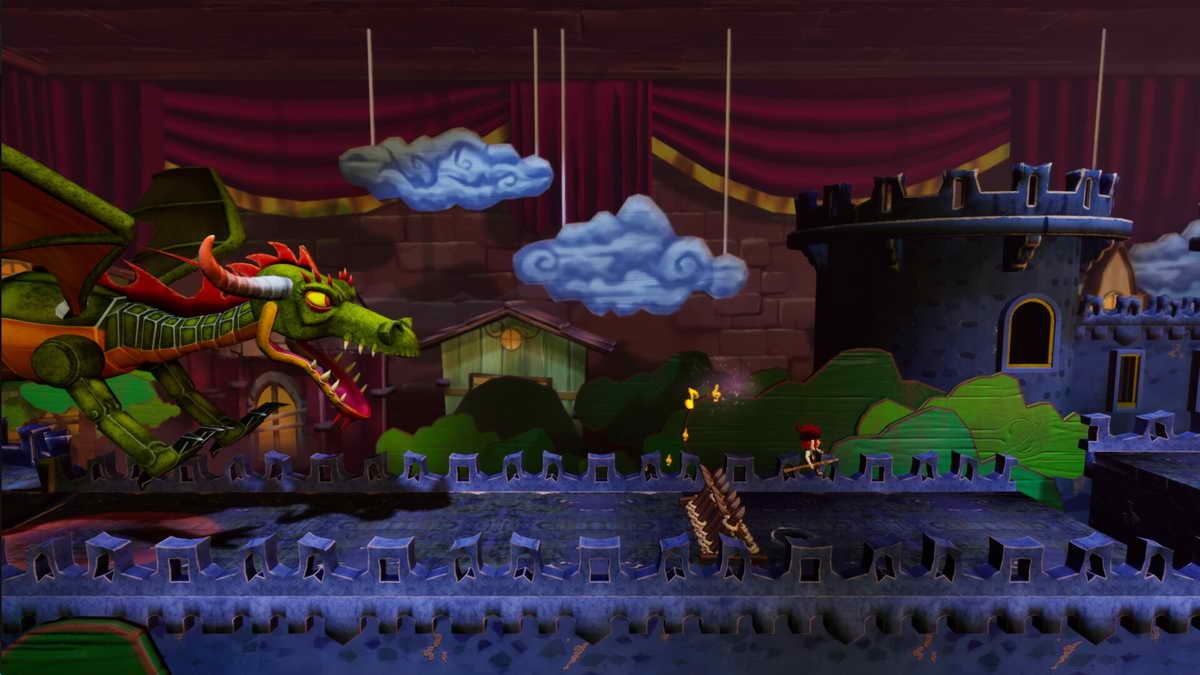
Developed by 3Cat and published by Jandusoft, Manairons is a 3D action-platformer rooted in Catalan folklore. Set in the Pyrenees, the game draws inspiration from regional myths about mischievous magical creatures known as manairons. Players take control of Nai, a recently awakened member of this species who emerges from a magical container known as the “canut” after centuries of confinement. With a local village falling under the control of an industrial-minded landowner named Llorenç, Nai’s quest becomes one of restoring balance by freeing fellow manairons and dismantling the machinery-driven chaos that has overtaken the once-peaceful settlement of Vilamont. The premise mixes humor, folklore, and environmental themes, giving the adventure a distinctive identity, even if the story itself remains fairly lightweight and largely serves as a framework for the platforming challenges ahead.
The structure of the game revolves around exploring different businesses and locations throughout Vilamont, each functioning as a themed level filled with platforming obstacles, puzzles, and enemies. Progression often hinges on learning magical melodies that Nai can play on a flute, which allows control over other manairons or triggers environmental interactions. This musical mechanic gives Manairons its most distinctive gameplay twist, blending puzzle-solving with action-platforming in ways that encourage experimentation. At times the puzzles strike a satisfying balance between logic and exploration, but there are moments where trial-and-error can slow the pacing, particularly when solutions are not immediately clear.
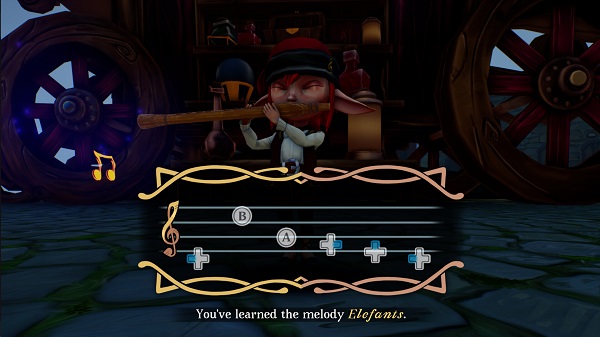
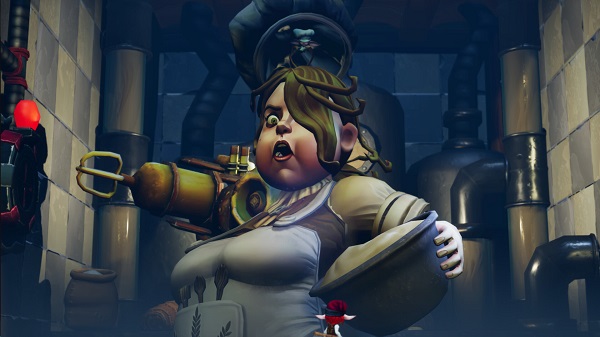
Combat is woven into this formula in a fairly straightforward way. Nai uses the flute not only as a puzzle-solving tool but also as a weapon against hostile manairons who are working for Llorenç. Encounters generally focus on stunning or disabling enemies rather than complex combat systems, keeping the emphasis on platforming and traversal. Boss encounters help break up the rhythm of exploration, introducing larger foes that often test the player’s understanding of the mechanics learned in previous sections. While these battles add variety, the combat itself can feel somewhat simplistic compared to the more creative puzzle elements.
Movement and platforming form the backbone of the experience, and the controls largely support that focus. Jumping, climbing, and navigating vertical spaces feel responsive, making the core traversal enjoyable across the game’s environments. That said, some aspects of the movement system can occasionally feel rough around the edges, particularly during more demanding sequences that require precise timing or positioning. Camera limitations can also make it harder to locate collectibles or judge jumps accurately in certain situations, which may lead to repeated attempts on the same sections.
Visually, Manairons embraces a colorful, stylized aesthetic that reflects its folkloric inspiration. The village environments and surrounding mountain landscapes are filled with charming details, giving each location a distinct personality. Character designs lean into exaggerated shapes and expressive animations that suit the playful tone of the game. While the art direction succeeds in creating an appealing world, the overall graphical fidelity is closer to a modest indie production than a technical showcase, and occasional rough edges in textures or animation remind players of the project’s smaller scale.
The audio design complements the visuals nicely, with a soundtrack that reinforces the whimsical atmosphere of the adventure. Musical cues and sound effects often tie directly into gameplay, especially through the flute-based mechanics that drive many of the puzzles. Environmental sounds and character effects help give the world a lively feel, although voice work and dialogue remain fairly minimal. The result is an audio presentation that supports the tone of the game effectively without ever becoming overly elaborate.
Taken as a whole, Manairons delivers a lighthearted platforming adventure built around a distinctive cultural inspiration. Its mix of musical puzzle mechanics, exploration, and folklore-driven storytelling gives it a personality that helps it stand out among indie platformers. At the same time, occasional camera quirks, uneven puzzle clarity, and relatively simple combat prevent it from reaching the heights of the genre’s most polished examples. Still, for players looking for a charming and culturally flavored platformer with a playful sense of identity, Manairons offers a journey that is easy to appreciate despite its rough edges.
Score: 6.8/10
 Press Play Media