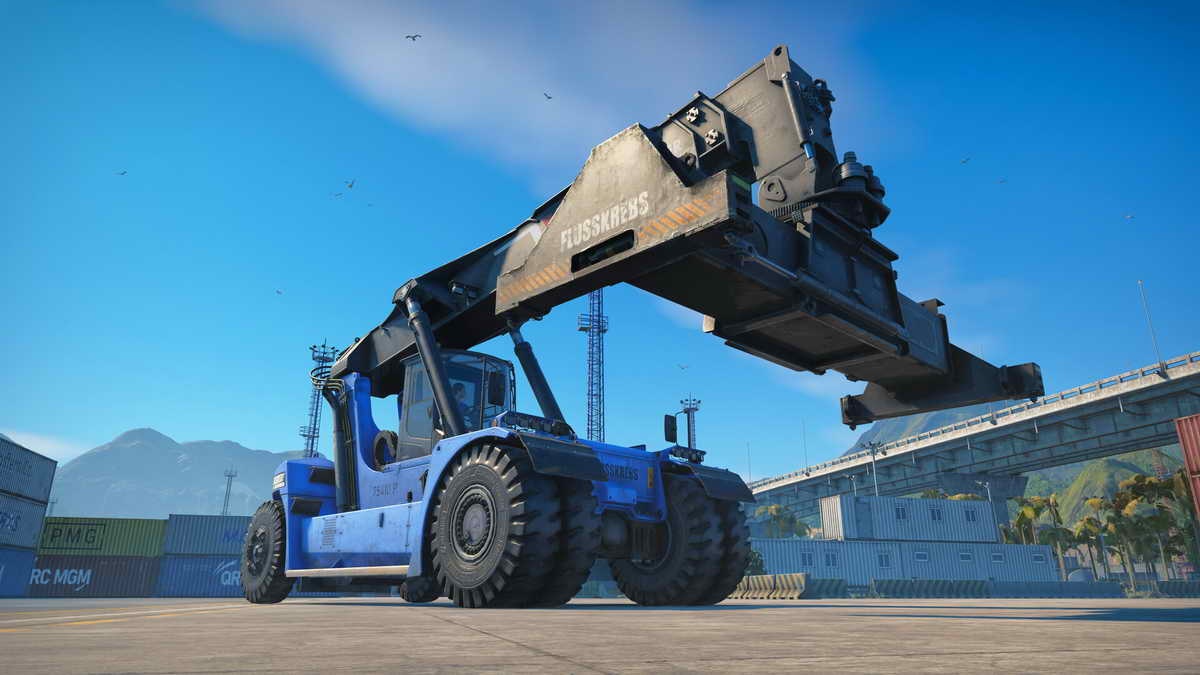
Docked sees Saber Interactive stepping into the niche world of industrial simulation, swapping muddy trails and wilderness logistics for the bustling machinery and tight logistics of a working port. Set in the recovering harbor of Port Wake after a devastating hurricane, the game frames its operations around rebuilding a family-run dockyard while restoring supply chains and infrastructure. While the premise provides just enough narrative motivation to contextualize the work ahead, Docked ultimately leans far more on its simulation mechanics than on storytelling, using the rebuilding effort mainly as a framework for a steady stream of contracts and operational challenges.
At its core, Docked is about mastering heavy machinery and understanding how each job connects to a broader logistical chain. Players move cargo from ship to shore, load trucks for distribution, and maintain equipment that slowly wears down under constant use. This structure creates a satisfying rhythm once the systems click: unloading containers, moving materials into storage, and preparing outbound shipments becomes a carefully choreographed process where precision matters. The game’s emphasis on planning and execution gives it a deliberate pace that simulation fans may appreciate, though newcomers may find the learning curve steep and occasionally unforgiving when small mistakes disrupt an entire job sequence.
Operating the dock’s vehicles forms the backbone of the experience, with cranes, forklifts, and heavy tractors all behaving with a weighty sense of scale. The handling model tries to balance accessibility with realism, asking players to maneuver delicate cargo through tight industrial spaces where a careless swing of a crane can cost both time and money. This attention to physicality gives Docked some of its most engaging moments, especially when complex lifts or tricky transport routes demand careful coordination. At the same time, the controls can feel cumbersome, particularly during the early hours when the game expects players to juggle multiple machines and responsibilities without much room for error.
Beyond individual tasks, Docked gradually expands into a management-lite experience as contracts bring in revenue that can be reinvested into new vehicles, infrastructure upgrades, and additional storage space. Expanding the port introduces a welcome sense of progression, turning the dock into a slowly evolving industrial hub. Still, the structure can become repetitive over time, with many contracts relying on similar cargo loops that begin to blur together after several hours. The sense of running a living harbor is compelling in theory, but the mission design occasionally struggles to keep the routine feeling fresh.
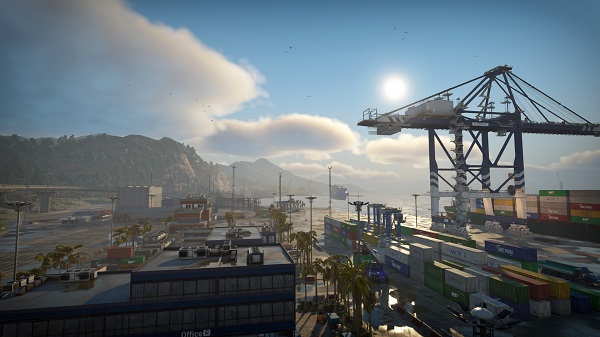
Visually, Docked captures the gritty atmosphere of a working harbor reasonably well, with imposing cranes, container stacks, and industrial equipment giving Port Wake a believable sense of scale. Watching massive machinery swing cargo across the docks reinforces the game’s focus on physical labor and heavy industry. However, the presentation can also feel inconsistent, with environments that sometimes appear sparse and technical shortcomings that undermine the otherwise grounded aesthetic. Lighting and environmental detail fluctuate depending on the area, making the port feel convincing in some moments and noticeably less polished in others.
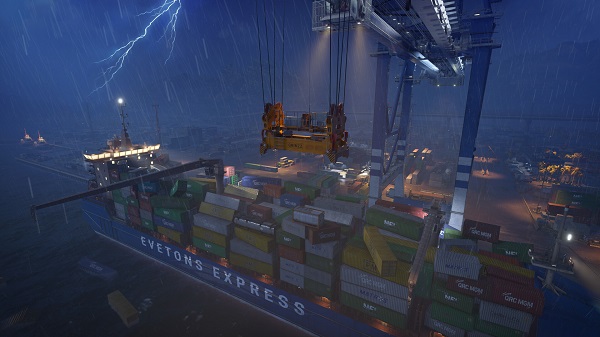
The audio design reinforces the simulation angle, with engines rumbling, cranes groaning under heavy loads, and machinery clanking through repetitive tasks. These industrial sounds help sell the fantasy of operating a busy harbor, even if the soundtrack itself tends to fade into the background rather than becoming a memorable part of the experience. As a result, the game’s atmosphere relies more on the mechanical soundscape than on musical cues, which works well for immersion but can leave quieter moments feeling somewhat empty.
Where Docked struggles the most is in its technical consistency. Performance issues occasionally interrupt the workflow, and when a simulation game depends heavily on precision and timing, even minor hiccups can become frustrating. Combined with the occasionally clunky interface and control quirks, these technical rough edges sometimes make routine tasks feel more cumbersome than they should. Still, for players who enjoy deliberate simulation experiences and the slow satisfaction of building an efficient operation from the ground up, Docked offers a distinctive setting that separates it from the more common farming or trucking simulators.
Docked ultimately succeeds in capturing the methodical satisfaction of port logistics, even if its execution doesn’t always match the ambition behind the concept. The detailed machinery and structured workflow can be absorbing for players willing to learn its systems, but technical hiccups, repetitive contracts, and uneven presentation prevent it from reaching the heights of the genre’s best examples. For simulation enthusiasts intrigued by the rarely explored world of harbor operations, Port Wake provides an interesting place to clock in – even if the shift sometimes runs a little rough.
Score: 7.7/10
 Press Play Media