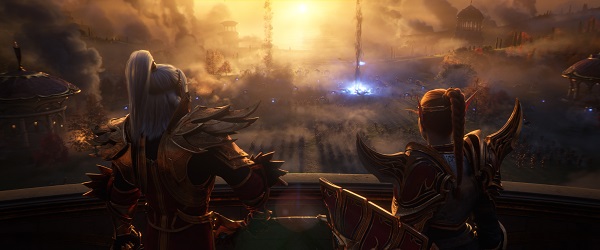
More than two decades after its original launch, World of Warcraft continues to evolve, and its eleventh expansion – World of Warcraft: Midnight – marks the second chapter of Blizzard’s ongoing Worldsoul Saga. Returning players find themselves back in the elven kingdom of Quel’Thalas, where the Void entity Xal’atath threatens to corrupt the Sunwell and plunge Azeroth into darkness. It’s a premise that leans heavily into Warcraft’s long-standing cosmic conflict between Light and Void, but it also taps into a deep well of nostalgia by revisiting one of the franchise’s most iconic regions. The story benefits from stronger character interactions than some earlier expansions, particularly through dialogue-heavy questlines involving familiar figures like Alleria Windrunner and Lor’themar Theron. At times, however, the narrative still falls into familiar MMO rhythms, where high-stakes lore is delivered between waves of routine objectives, making the pacing feel uneven even when the central conflict remains compelling.
Quel’Thalas itself is easily one of Midnight’s biggest draws. Blizzard has rebuilt the region on a much larger and more seamless scale, transforming areas such as Eversong Woods and Silvermoon City into sprawling hubs that encourage exploration. The redesigned capital functions as a shared hub for both factions and is visually striking, blending elegant elven architecture with subtle signs of the looming Void invasion. These locations balance nostalgia with modernization – longtime players will recognize familiar landmarks, but the environments have been expanded and refreshed enough to feel contemporary rather than purely nostalgic callbacks. That said, the expansion’s sense of discovery can fluctuate between zones, with certain areas feeling more fleshed out than others.
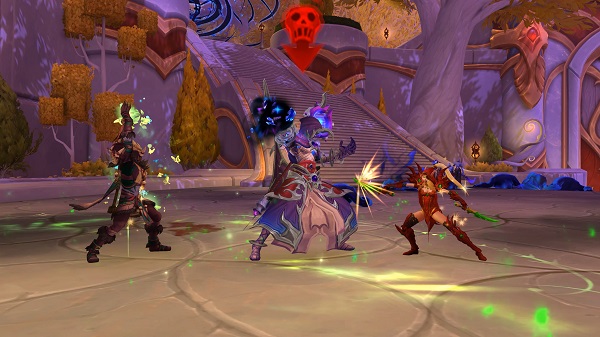
Gameplay-wise, Midnight follows Blizzard’s recent trend toward accessibility and flexibility. Systems like Delves – compact dungeon-like experiences designed for solo or small-group play – have been expanded further, allowing players to earn meaningful gear without always committing to traditional group content. This design philosophy makes the expansion particularly welcoming to casual or returning players, reducing the feeling of obligation that often comes with large MMO content updates. At the same time, traditional endgame pillars such as raids and dungeons remain intact, ensuring that the game’s most dedicated players still have challenging cooperative content to pursue.
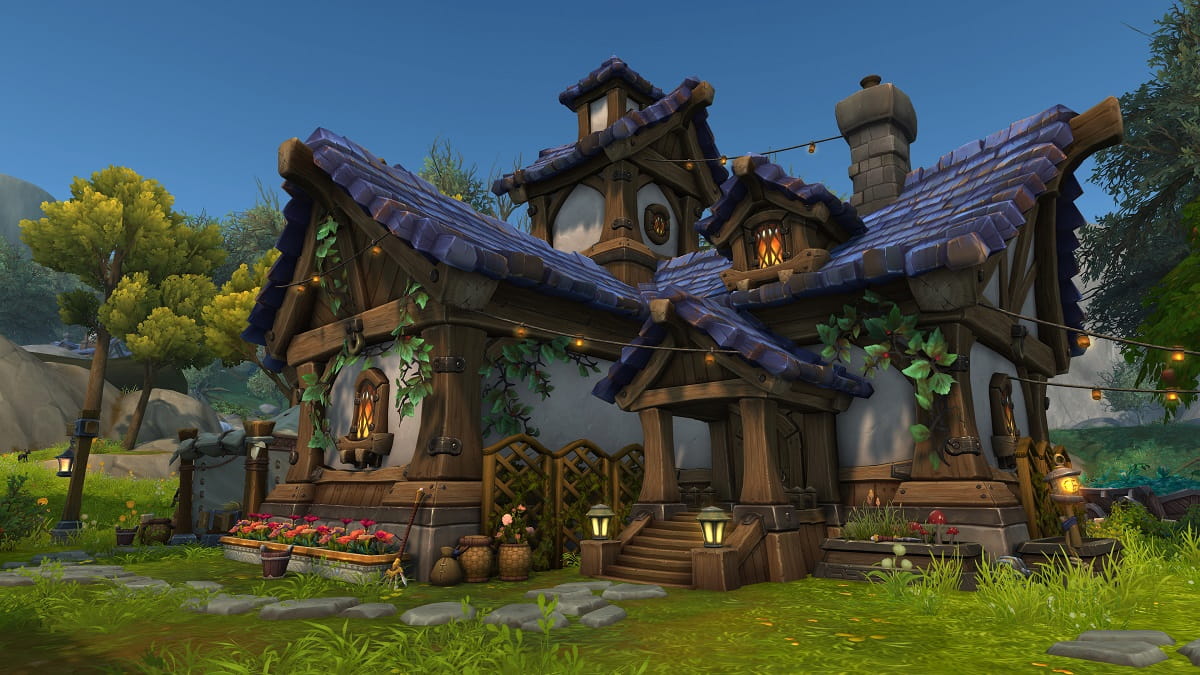
One of the expansion’s most widely discussed additions is player housing, a long-requested feature that finally gives players a personal space within Azeroth. Houses can be customized extensively and are placed in shared neighborhoods, allowing players to build communities with friends and guildmates. The system adds a surprising amount of creativity and personalization to the game, turning Azeroth into more than just a series of quest hubs. Still, its implementation isn’t entirely frictionless, as some customization options feel somewhat limited at launch or tied to systems that could expand further over time.
Combat and class design also receive a notable update with the addition of the Devourer specialization for Demon Hunters, which trades traditional fel-infused aggression for Void-themed abilities that emphasize mid-range combat. While thematically appropriate for the expansion’s darker tone, it doesn’t fully realize its potential mechanically. More broadly, the new “Prey” system introduces an opt-in open-world activity where players hunt powerful targets while being hunted themselves, adding tension and unpredictability to exploration. It’s an interesting twist on the usual questing loop, though its appeal tends to vary depending on how much players enjoy emergent world events.
From a presentation standpoint, Midnight maintains Blizzard’s reputation for strong environmental art and atmospheric audio. The expansion’s zones are rich with color and detail, from lush jungles to surreal Void-infused landscapes that distort gravity and space. The soundtrack complements these areas with sweeping orchestral themes and quieter ambient tracks that reinforce the sense of scale and looming cosmic danger. Yet despite the impressive visuals, the game’s underlying engine occasionally shows its age, and large player gatherings or densely populated areas can still impact performance depending on system configuration.
Ultimately, World of Warcraft: Midnight is less about reinventing the long-running MMORPG and more about refining the formula that has kept it relevant for so many years. Its mix of nostalgic worldbuilding, expanded solo-friendly systems, and traditional endgame content ensures that both veterans and newcomers can find something to enjoy. While the expansion may not dramatically reshape the structure of the game, it successfully strengthens many of its existing systems and reinforces the ongoing narrative arc of the Worldsoul Saga. For a game that has been evolving since 2004, that balance between familiarity and gradual improvement may be exactly what Azeroth needs right now.
Score: 7.8/10
 Press Play Media