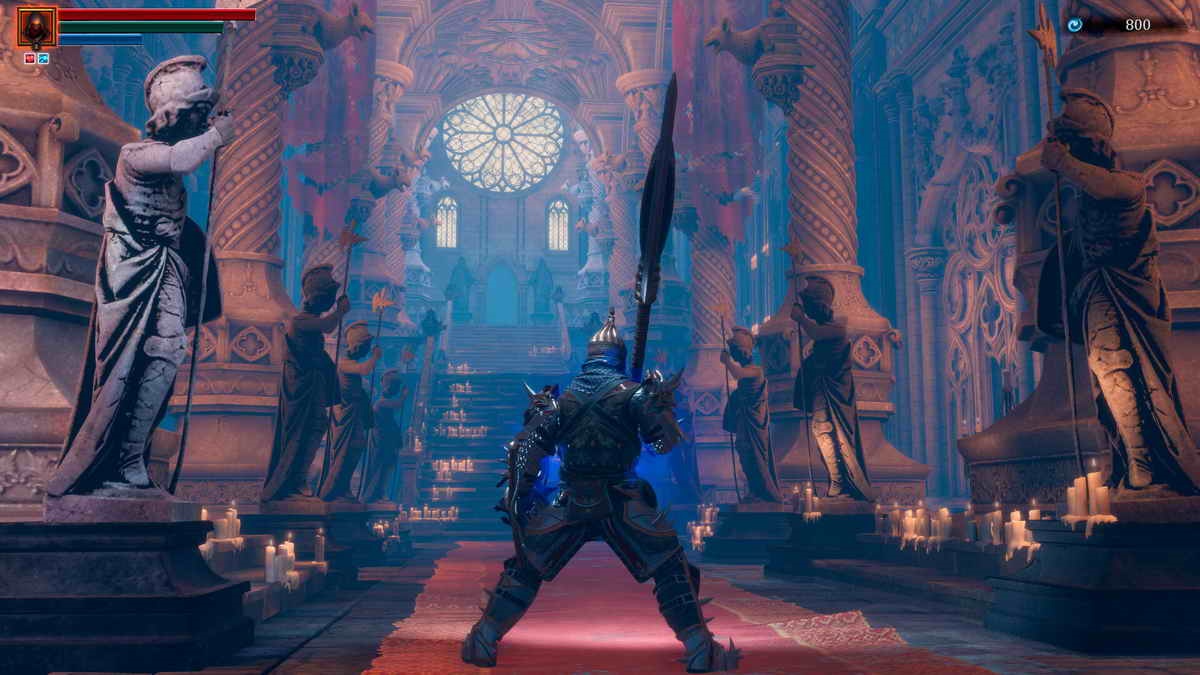
Dark Reaper Studio’s The Bearer & The Last Flame, published by Meridiem Games, positions itself squarely within the familiar territory of dark fantasy action RPGs inspired by the Soulslike formula. The premise is simple but evocative: the world of men has fallen to darkness, and the player assumes the role of a lone warrior entrusted with carrying the final spark of light across a series of hostile kingdoms. It’s a setup that leans heavily on genre staples – ruined kingdoms, demonic forces, and a solitary hero tasked with restoring balance – but it establishes a suitably grim tone that fits the game’s ambitions. Unfortunately, while the foundation hints at something atmospheric, the narrative presentation never fully capitalizes on that potential, with storytelling that often feels vague or underdeveloped and voice work that can be difficult to understand at times.
Structurally, the game attempts to follow the Soulslike blueprint quite closely. Exploration unfolds across interconnected regions filled with enemies, shortcuts, and rest points that function similarly to bonfires. Early on, players choose a character background that appears to promise different starting identities or builds, though the game provides little clarity on how meaningful these choices actually are in practice. While the environments suggest a larger world waiting to be uncovered, the narrative context tying everything together often feels thin, leaving much of the story implied rather than explored in depth.
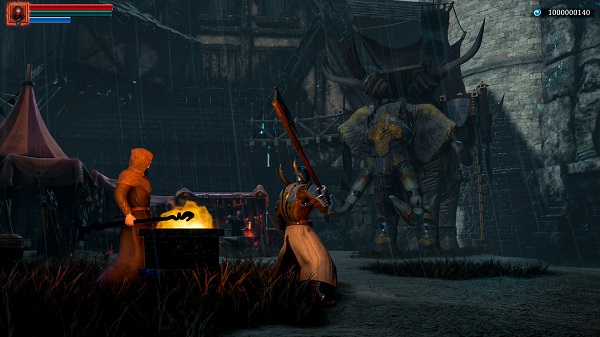
Combat forms the core of the experience, and it’s here that The Bearer & The Last Flame struggles to deliver the sense of weight and precision that defines the genre it emulates. Attacks can feel oddly floaty, with inconsistent hit detection and animations that sometimes swing between overly quick strikes and sluggish wind-ups. Dodging and blocking mechanics exist, but they don’t always provide the reliable feedback players expect, which can make encounters feel unpredictable rather than challenging. You’ll eventually find workable strategies – such as focusing on aggressive offense rather than carefully timed defense – but the system rarely reaches the satisfying rhythm that Soulslike combat typically depends on.
Enemy variety is one area where the game shows flashes of promise. Even within the early hours, players encounter a mix of knights, skeletal warriors, spellcasters, spiders, and larger monster types, suggesting an effort to keep encounters visually and mechanically varied. The world itself is divided into several themed locations that range from caves and tombs to forts and graveyards. However, these areas sometimes feel less distinct than they initially appear, with repeated environmental elements and layouts that can make exploration feel more repetitive than intended.
The game’s progression systems also introduce several frustrations. In theory, players gather currency from defeated enemies and use it to improve their character’s attributes or purchase equipment from hub-based merchants. In practice, technical problems disrupt this loop, including instances where leveling mechanics fail or produce incorrect results. Combined with the ability to bypass many enemies simply by running past them – since their pursuit range is often short – the result can be a progression system that feels unreliable and easily circumvented rather than carefully balanced.
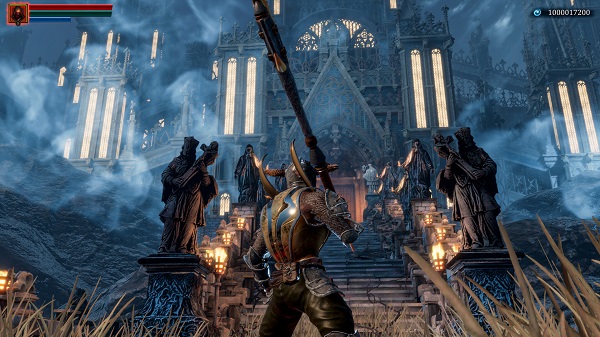
Visually, The Bearer & The Last Flame demonstrates a modest but occasionally striking dark fantasy aesthetic. Some environments manage to capture the bleak atmosphere the game is aiming for, and certain enemy designs fit comfortably within the grim medieval tone. At the same time, technical roughness frequently undermines these strengths. Environmental assets can repeat noticeably, lighting occasionally behaves oddly, and some areas appear unfinished or poorly signposted. Audio is similarly inconsistent, with atmospheric music and ambient sounds sometimes working well but voice acting and dialogue presentation proving less polished.
All of this leaves The Bearer & The Last Flame in an awkward position. Beneath its rough exterior lies the outline of a traditional Soulslike adventure with interesting locations, a respectable range of enemies, and a bleak fantasy world worth exploring. Yet technical issues, inconsistent combat feedback, and progression problems make it difficult to appreciate those ideas in their current state, no matter how impressive it is that this was mostly made by a single developer. For now, the game feels less like a fully realized entry in the genre and more like an early build that hasn’t quite reached its final form. With significant updates and refinement, the core concept could still develop into something worthwhile, but as it stands, this is a release that many players may want to approach with caution.
Score: 5.4/10
 Press Play Media