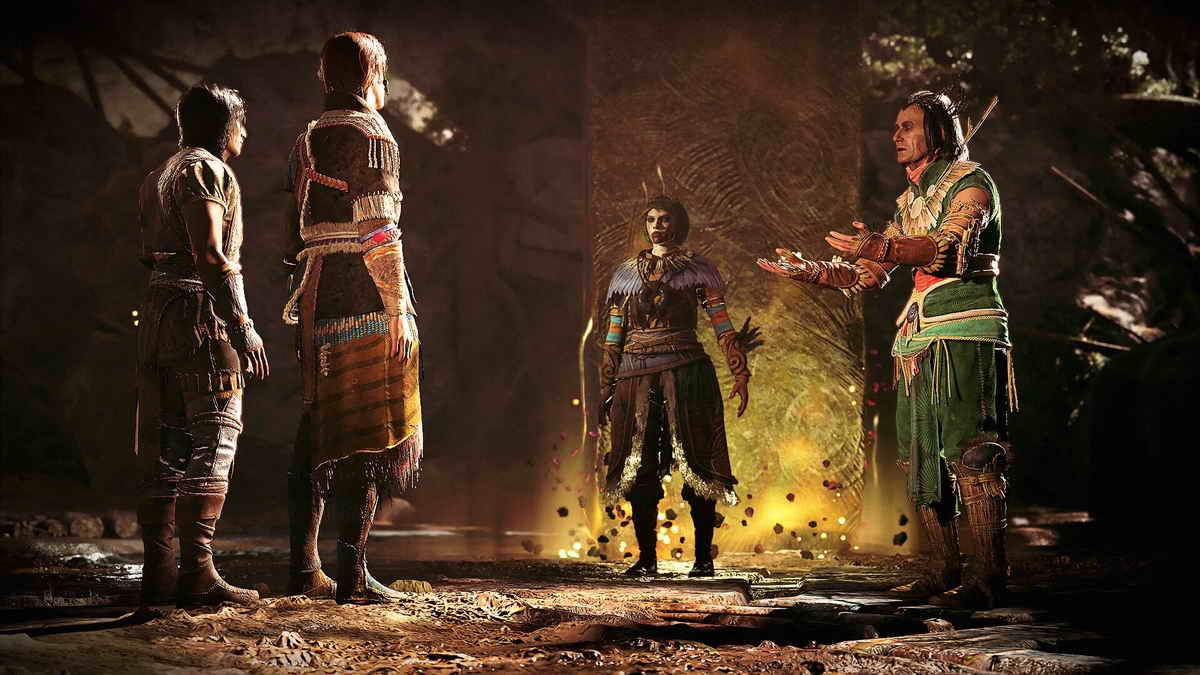
Developed by Spiders and published by Nacon, GreedFall: The Dying World revisits the studio’s colonial fantasy setting with a prequel that shifts the perspective in an interesting way. Rather than following a noble emissary from the Old Continent as in the original game, this story places players in the role of a native of Teer Fradee who is drawn into the politics and power struggles of Gacane, the homeland of the colonizing powers. It’s an intriguing narrative inversion that explores themes of exploitation, cultural conflict, and shifting alliances, and the game’s emphasis on player choice and faction relationships gives the story some welcome flexibility. However, while the premise is compelling, the narrative often struggles with pacing, taking several hours before the plot meaningfully opens up and occasionally presenting companions and dialogue sequences that lack the emotional impact the setup promises.
Much of the game revolves around assembling a team of allies and navigating the complex web of rival factions that dominate the continent. Conversations, diplomacy, and investigative quests are central to progression, and the branching dialogue options help reinforce the role-playing element that fans of the original GreedFall will recognize. That said, the writing can feel uneven at times, with certain characters lacking the depth or charm needed to carry the numerous conversations the game demands. While the political intrigue and moral dilemmas occasionally shine through, the overall pacing of the campaign means that the early hours in particular can feel sluggish before the story truly finds its footing.

One of the most significant changes compared to the first GreedFall is the shift in combat design. The Dying World abandons the original game’s more action-oriented battles in favor of a tactical real-time-with-pause system that echoes classic party-based RPGs. This approach allows players to halt combat to issue orders, position companions, and exploit enemy weaknesses, which can add a strategic layer to encounters when it works well. Unfortunately, the execution isn’t always convincing. Tutorials do a poor job of explaining the system’s deeper mechanics, and the interface can feel cumbersome, especially when juggling multiple abilities and party commands during chaotic fights. As a result, battles can sometimes feel more confusing than tactical, particularly in the earlier stages of the game when systems are still being introduced. Things are smoother on a second playthrough, but the game would benefit from smoother onboarding.
Outside of combat, the RPG systems are fairly extensive. Character progression includes attributes, talents, and skill trees that allow for different playstyles, from diplomatic problem-solvers to stealth-focused explorers or more combat-oriented builds. However, the way some of these mechanics are implemented can feel restrictive. Skills such as lockpicking or diplomacy are tied to level-based talent points rather than improving organically through use, which can make character growth feel somewhat artificial. The game encourages alternative approaches to conflict – including stealth and negotiation – but the balance between these systems isn’t always convincing, and certain mechanics feel underdeveloped compared to the ambitious “play your way” philosophy the game promotes.
Technically, the PlayStation 5 version presents a mixed picture. The environments themselves can be striking, with sprawling European-inspired cities and coastal landscapes that capture the setting’s 17th-century aesthetic quite effectively. Lighting and environmental detail show clear improvements over the original game, and the world occasionally delivers genuinely impressive vistas. At the same time, character animations and facial expressions can appear stiff, undermining dramatic moments during dialogue scenes. Technical rough edges also persist, including bugs that interrupt the flow of the adventure and remind players that this is still a somewhat rough-around-the-edges RPG despite its time in Early Access on PC.
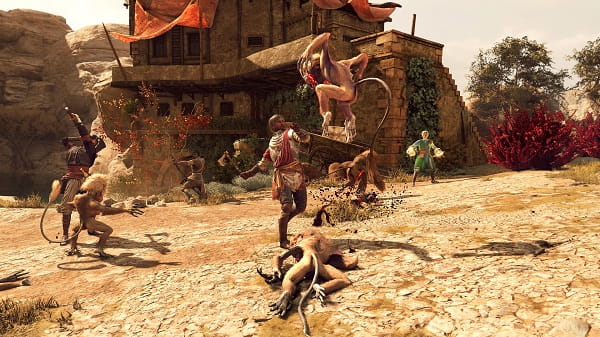
Audio design is one of the more consistently strong elements. The orchestral soundtrack does a solid job of reinforcing the game’s adventurous tone, particularly during exploration and major encounters. Voice acting is generally competent across the main cast, helping to carry the narrative even when the writing falters. Still, audio presentation can be uneven at times, with some dialogue sequences dragging on longer than necessary and certain sections of spoken language feeling repetitive during the early hours of the campaign.
Taken as a whole, GreedFall: The Dying World feels like a classic case of ambition outpacing execution. Spiders once again demonstrates its talent for crafting distinctive RPG settings and complex faction dynamics, but the experience is held back by uneven pacing, a divisive combat overhaul, and a lack of polish in key areas. There is still plenty of enjoyment to be found for players who appreciate old-school, systems-driven RPGs and are willing to tolerate some rough edges along the way. However, despite its interesting premise and moments of genuine promise, this prequel never quite reaches the heights that its world and ideas suggest it could have achieved.
Score: 7.3/10
 Press Play Media