Downloadable content has become an increasingly common way for developers to keep games alive long after their initial release, whether through new story chapters, fresh gameplay twists, or simply inventive new spaces to explore. This latest batch of DLC illustrates just how varied those add-ons can be. From the chaotic boomer-shooter action of POSTAL: Brain Damaged – These Sunny Daze, to the quiet character-building moments of Neva: Prologue, and the playful VR course design of Walkabout Mini Golf – Hollywood, each expansion revisits an existing game from a different angle. Some aim to extend the core experience with new mechanics and encounters, while others focus on atmosphere, storytelling, or creative world-building – but all of them offer fans another reason to step back into familiar worlds.
POSTAL: Brain Damaged – These Sunny Daze review (PS5)
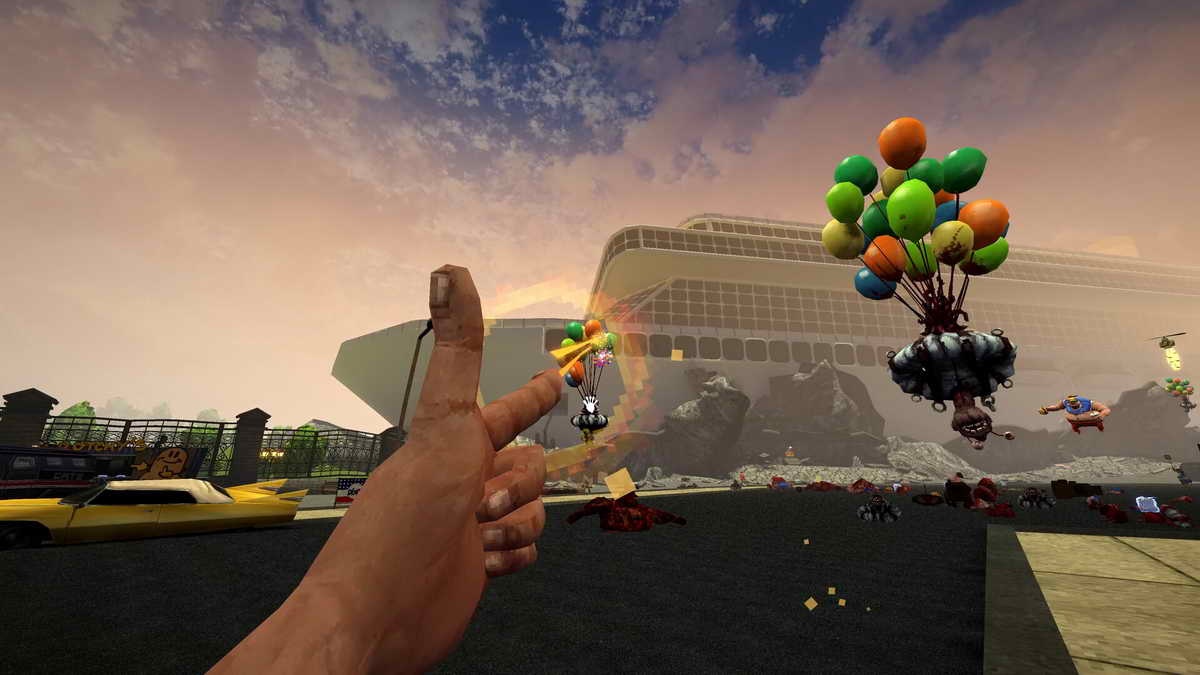
POSTAL: Brain Damaged – These Sunny Daze picks up with the series’ trademark brand of outrageous satire, throwing the POSTAL Dude into yet another ridiculous crisis when a bizarre political crackdown leaves him stripped of his weapons and forced to claw his way back to his arsenal. As premises go, it’s exactly as absurd as fans would expect, leaning hard into the franchise’s blunt humour and chaotic tone. The narrative is more of an excuse for carnage than a story with real depth, but that has always been part of POSTAL’s appeal, and the DLC embraces it with gleeful abandon. The writing frequently lands somewhere between juvenile and intentionally provocative, which means it will either produce a laugh or an eye roll depending on your tolerance for the series’ brand of shock humour.
Mechanically, the expansion sticks closely to the formula that made Brain Damaged such an enjoyable throwback to classic arena shooters. Movement remains fast and fluid, encouraging aggressive play built around strafing, bunny hopping, and rapid weapon swapping while dozens of enemies flood the screen. The DLC adds several new weapons and enemy types, along with traversal tools like the sticky hand that can pull you toward enemies or grapple points, helping keep combat arenas mobile and chaotic. However, many of the new guns feel more like quirky reskins than meaningful mechanical upgrades, which means the core combat loop feels familiar rather than transformative. Still, when the game throws large enemy waves at you and the action clicks, the frantic rhythm of running, jumping, and blasting through enemies remains hugely satisfying.
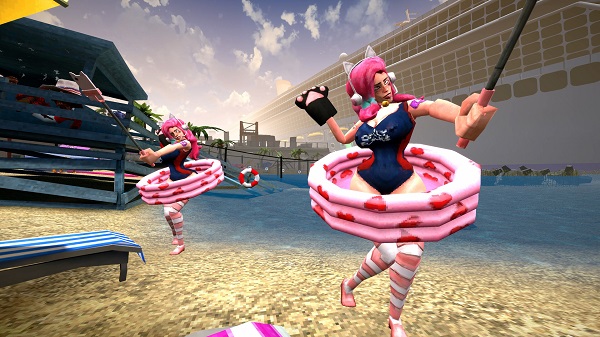
Level design follows a similar pattern: bright, vacation-themed environments like beaches and cruise ships bring a fresh visual flavour to the madness, but the structure largely mirrors what players have already experienced in the base game. The arenas tend to be larger and more vertical, encouraging creative movement and constant repositioning during fights, though some sections can feel visually cluttered or a bit generic once the novelty of the tropical theme fades. Enemy variety helps maintain momentum, introducing new foes that pressure different playstyles and force quick reactions, even if the underlying design philosophy remains firmly rooted in the familiar arena-shooter template.
Visually and aurally, These Sunny Daze leans fully into its exaggerated aesthetic, combining bright resort imagery with the game’s deliberately crude, cartoon-style violence. The contrast between sunny holiday visuals and relentless carnage gives the DLC its own identity, while the soundtrack mixes energetic rock with playful beach-inspired tones that underline the absurdity of the action. Performance and controls generally hold up well, though the intense speed of the gameplay can be overwhelming at times and the experience still clearly assumes you’re already comfortable with the base game’s mechanics. Ultimately, These Sunny Daze doesn’t radically expand on what Brain Damaged already offered, but for fans of its frantic boomer-shooter combat and irreverent humour, it provides a short but entertaining excuse to dive back into the chaos.
Neva: Prologue review (PS5)
Neva already told a moving story about the bond between Alba and her wolf companion, and Neva: Prologue revisits that world to explore how the two first met. Following a trail of white butterflies into a corrupted swamp, Alba discovers a frightened wolf cub and slowly begins forming the relationship that drives the main game. Like the base adventure, the storytelling leans heavily on atmosphere rather than dialogue, using small interactions and environmental cues to convey emotion. It’s an effective setup that deepens the characters’ connection, though the short running time means the narrative arc never develops quite as fully as it might have with more room to breathe.
Mechanically, the DLC sticks close to the foundation established in the original game. Combat and platforming once again revolve around Alba’s agile movement set – double jumps, dashes, and sword strikes – while new enemy types and environmental hazards introduce a slightly steeper challenge. Several encounters demand careful positioning or timing, and puzzle sequences occasionally revolve around guiding or protecting the vulnerable wolf cub before she learns to trust Alba. These ideas work well conceptually and reinforce the story’s theme of responsibility, but some sections lean a bit too heavily on trial-and-error design, making a few obstacles feel more about memorization than mastery.
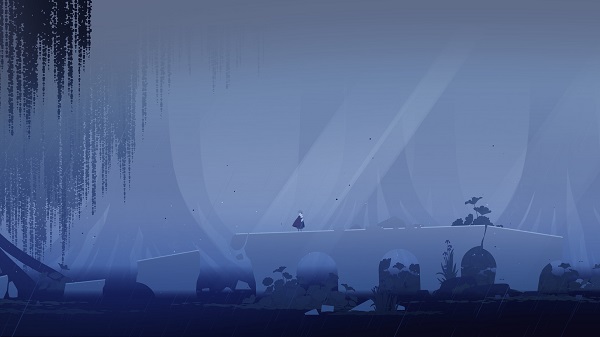
The Prologue’s pacing is brisk, alternating between combat arenas, platforming segments, and light puzzles across a handful of new environments. Moments where Alba must carry the cub or guide her through danger add a layer of tension, as they limit mobility and force players to rethink how they approach traversal and combat encounters. These sequences create some memorable set pieces – particularly when larger enemies or looming threats enter the picture – but they also highlight the DLC’s biggest limitation: many of its best ideas only appear briefly before the story moves on.
Visually and sonically, however, the expansion remains as striking as ever. Nomada Studio’s hand-painted environments and fluid animation once again deliver a world that feels both beautiful and melancholy, with darker tones and stormy landscapes adding a more ominous edge to the journey. Combined with Berlinist’s atmospheric score, the presentation continues to carry much of the emotional weight. Ultimately, Neva: Prologue is a short but worthwhile return to this evocative universe – one that offers a few new challenges and touching moments, even if its brevity and familiarity prevent it from leaving quite the same lasting impression as the original adventure.
Walkabout Mini Golf – Hollywood review (Quest)
Mighty Coconut’s latest addition to Walkabout Mini Golf takes players behind the scenes of old-school filmmaking with a Hollywood-themed course. Rather than focusing on a single movie genre, the course plays out like a guided walk through a bustling studio backlot, with holes weaving between soundstages, prop workshops, theaters, and elaborate sets inspired by everything from swashbuckling adventures to classic science fiction and noir cinema. The setting works particularly well in VR, where the playful recreation of studio spaces invites players to linger and soak in the details, though the course’s loose structure occasionally makes the journey feel a bit less cohesive than some of the game’s more tightly themed environments.
The core mini-golf mechanics remain as polished as ever, with the familiar blend of intuitive physics and cleverly constructed layouts that have made Walkabout Mini Golf such a staple of the VR library. Hollywood doesn’t introduce a single defining gimmick like some earlier courses, but instead mixes a variety of obstacles and playful tricks – moving props, wind effects, lasers and unusual shot angles – across its holes. The result is a course that starts fairly approachable before gradually introducing more elaborate shots and risk-reward opportunities. That variety keeps rounds engaging, though players hoping for a bold new mechanical twist (that leans hard into Hollywood’s special effects industry, for instance) may find this one more iterative than experimental.
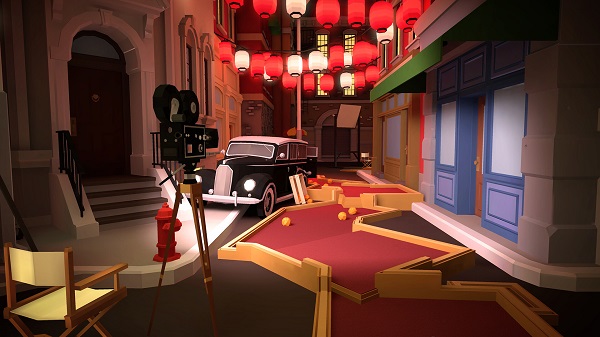
Where the course truly shines is in its presentation. Each stage is packed with props, set dressing and subtle references that reward exploration, with hidden collectibles tucked into corners and playful nods to other courses and cinema history scattered throughout the environment. Some objects can even be interacted with, reinforcing the illusion that you’re wandering through a working film studio rather than a static backdrop. At times, however, the abundance of decorative space can make certain areas feel slightly emptier than expected from a gameplay perspective, with long stretches that emphasize atmosphere over tightly packed golf design.
Like most Walkabout Mini Golf DLC, the Hollywood course also includes a redesigned night version that remixes several holes and routes through the environment, offering a noticeably different experience once the sun goes down. The added lighting and altered layouts help extend the replay value, even if the collectible rewards themselves are a mixed bag in terms of visual flair. Still, the course’s charm, strong sense of place, and consistently satisfying putting mechanics ensure it fits comfortably alongside the game’s long list of creative DLC additions. It may not be the most mechanically daring course in the catalogue, but as a lovingly crafted tour through a playful VR backlot, Passport: Hollywood remains an easy recommendation for returning players, and a must-play for movie fans.
 Press Play Media