Dark Trip immediately positions itself as an unusual entry within VR’s escape-room genre, blending investigative storytelling with surreal horror imagery and psychedelic puzzle design. Players step into the shoes of an investigator searching for a missing woman in a small German town, eventually uncovering a laboratory tied to disturbing experiments and cryptic research notes. The narrative leans heavily on environmental storytelling, gradually revealing fragments of a darker history through scattered clues and diary entries. It’s a premise that thrives on unease and ambiguity, successfully building tension through atmosphere rather than straightforward exposition, though its deliberately disturbing tone and mature imagery mean it’s clearly aimed at players comfortable with unsettling subject matter.
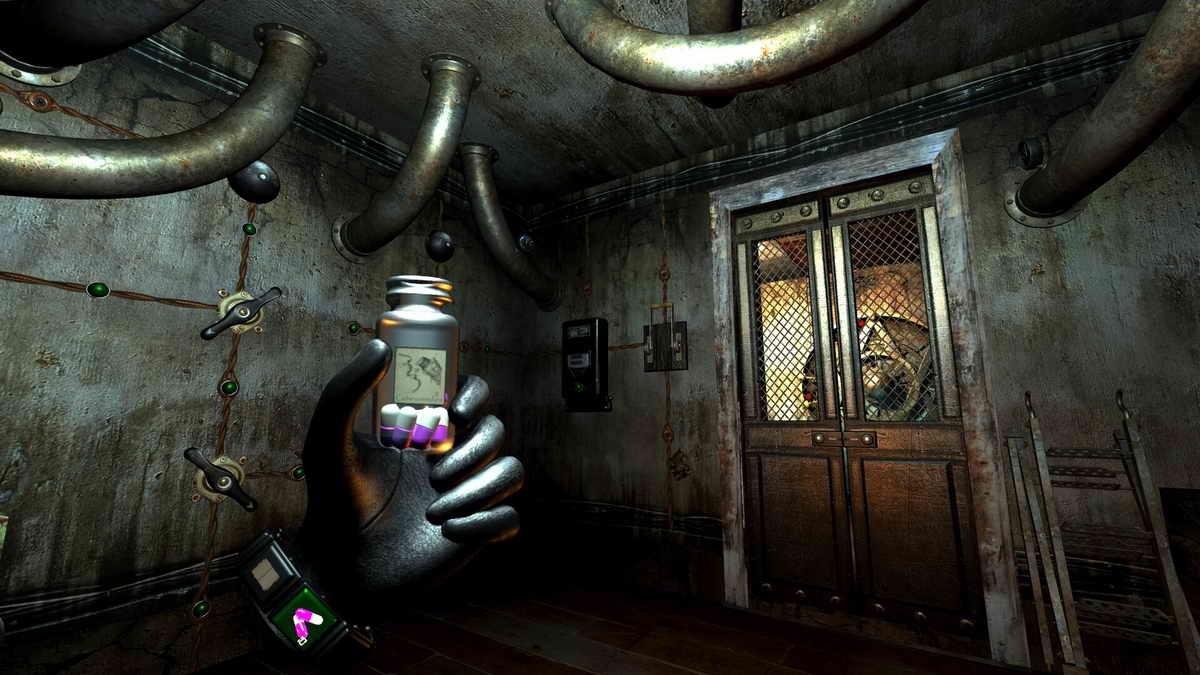
The most distinctive element of Dark Trip is the mechanic that defines its entire design: the ability to consume pills that shift the player into a hallucinatory state. Instead of simply serving as a visual gimmick, this altered perception fundamentally reshapes the puzzles themselves. Rooms change, hidden clues become visible, and objects can take on entirely different meanings depending on whether players are exploring the environment sober or under the influence. The concept is reminiscent of other puzzle adventures that let players view the world from alternate perspectives, but here the transformation is far more unsettling, turning familiar spaces into warped and eerie versions of themselves. The mechanic introduces a layer of experimentation that encourages players to rethink how they approach each puzzle.
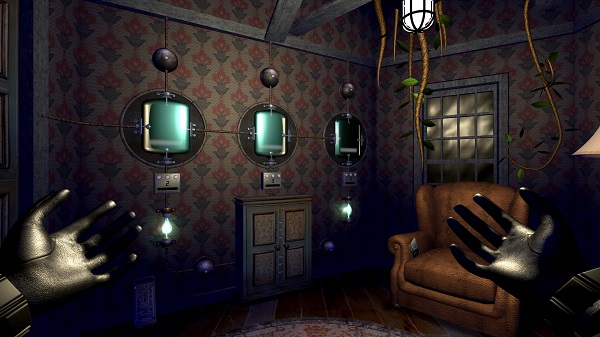
Most of the gameplay follows a classic escape-room structure, with players moving from room to room while solving interconnected puzzles and searching for items needed to progress. The current Early Access build features a series of puzzle-filled rooms that gradually increase in complexity, offering a satisfying mix of logic problems and environmental interactions. The puzzles generally strike a fair balance between challenge and accessibility, often requiring players to step back and reconsider their surroundings rather than relying on brute-force experimentation. That said, the game can occasionally leave players without clear direction, particularly because it lacks an in-game hint system – meaning that if you become stuck, the only real option is to keep experimenting or seek outside help.
Atmosphere is arguably where Dark Trip excels the most. The environments lean heavily into horror aesthetics, with dimly lit laboratories and unsettling biotechnological machinery creating a constant sense of unease. Ambient sound design plays a key role here, layering eerie background noise with subtle cues that make it feel as if something is lurking just out of sight. Moments where shadowy figures seem to vanish when you glance in their direction reinforce that tension without relying on frequent jump scares. The result is an experience that’s less about sudden shocks and more about maintaining a lingering sense of dread throughout the investigation.
Visually, however, the experience can be inconsistent. While the environments are detailed and the hallucination sequences can produce striking imagery, the presentation doesn’t always live up to what we were expecting. Much of the game takes place in extremely dark environments, and the lack of brightness controls can make it difficult to fully appreciate the details of the world. Later rooms allow the visual design to shine a bit more, but the heavy darkness occasionally works against the otherwise strong environmental design.
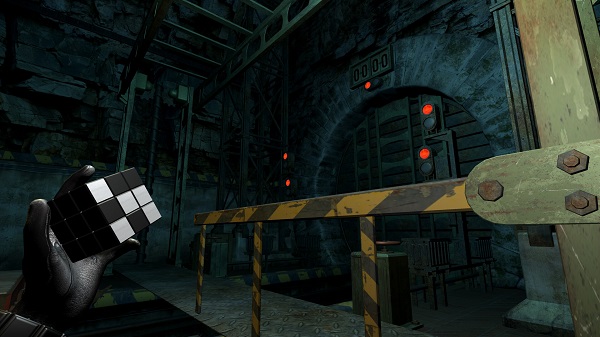
Technical rough edges also remind players that Dark Trip remains a work in progress. Some interactions feel clunky, particularly when managing inventory items or manipulating puzzle components. Bugs and awkward collision detection – such as getting stuck on certain pieces of scenery – can interrupt the flow of exploration. On the other hand, the developers appear to be actively addressing issues and expanding the game’s content during its Early Access phase, suggesting that the current version is only the beginning of what the full experience may eventually become.
Even with those rough edges, Dark Trip manages to carve out a memorable niche within VR puzzle games. Its surreal premise, inventive hallucination mechanic, and oppressive atmosphere help it stand apart from more traditional escape-room titles. At the same time, uneven visuals, technical hiccups, and a relatively limited amount of content in the current build prevent it from fully realizing its ambitions just yet. For players willing to accept the quirks of an evolving Early Access project, Dark Trip offers an intriguing glimpse into a strange and unsettling VR mystery – one that could grow into something much more substantial as development continues.
 Press Play Media