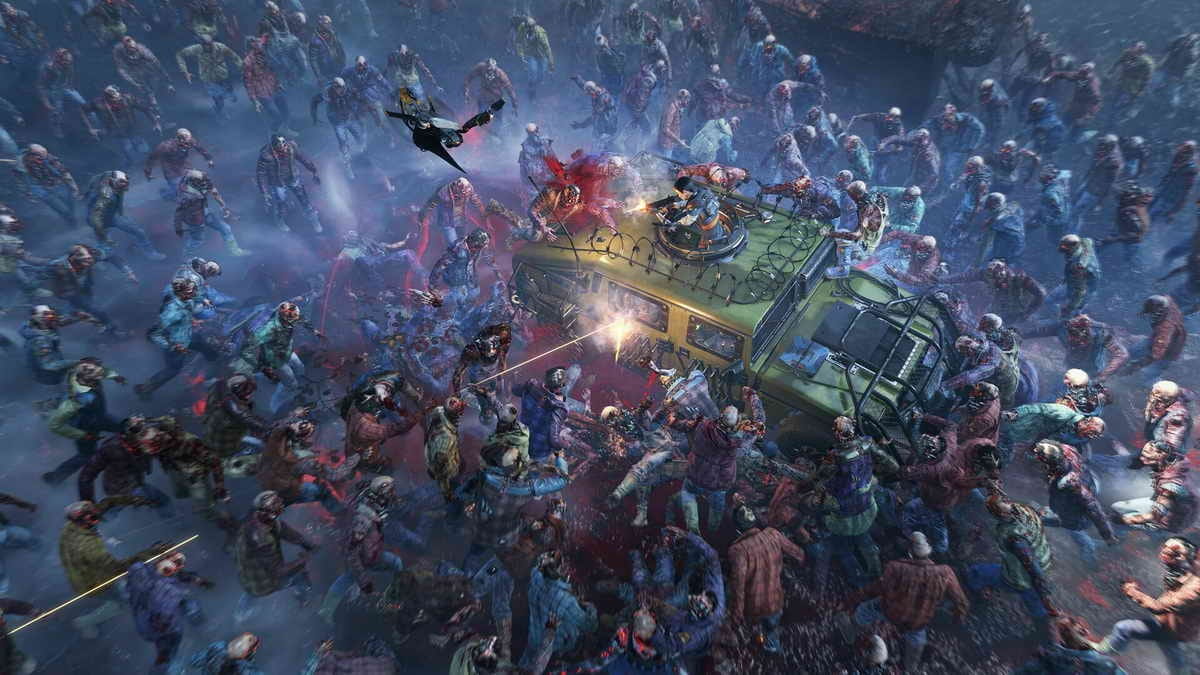
John Carpenter’s Toxic Commando arrives with a clear mission statement: channel the spirit of ‘80s horror-action cinema into a cooperative shooter framework, blending absurdity, gore and camaraderie into a single package. Developed by Saber Interactive and published by Focus Entertainment, the game leans heavily into its B-movie inspirations, framing its apocalyptic scenario around a failed scientific experiment that unleashes a grotesque, world-altering force. The setup is knowingly ridiculous, and the tone embraces that fully, though it occasionally struggles to balance its tongue-in-cheek humor with a sense of narrative cohesion, leaving the premise feeling more like a backdrop for chaos than a story worth investing in.
At its core, Toxic Commando is a cooperative first-person shooter built around squad-based play, where teamwork is less a suggestion and more a necessity. Players select from distinct classes and dive into missions that emphasize horde combat, vehicle traversal and objective-based progression. The gunplay is immediately accessible and satisfying in short bursts, with a solid sense of impact and a generous arsenal that encourages experimentation. However, repetition sets in faster than expected, as mission structures and enemy encounters tend to blur together over time, limiting the long-term appeal unless played with a dedicated group of friends.
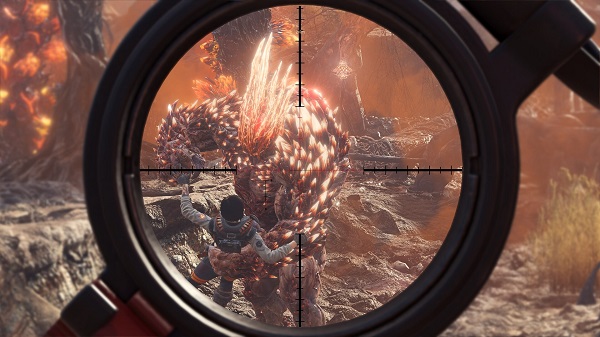
The class system introduces some welcome variation, offering different playstyles that range from support-focused roles to more aggressive damage dealers. Abilities and upgrades add a layer of progression, though they rarely evolve the gameplay in transformative ways. Instead, they reinforce existing patterns rather than pushing players toward new strategies. This makes early sessions feel dynamic, but later hours reveal a certain rigidity in design, where the initial excitement gives way to a more routine loop.
One of the more distinctive elements is the inclusion of vehicles, which are not just a novelty but a core part of the gameplay loop. Driving through infested landscapes with a full crew while mowing down enemies creates some of the game’s most memorable moments, capturing the chaotic and cinematic energy it aims for. That said, vehicle handling can feel inconsistent, and their integration into missions sometimes feels scripted rather than organic, disrupting pacing instead of enhancing it.
Visually, the game commits fully to its grimy, exaggerated aesthetic. Environments are drenched in sludge and decay, with creature designs that emphasize grotesque mutations over subtlety. While this results in a strong visual identity, technical limitations occasionally undermine the presentation, with performance hiccups and a lack of environmental variety becoming noticeable over time. The art direction carries the experience, but it doesn’t completely mask these shortcomings.
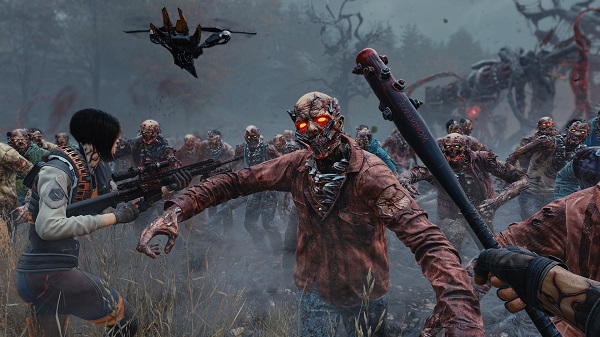
Audio design is similarly aligned with the game’s cinematic inspirations, featuring a bombastic soundtrack and exaggerated sound effects that amplify the action. Voice acting leans into caricature, reinforcing the over-the-top tone, though the humor doesn’t always land consistently. Some exchanges feel genuinely entertaining, while others come across as forced, highlighting the difficulty of sustaining this kind of style across extended play sessions.
Ultimately, John Carpenter’s Toxic Commando succeeds in delivering short-lived bursts of chaotic, cooperative fun, especially when played with friends who are willing to embrace its absurdity and b-movie quality. However, its reliance on repetition, limited gameplay evolution and uneven execution prevent it from reaching the same heights as the films that inspired it. It’s a game that knows exactly what it wants to be, but only partially succeeds in translating that vision into a consistently engaging experience, leaving it best suited for players looking for casual, cooperative mayhem rather than a deeply rewarding shooter. Having said that, it’s an absolute blast to jump into and we’re hoping it’ll evolve more over time.
Score: 7.8/10
 Press Play Media