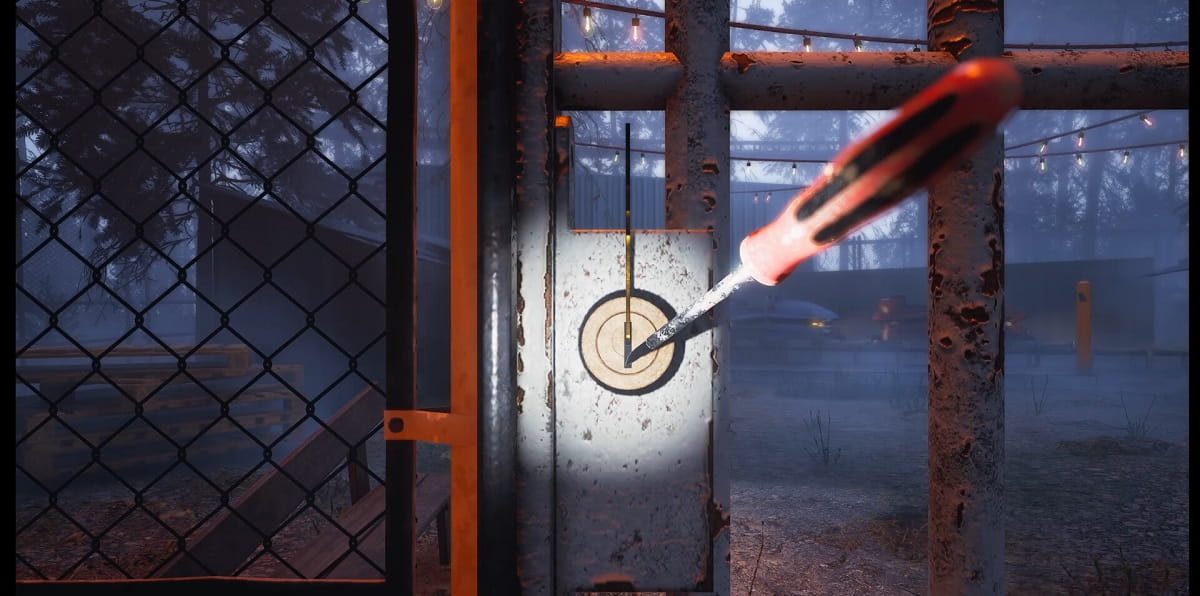
EMOTIONLESS: The Last Ticket, developed by X1 Games and published by Perp Games on consoles, positions itself squarely within the realm of psychological horror, leaning heavily on atmosphere and disorientation rather than traditional mechanics. Set within a decaying amusement park tied to a deeply personal narrative, the game blends liminal space aesthetics with cosmic horror influences to create an experience that is as introspective as it is unsettling. Its premise is immediately compelling, drawing players into a fragmented reality where memory and perception intertwine, though its storytelling occasionally struggles to maintain clarity amidst its more abstract ambitions.
The narrative unfolds through environmental storytelling and scattered clues, placing players in the role of James Anderson as he revisits the remnants of his father’s legacy. This approach succeeds in fostering a sense of mystery and unease, with the park itself acting as both a narrative device and psychological mirror. However, the ambiguity that underpins the story can be a double-edged sword – while it enhances the surreal tone, it also risks alienating players who prefer more structured storytelling, leaving certain plot threads feeling underdeveloped or overly obscure.
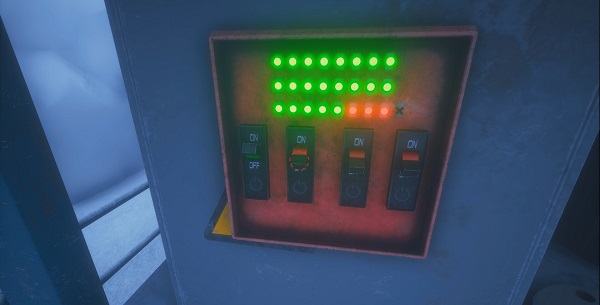
Gameplay is deliberately minimalistic, emphasizing exploration and puzzle-solving over interaction-heavy systems. The absence of combat reinforces the game’s focus on tension and vulnerability, allowing the atmosphere to take center stage. Environmental puzzles, often tied to machinery and physical interactions, are integrated in a way that maintains immersion, though their simplicity can occasionally make progression feel repetitive or lacking in challenge. The shifting layout of the park introduces a layer of unpredictability that works well conceptually, but can also lead to moments of frustration when navigation becomes disorienting rather than engaging.
Controls are generally straightforward, aligning with the game’s stripped-back design philosophy. Movement and interaction feel functional, but not particularly refined, with a slight lack of responsiveness that can detract from the overall immersion. This is especially noticeable during puzzle interactions or when navigating tighter environments, where precision becomes a bit more important. While not a major flaw, it contributes to an overall sense that the mechanical side of the experience doesn’t quite match the ambition of its atmosphere.
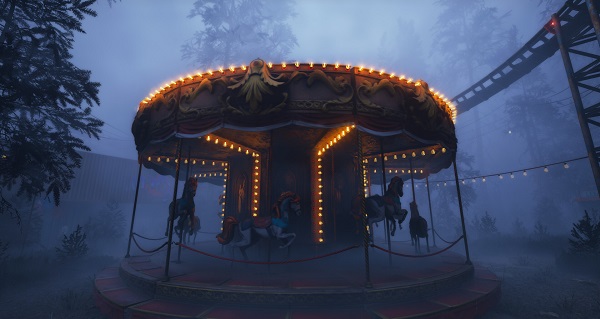
Visually, EMOTIONLESS: The Last Ticket is one of those titles that thrives on mood rather than technical fidelity. The amusement park setting is realized through decayed structures, unnatural lighting, and surreal spatial design that constantly undermines the player’s sense of orientation. The use of liminal imagery and impossible architecture is particularly effective, creating a persistent feeling of unease. That said, graphical inconsistencies and occasional rough edges can break immersion, with some environments being either too dark or lacking the polish needed to fully sell their intended impact.
Audio design plays a crucial role in sustaining the game’s tension, with an ambient soundscape that leans heavily on subtle cues and unsettling tones. The absence of a dominant musical score allows environmental sounds to take precedence, amplifying the sense of isolation and dread. At its best, this approach is highly effective, though it can sometimes verge on monotony, particularly during longer exploration segments where variation is limited.
Ultimately, EMOTIONLESS: The Last Ticket succeeds somewhat in crafting a distinct psychological horror experience that prioritizes atmosphere and thematic depth over traditional gameplay systems. Its strengths lie in its unsettling world design and commitment to a purist horror approach, but it is held back by uneven pacing, occasional technical shortcomings, and a narrative that doesn’t always balance ambiguity with cohesion. For players willing to embrace its slower, more introspective style, it offers a memorable journey into the uncanny – just one that doesn’t fully capitalize on its own intriguing premise.
Score: 6.4/10
 Press Play Media