
MLB The Show 26, developed by San Diego Studio and published by Sony Interactive Entertainment, continues the long-running baseball simulation series with a focus on incremental refinement rather than sweeping reinvention. On PlayStation 5, the game leans heavily into authenticity, presenting a layered experience that spans career progression, team management, and historical storytelling. While the core premise remains familiar – guiding players from hopeful prospects to legendary status – the latest iteration expands its scope with deeper career pathways and a more structured sense of progression, even if not all additions and changes feel equally impactful.
Road to the Show receives one of the most notable updates, extending the journey back into earlier formative years and introducing collegiate play as a meaningful stepping stone. The inclusion of amateur circuits and draft positioning adds context to player development, making the climb to the majors feel more deliberate. However, while these additions strengthen immersion, they can also slow pacing, particularly for players eager to reach the MLB stage quickly. The narrative framing remains largely systemic rather than character-driven, meaning emotional investment still depends heavily on player imagination rather than authored storytelling.
On the gameplay front, MLB The Show 26 refines its already robust mechanics with a greater emphasis on player agency. New systems like Bear Down Pitching introduce a risk-reward dynamic that rewards precision under pressure, while Big Zone Hitting offers more granular control over batting outcomes. These changes enhance the skill ceiling, making each at-bat or pitching duel feel more deliberate. That said, the increased complexity may prove daunting for newcomers, as the onboarding does not always sufficiently bridge the gap between casual play and high-level execution. For veterans, however, the improvements translate into a more satisfying and competitive experience.
Diamond Dynasty continues to evolve as the game’s live-service backbone, with new card tiers and progression systems adding depth to team-building. The revised progression mechanics and seasonal structures provide a clearer sense of momentum, though the mode still walks a fine line between rewarding engagement and encouraging grind-heavy playstyles. While monetization pressures are less aggressive than in some competing sports titles, the time investment required to remain competitive can still feel substantial.
Franchise mode sees meaningful, if overdue, enhancements through its revamped front office systems. Trade logic has been reworked to better reflect real-world decision-making, and the addition of a centralized trade hub streamlines what was previously a cumbersome process. These changes bring a welcome layer of strategic depth, though some lingering AI inconsistencies prevent the mode from fully realizing its simulation ambitions. Still, it represents a step in the right direction for players seeking a more management-focused experience.
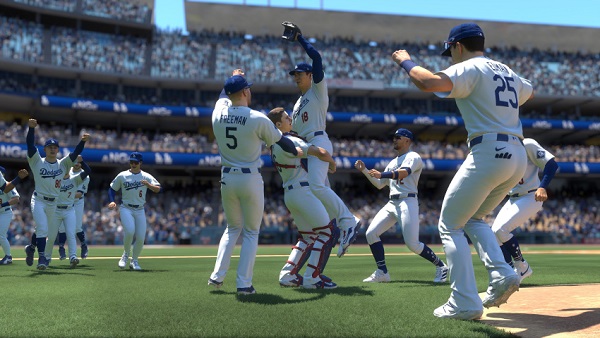
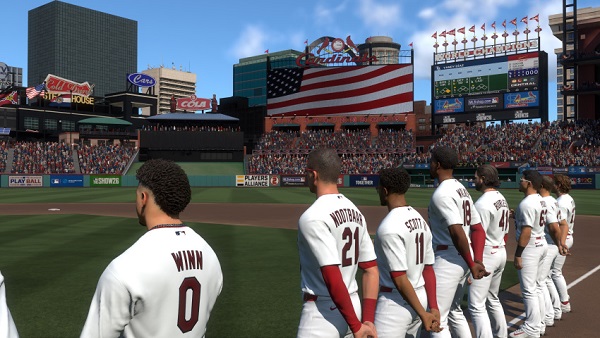
Visually, MLB The Show 26 maintains its reputation for realism, with detailed player models, fluid animations, and convincingly rendered stadiums that capture the atmosphere of live broadcasts. Subtle improvements to lighting and presentation help elevate the overall package, even if the generational leap is less pronounced than some might expect at this stage in the PS5 lifecycle and we have mixed feelings about the UI changes. Audio design remains strong, with commentary that adapts well to in-game situations, though repetition can still creep in over extended play sessions.
Ultimately, MLB The Show 26 is a confident iteration that prioritizes depth and authenticity over headline-grabbing innovation. Its expanded career mode, refined gameplay systems, and improved management features collectively enhance the experience, even if some areas still show signs of stagnation. For dedicated fans of the series and the sport, it offers one of the most comprehensive baseball simulations available, while newcomers may find its complexity both a strength and a barrier.
Score: 7.6/10
 Press Play Media