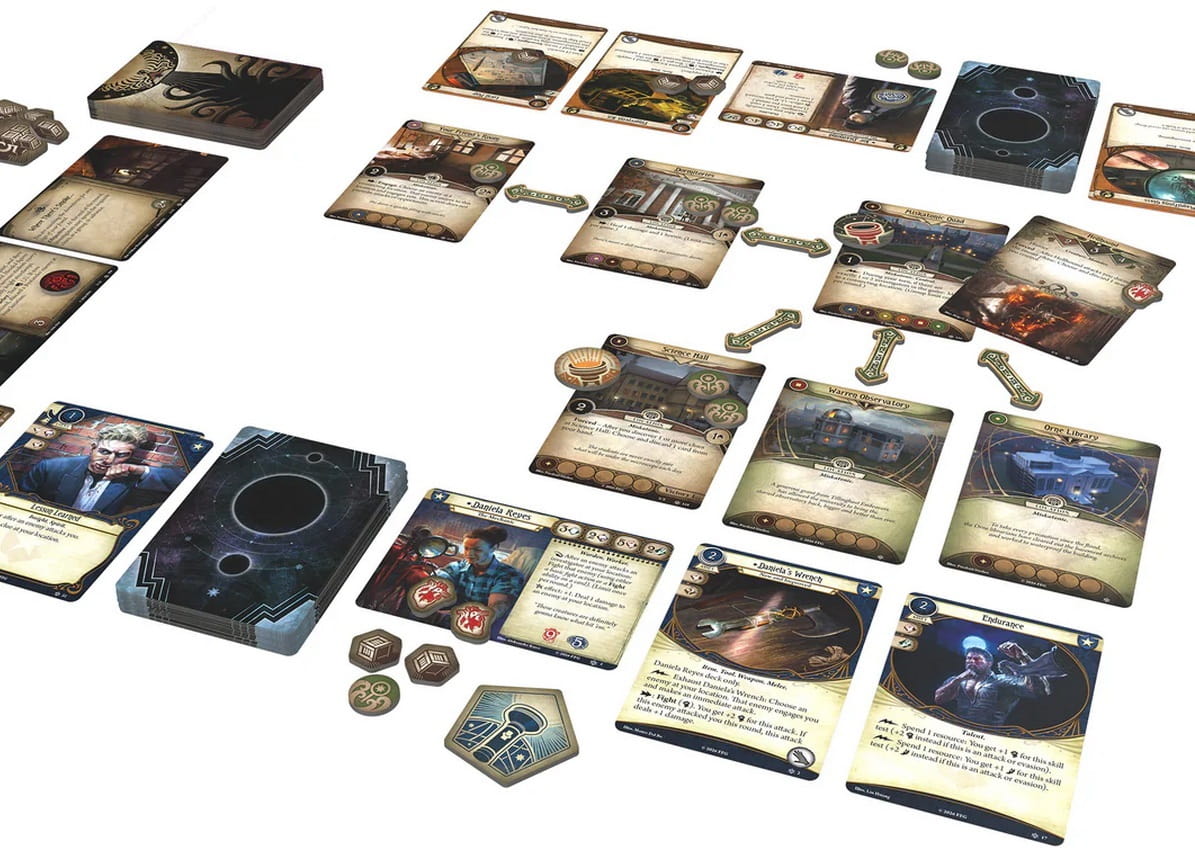
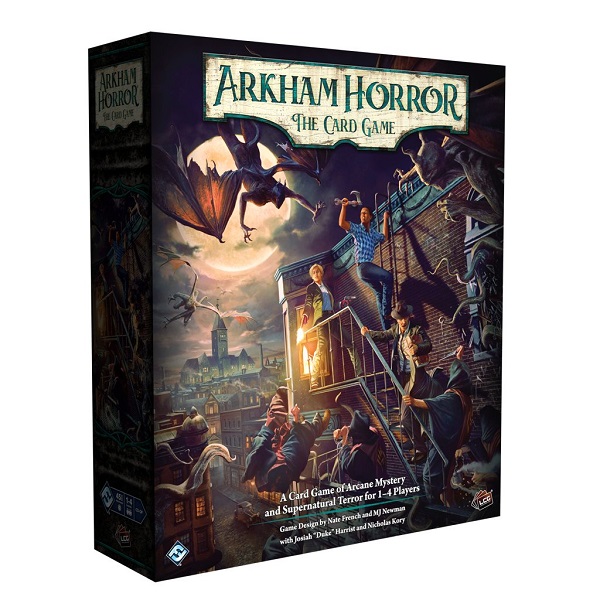
Arkham Horror: The Card Game returns in 2026 with a new core set that effectively marks the beginning of a second chapter for Fantasy Flight Games’ long-running cooperative living card game. Positioned as both a continuation and a fresh entry point, this updated box replaces the 2021 revised core set while maintaining full compatibility with the game’s extensive back catalogue. That dual purpose defines much of its design: it needs to onboard new players cleanly while still offering enough structural refinement to justify its place in an already crowded ecosystem – and it largely succeeds, albeit with some notable caveats.
At its core, Arkham Horror remains a cooperative, scenario-driven card game where one to four players assume the roles of investigators battling cosmic horror in a branching campaign. The new core set delivers a three-scenario storyline that picks up after prior calamities in Arkham, focusing on eerie fires, cult activity, and creeping dread across locations like Miskatonic University. While the narrative framing is evocative and benefits from the setting’s established lore, it still leans more on atmosphere than deeply layered storytelling. Compared to other Arkham Files titles, the plot feels functional rather than richly immersive, though player-driven outcomes and scenario consequences do lend it a sense of agency and replayability.
Mechanically, the game continues to revolve around a tight loop of four phases – Mythos, Investigator, Enemy, and Upkeep – which together create a steady rhythm of pressure and response. The Mythos phase in particular reinforces the Lovecraftian tone, constantly introducing new threats through treachery cards and enemy spawns. What elevates the design is how these pressures intersect with the game’s three core objectives: fighting enemies, surviving escalating dangers, and gathering clues to advance the scenario. Balancing these competing demands is where Arkham Horror shines, forcing players into meaningful trade-offs that reward coordination and long-term planning.
The chaos bag system remains one of the game’s defining features, injecting a layer of controlled randomness into every skill test. Drawing tokens to modify outcomes ensures that even well-prepared plans can unravel, reinforcing the theme of uncertainty. However, this same system can also be a source of frustration, as unlucky draws may negate carefully constructed strategies. The 2026 core set doesn’t fundamentally alter this dynamic, meaning that while the tension it creates is compelling, it can occasionally feel punitive – particularly for players who prefer more deterministic systems.
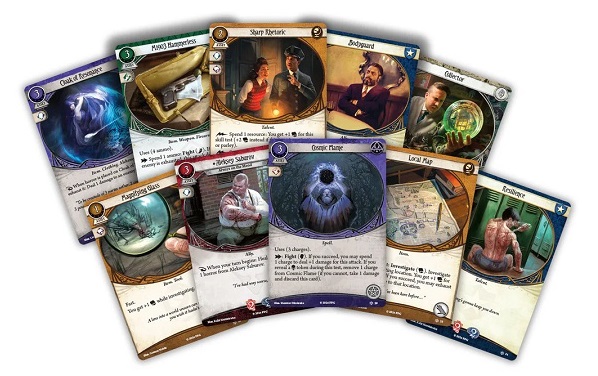
One of the most accessible aspects of this new edition is its approach to onboarding. Five pre-constructed investigator decks allow players to jump in immediately, each representing a blend of the game’s five classes – Guardian, Seeker, Rogue, Mystic, and Survivor. These decks showcase distinct playstyles, from combat-focused builds to clue-gathering specialists, and serve as effective tutorials for the broader deck construction system. That system, while deep and rewarding, can still feel daunting once players move beyond the starter decks. The core set does a commendable job of easing players into deckbuilding concepts, but the underlying complexity remains intact.
Deck construction itself continues to be one of Arkham Horror’s strongest pillars. Rather than building decks mid-game, players refine and upgrade them between scenarios, creating a sense of progression that mirrors role-playing campaigns. The introduction of updated card pools and subtle rebalancing of staple cards helps modernize the experience, while new mechanics – such as reward-based progression elements – add further incentives for replay. That said, veterans may find that much of the content feels iterative rather than transformative, with several cards and investigator concepts revisiting familiar ground.
From a production standpoint, this core set is polished and thoughtfully organized. The inclusion of improved tokens, clearer iconography, and better storage solutions enhances usability, while optional premium upgrades from third-party partners can elevate the tactile experience further. The artwork remains consistently strong, blending moody illustrations with clear gameplay readability. Still, the reliance on cardboard tokens and manual bookkeeping highlights one of the game’s ongoing drawbacks: managing board state, tracking effects, and handling multiple decks can become cumbersome, particularly in longer sessions or at higher player counts.
That sense of length and overhead is perhaps the most persistent friction point. Scenarios can stretch beyond an hour, especially with a full group, and the cumulative complexity of managing enemies, locations, and card effects demands sustained focus. For dedicated players, this depth is part of the appeal, but it may limit the game’s accessibility for more casual audiences. The new core set mitigates this slightly through improved rulebooks and player aids, yet the fundamental weight of the system remains unchanged.
Ultimately, the 2026 core set for Arkham Horror: The Card Game succeeds as a carefully calibrated refresh rather than a radical reinvention. It offers a strong, approachable entry point for newcomers while refining key aspects of the experience through better organization and updated content. For returning players, however, its value is more nuanced – appreciable in its polish and incremental improvements, but less compelling as a must-have upgrade. As an evergreen foundation for the game’s future, it sets a solid baseline, even if it doesn’t dramatically reshape what Arkham Horror has always been: a tense, intricate, and occasionally unforgiving descent into cosmic dread.
 Press Play Media