There’s something quietly revealing about revisiting games through the lens of a new platform, especially when those games arrive with the promise – implicit or otherwise – of refinement or subtle changes. Recent PS5 ports like Trash Goblin, New Super Lucky’s Tale, and Go Home Annie: An SCP Game highlight just how varied that promise can be. From cozy, low-stakes tinkering to bright, nostalgic platforming and unsettling, system-driven horror, these titles span a broad tonal and mechanical spectrum. What they share, however, is the challenge of translating their core identities to new hardware.
Trash Goblin review (PS5)
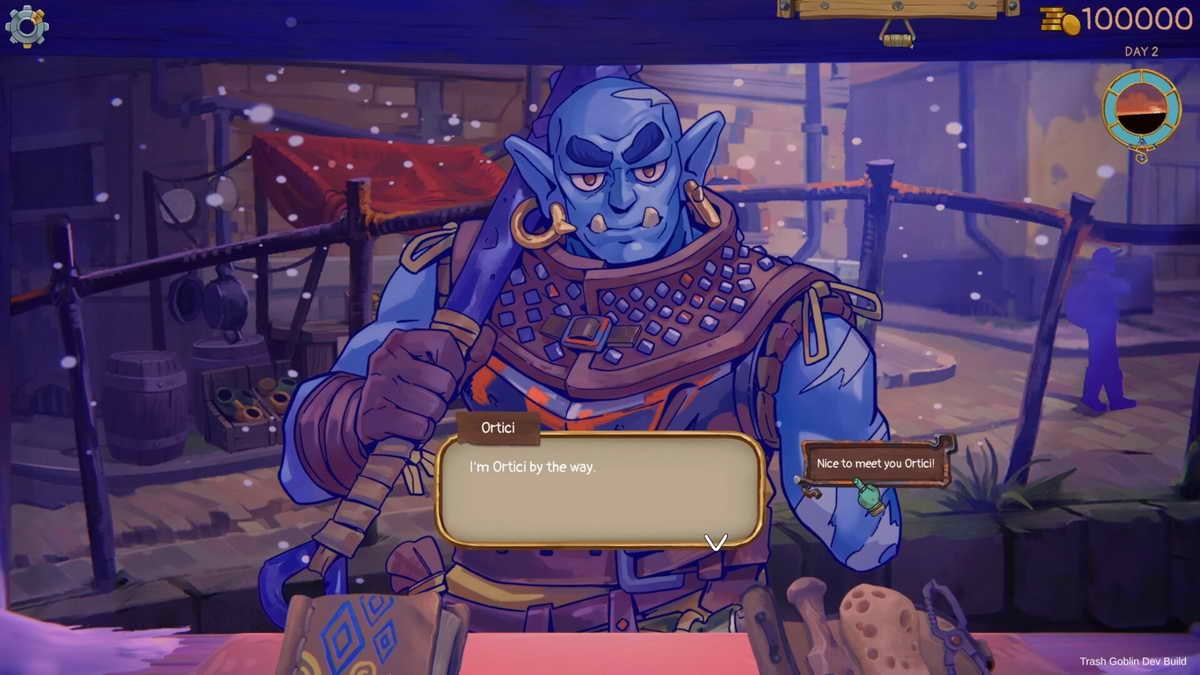
Trash Goblin leans fully into its low-stakes premise, casting players as a tinkering shopkeeper restoring discarded curios and reselling them to an ever-rotating cast of eccentric customers. Rather than building toward a grand narrative arc, the experience is framed around small, character-driven interactions and the quiet satisfaction of turning junk into something desirable. That relaxed structure works in its favor early on, creating a cozy, almost meditative rhythm, though the lack of meaningful narrative escalation or long-term stakes can make progression feel diffuse over extended sessions.
The core gameplay loop revolves around uncovering trinkets from blocks of grime, cleaning them, and optionally recombining them into new creations. These mechanics are simple but tactile, with the chipping and scrubbing minigames offering just enough interaction to stay engaging without demanding precision. However, that same simplicity becomes a double-edged sword: while it reinforces the game’s “no pressure” ethos, repetition sets in relatively quickly, especially once players have seen most of the available variations. Upcycling adds a creative layer, but the system doesn’t always provide enough mechanical depth or meaningful decision-making to sustain long-term engagement.
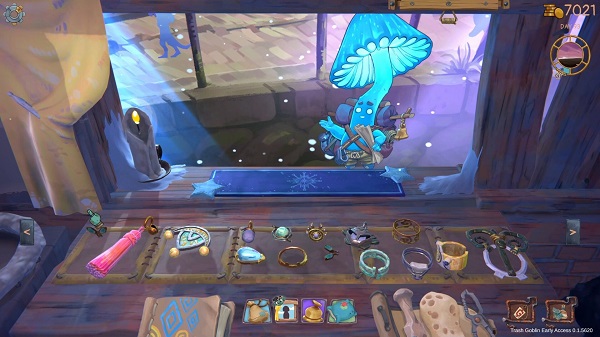
Controls on PS5 translate cleanly to a controller setup, keeping interactions intuitive and accessible, though they occasionally lack the responsiveness and finesse that a mouse-driven interface might offer for more delicate tasks. The pacing is deliberately unhurried, with light daily structure but no real fail states, which suits the game’s tone but can also reduce tension to the point where sessions begin to blur together. Progression systems – like shop upgrades and new tools – help maintain a sense of forward motion, but their impact is incremental rather than transformative.
Visually, Trash Goblin embraces a soft, storybook aesthetic that complements its cozy ambitions, with colorful characters and charmingly odd item designs doing much of the heavy lifting. The presentation is consistently pleasant, if not especially varied, and the audio follows suit with a gentle, unobtrusive soundtrack that reinforces the laid-back atmosphere. Together, they create a cohesive mood piece, even if neither element evolves significantly over time. As a result, Trash Goblin succeeds best as a casual, comfort-driven experience – ideal for short, relaxed play sessions, but less compelling when approached as a deeper or more systems-driven management game.
New Super Lucky’s Tale review (PS5)
Playful Corp’s New Super Lucky’s Tale arrives on PS5 as a polished iteration of what was already a reworked platformer (that we covered before), blending classic mascot sensibilities with a modernized structure. The lighthearted premise – following Lucky as he travels through magical storybook worlds to thwart the mischievous Jinx and his family – leans heavily into charm over narrative depth, offering just enough context to tie its varied environments together. While the story rarely evolves beyond its Saturday morning cartoon tone, its colorful cast and breezy pacing make it an inviting backdrop for players looking for accessible, low-stakes adventuring.
Gameplay remains the title’s strongest asset, thanks to its constant variety. The mix of open 3D hub worlds, more linear platforming stages, and occasional 2D side-scrolling segments keeps the experience fresh, even if individual mechanics rarely push boundaries. Tightened controls and responsive movement – already improved in this “New” version on the PS4 – translate well to PS5, making jumps, burrowing, and tail attacks feel reliable and precise. That said, the game’s relatively low difficulty and occasional repetition in objectives can make progression feel a bit too safe, particularly for experienced platforming fans who may find the challenge lacking.
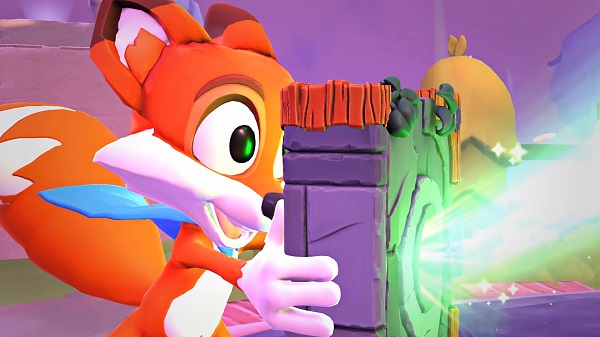
On a technical level, the PS5 upgrade is where this version distinguishes itself most clearly. The jump to 4K resolution and high frame rate – reaching up to 120fps on supported displays – results in exceptionally smooth gameplay that enhances both responsiveness and visual clarity. Load times are minimal, and the overall presentation benefits from cleaner textures and more stable performance compared to earlier console versions. DualSense support adds a subtle layer of immersion through haptic feedback, though its implementation remains relatively light and doesn’t fundamentally change how the game feels in hand.
Visually and audibly, New Super Lucky’s Tale continues to deliver a vibrant and upbeat package, with bright environments and cheerful music that reinforce its family-friendly tone. However, the simplicity of its art direction and sound design can occasionally border on generic, lacking the standout identity seen in genre heavyweights. Even so, the PS5 version represents the most refined way to experience the game, especially given the modest upgrade path for existing owners. While it may not redefine the 3D platformer, it stands as a confident, technically enhanced reminder of why the genre remains enduringly appealing.
Go Home Annie: An SCP Game review (PS5)
Go Home Annie: An SCP Game builds its identity around the unsettling premise of routine exposure to the abnormal, casting players as a low-level employee stuck inside a replication-focused branch of the SCP Foundation. It’s a compelling setup that leans heavily into existential dread, with repetition and controlled experimentation forming the backbone of its narrative arc. While the mystery surrounding Annie’s role and the facility’s true purpose gradually unfolds in intriguing ways, the pacing can feel uneven at times, with stretches of ambiguity that risk dulling the tension rather than enhancing it.
Gameplay revolves around puzzle-solving mechanics tied to anomalous objects and recreated SCP scenarios, and this is where the game finds both its most creative highs and its occasional frustrations. Some puzzles cleverly incorporate SCP logic, requiring players to think laterally and embrace unpredictability, but others lean toward trial-and-error design that can disrupt immersion. The loop of revisiting altered versions of scenarios reinforces the narrative themes, yet also introduces a sense of repetition that may wear thin over longer sessions.
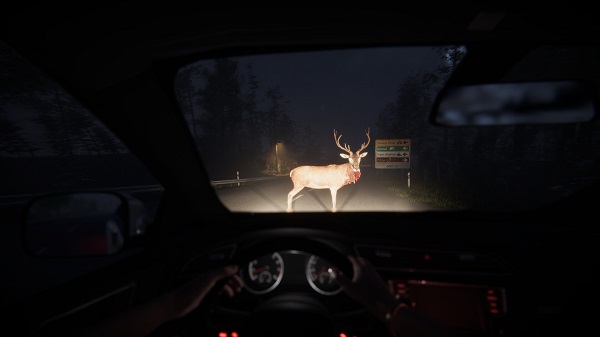
On PS5, the control scheme feels generally responsive, though not always perfectly tuned for the precision some puzzles demand. Movement and interaction are straightforward, but there are moments where environmental feedback or object handling lacks clarity, leading to unnecessary confusion. This is compounded slightly by the game’s reliance on subtle cues, which can either enhance the sense of unease or create friction depending on how clearly those cues are communicated and interpreted.
Visually, the game captures the sterile yet oppressive atmosphere of an SCP facility effectively, blending clinical interiors with increasingly surreal anomalies. Lighting and environmental design do much of the heavy lifting, though character models and animations don’t always match that level of polish. The audio design, on the other hand, stands out more consistently, using ambient soundscapes and sudden distortions to reinforce tension. While not every element lands equally well, Go Home Annie succeeds in translating the SCP universe into an interactive format that feels both faithful and experimental, even if its ambition occasionally outpaces its execution.
 Press Play Media