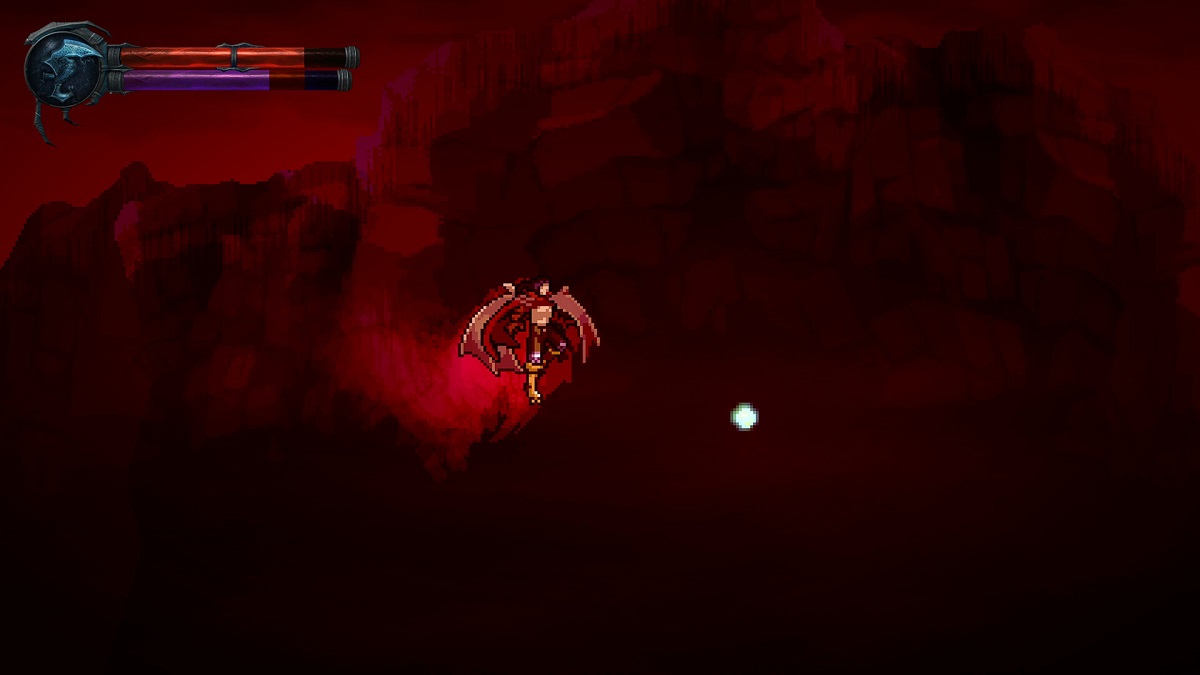
Legacy of Kain: Ascendance marks a surprising return to Nosgoth, reimagining the long-dormant franchise as a fast-paced 2D action platformer under developer Bit Bot Media and publisher Crystal Dynamics. Rather than attempting to replicate the sprawling 3D adventures the series is known for, Ascendance distills its identity into something more mechanically focused, emphasizing vertical traversal, combat chaining, and a multi-perspective narrative that revisits familiar characters at different points in their arcs. It’s an approach that both honors the source material and risks alienating purists, but it ultimately lands somewhere in between – capturing the tone of the original saga while reshaping its structure into something more arcade-like.
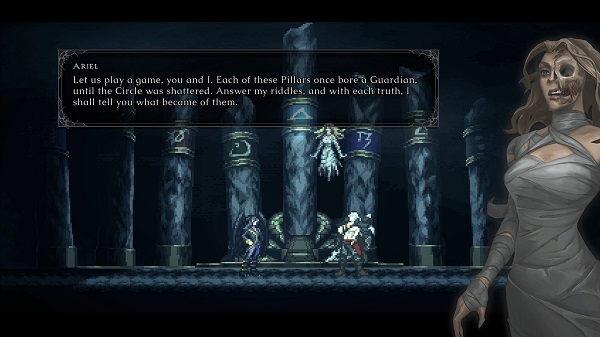
The narrative leans heavily on the franchise’s established lore, weaving together timelines and character perspectives that include Kain, Raziel, and other figures tied to Nosgoth’s ongoing collapse. While the inclusion of multiple protagonists adds variety and context, the storytelling itself can feel fragmented, with transitions that sometimes prioritize momentum over clarity. There’s a clear effort to explore key moments – particularly Raziel’s transformation – but the pacing occasionally undercuts the emotional weight those scenes should carry. Fans of the series will appreciate the callbacks and expanded viewpoints that enrich the lore, though newcomers may find the plot dense and not always well contextualized.
Gameplay is where Ascendance most clearly defines itself, building around fluid movement and combat systems that reward precision and aggression. Characters can chain attacks, dodge incoming threats, and utilize supernatural abilities in ways that encourage constant motion, especially during vertically oriented encounters. This creates a satisfying rhythm when everything clicks, but it also exposes some rough edges – difficulty spikes and enemy patterns can sometimes feel punishing rather than challenging, particularly in later stages. The platforming elements blend naturally with combat, though certain sections lean too heavily on trial-and-error design, disrupting the otherwise smooth flow.
Each playable character brings a distinct feel, with Kain’s heavier, power-driven approach contrasting against Raziel’s agility and aerial mobility. These differences help maintain engagement across levels, though not all playstyles feel equally refined. Some segments stand out for their dynamic pacing and clever enemy placement, while others feel less polished, suggesting uneven tuning across the campaign. The inclusion of multiple combat styles is a strength overall, but the execution occasionally lacks the consistency needed to fully capitalize on the concept.
Controls are generally responsive, which is critical given the game’s reliance on timing and positioning. Movement, attacks, and evasive maneuvers tend to register accurately, allowing skilled players to navigate encounters with precision. However, there are moments where input clarity falters – particularly during more chaotic sequences – leading to frustration when deaths feel avoidable but unavoidable due to readability issues. It’s a system that works well most of the time, but not flawlessly enough to eliminate friction in high-pressure scenarios.
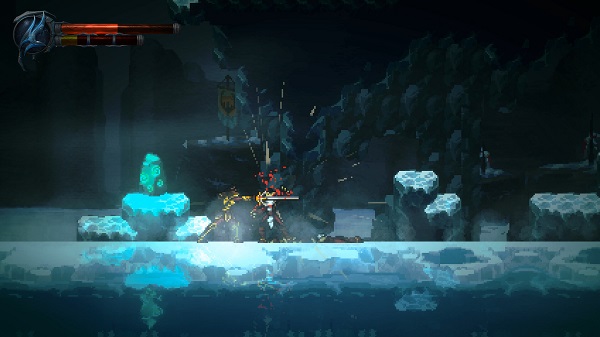
Visually, Ascendance embraces pixel art with a strong sense of atmosphere, successfully translating Nosgoth’s gothic aesthetic into a 2D format. Character animations are fluid, environments are richly detailed, and the use of lighting helps reinforce the world’s decaying, supernatural tone. Cutscenes add an extra layer of storytelling, though their quality can vary. The overall presentation is cohesive and often striking, even if some environmental repetition becomes noticeable over extended play sessions.
The audio design further strengthens the experience, particularly through its soundtrack, which delivers a fittingly dark and intense accompaniment to the action. Voice performances from returning actors add authenticity and nostalgia, though their impact is somewhat limited by the game’s pacing and narrative structure. Sound effects complement the combat well, reinforcing the weight and speed of encounters, but they don’t always stand out individually. Together, the audiovisual elements create a strong sense of identity, even when other aspects of the game struggle to maintain consistency.
Legacy of Kain: Ascendance ultimately succeeds as a reinterpretation rather than a continuation, offering a mechanically driven take on a beloved universe. Its strengths lie in its fluid combat, distinct character playstyles, and atmospheric presentation, while its weaknesses stem from uneven difficulty, narrative fragmentation, and occasional control frustrations. For fans willing to embrace a different format and expand the lore, there’s a compelling experience here – one that captures the spirit of Nosgoth, even if it doesn’t fully recapture its former depth due to its limitations.
Score: 6.5/10
 Press Play Media