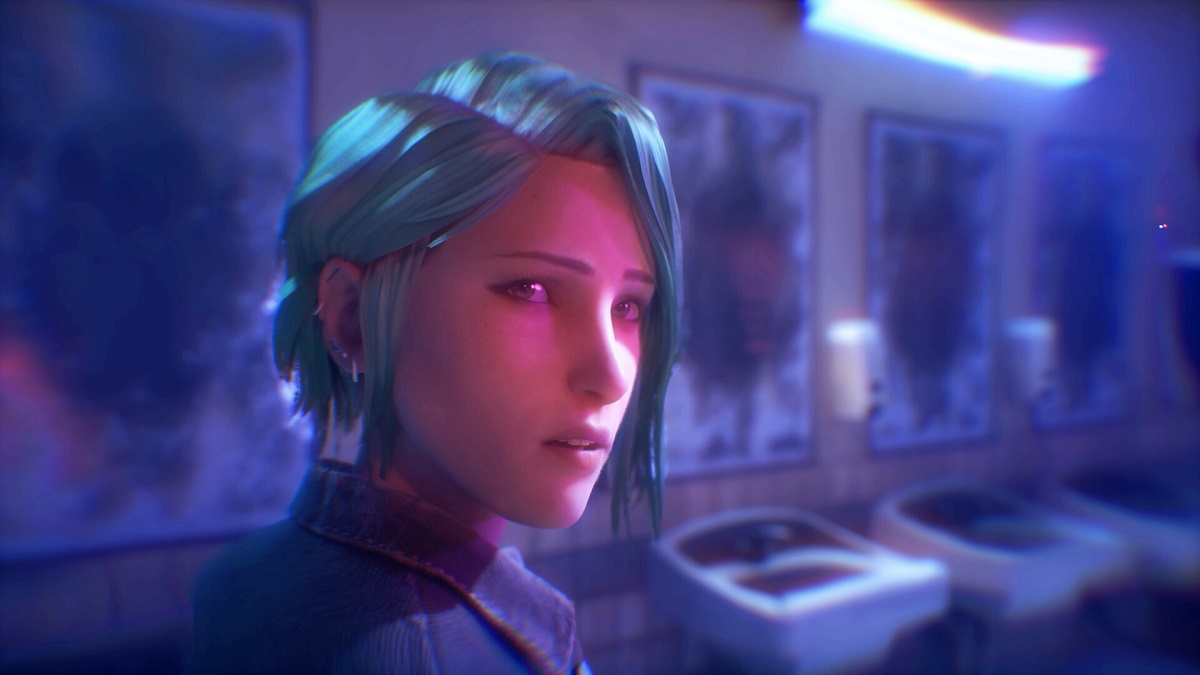
Returning to the world of Life is Strange has always been about more than revisiting characters – it’s about reconnecting with a tone, a rhythm, and a certain emotional vulnerability that few narrative-driven games manage to sustain. With Life is Strange: Reunion, Deck Nine Games and Square Enix attempt to bring closure to Max Caulfield and Chloe Price’s story, framing it as a high-stakes finale that blends supernatural tension with deeply personal conflict. Set against the looming threat of a catastrophic fire at Caledon University, the narrative leans heavily into themes of regret, memory, and consequence. While that setup carries immediate emotional weight, the execution doesn’t always match the ambition, occasionally struggling to balance spectacle with the grounded intimacy that defined earlier entries.
The dual-protagonist structure is one of Reunion’s more intriguing evolutions, allowing players to alternate between Max and Chloe as their perspectives converge on the same unfolding crisis. This approach adds variety and helps flesh out their individual arcs, especially as Chloe grapples with fragmented memories and Max faces the limits of her rewind ability. However, while the shifting viewpoints create narrative momentum, they can also fragment the pacing, with some transitions feeling abrupt or underdeveloped. The emotional core remains compelling, particularly in quieter moments of reflection and dialogue, but the broader plot occasionally leans into melodrama in ways that feel less organic than intended.
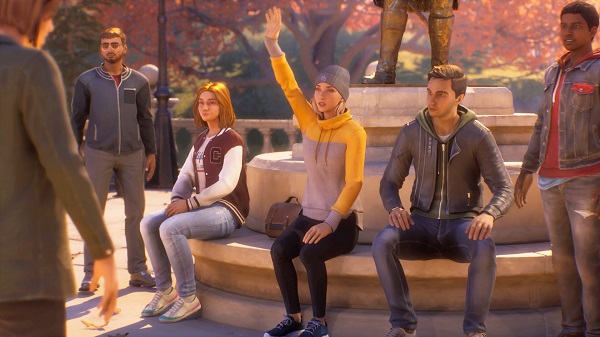
Mechanically, the return of Max’s rewind power is both a strength and a point of contention. It remains a satisfying tool for reshaping conversations and solving environmental puzzles, reinforcing the series’ signature cause-and-effect gameplay loop. At the same time, its expanded use in more complex puzzle scenarios introduces occasional friction, with solutions that can feel either overly guided or unnecessarily opaque. Chloe’s “Backtalk” sequences provide a contrasting gameplay style, emphasizing quick thinking and dialogue manipulation, though these segments sometimes feel less impactful than before, lacking the sharpness and tension that once made them stand out.
Controls on PlayStation 5 are generally responsive and intuitive, maintaining the accessibility that has always been central to the series. Exploration, interaction, and dialogue selection flow smoothly, with only minor issues related to camera positioning or environmental navigation breaking immersion. These are relatively small concerns, but in a game so heavily reliant on emotional continuity, even minor technical distractions can have an outsized effect.
Visually, Reunion delivers a noticeable step up in fidelity, with detailed character models and expressive facial animations that enhance the storytelling. The environments, particularly the university setting, are richly realized and contribute to the sense of an impending disaster. Yet, inconsistencies like occasional stiffness in animations and uneven lighting can detract from otherwise strong presentation values. It’s a polished experience overall, but not one that fully escapes the technical limitations that have followed the series.
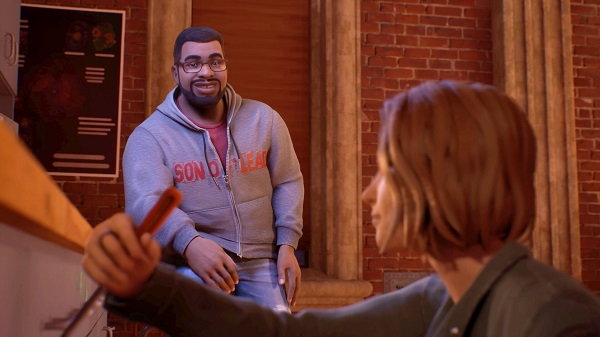
Audio remains one of Reunion’s strongest pillars. The soundtrack blends original compositions with licensed tracks in a way that reinforces the game’s emotional beats, echoing the series’ legacy of using music as a storytelling device. Voice performances are similarly effective, capturing the nuance of both returning and new characters, though some dialogue delivery can veer into overly dramatic territory, reflecting the script’s occasional excesses.
As a conclusion, Life is Strange: Reunion is both a heartfelt return and a somewhat uneven farewell. It succeeds in rekindling the emotional resonance of Max and Chloe’s relationship and offers meaningful player choice, but it also struggles under the weight of its own ambitions, with pacing issues and tonal inconsistencies holding it back from fully realizing its potential. For longtime fans, there’s still a lot to appreciate here – especially in its quieter, character-driven moments – but as a definitive finale, it feels slightly conflicted, caught between honoring the past and reaching for something grander.
Score: 7.5/10
 Press Play Media