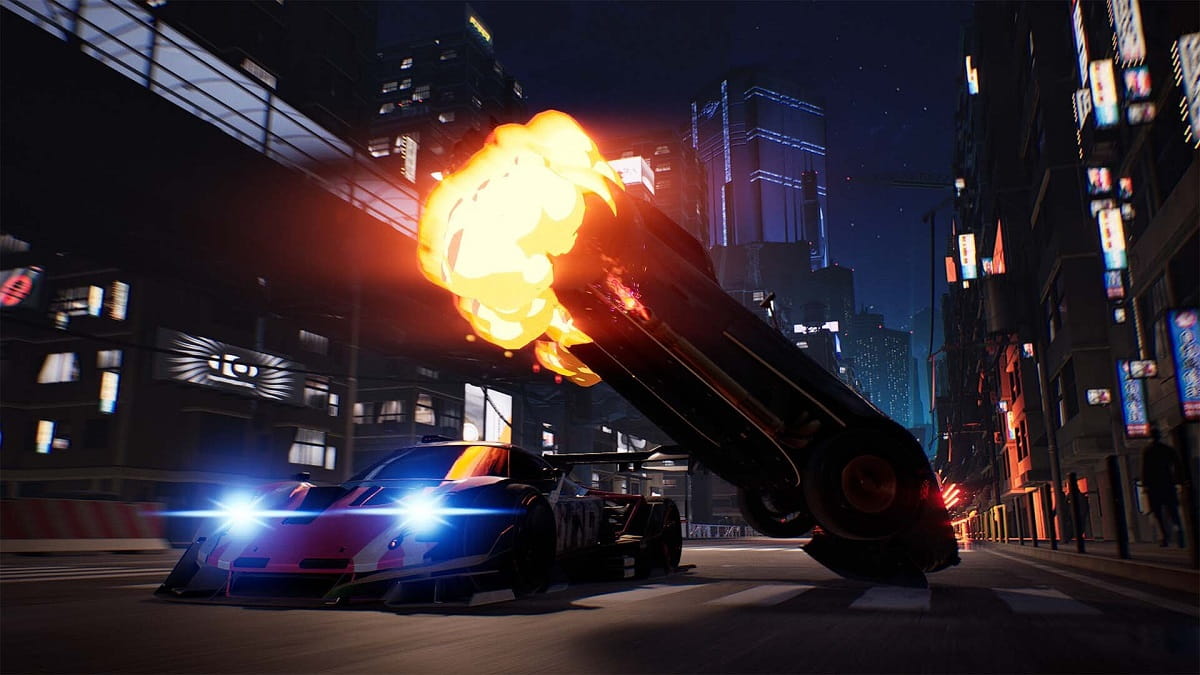
Screamer, developed and published by Milestone, reimagines a classic arcade racing concept through a futuristic, combat-driven lens. Built around a high-stakes tournament structure, the game frames its races as more than mere competitions, with a cast of drivers drawn from wildly different backgrounds, each chasing personal motivations that range from ambition to revenge. While this setup injects a layer of narrative intrigue, the storytelling remains relatively light in execution, functioning more as flavor than as a fully realized narrative arc. The characters and their rivalries add personality to the races, but they rarely evolve beyond archetypes, making the premise engaging in concept but somewhat underdeveloped in delivery.
Gameplay is where Screamer most clearly defines its identity, blending traditional arcade racing with combat mechanics through the ECHO system. This mechanic allows players to juggle between offensive and defensive abilities, creating a constant push-and-pull between speed and aggression. The result is a racing experience that prioritizes moment-to-moment decision-making over pure driving precision, often rewarding well-timed attacks as much as clean racing lines. This hybrid approach adds intensity and unpredictability to races, though it can also lead to moments of chaos where outcomes feel less skill-based and more influenced by timing or opportunistic strikes.
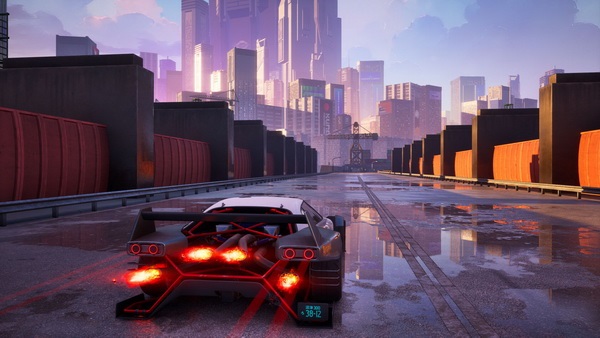
Controls generally support this fast-paced design, offering responsiveness that aligns with the game’s arcade sensibilities. Vehicles feel distinct enough thanks to their unique abilities, and mastering their handling becomes key to success. However, the emphasis on combat can sometimes overshadow the driving itself, with collisions and attacks disrupting flow in ways that may frustrate players looking for a purer racing experience more like the Screamer of 1995 – which was essentially dubbed as “arcade racing on PC” in a time where that was considered near-impossible. There’s a deliberate lack of simulation depth here, which fits the design philosophy but may limit long-term appeal for those expecting more nuanced handling models.
Visually, Screamer leans heavily into a neon-drenched, anime-inspired aesthetic that evokes 1990s sci-fi influences. Tracks are vibrant and stylized, filled with glowing signage, futuristic cityscapes, and exaggerated effects that reinforce the game’s high-energy tone. This presentation is consistently striking, though at times it can become visually overwhelming, especially during intense races where particle effects and on-screen action compete for attention. Despite this, the overall art direction is cohesive and memorable, giving the game a strong visual identity that sets it apart from more conventional racers.
Audio design complements the visuals with an equally energetic approach, featuring a soundtrack that leans into electronic and synth-heavy compositions. These tracks reinforce the sense of speed and urgency, while sound effects emphasize the impact of collisions and abilities. The audio landscape effectively supports the gameplay loop, though it can become repetitive over extended sessions, particularly given the limited variation in musical themes. Voice work and character presentation are serviceable but don’t significantly elevate the narrative elements.
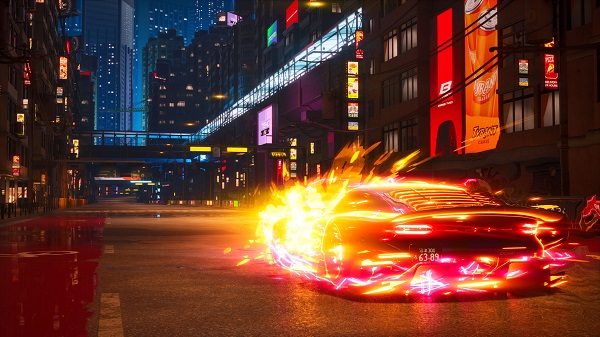
In terms of content, Screamer offers a variety of modes that attempt to diversify the experience, from team-based races to challenges focused on maintaining Overdrive states. These variations help break up the core loop, though they don’t always feel equally compelling. Multiplayer options, including split-screen and online play, add value and extend replayability, but the overall package can feel somewhat constrained depending on how much players engage with its competitive aspects. The reliance on its central mechanics means that enjoyment largely hinges on how well players connect with its combat-racing hybrid.
Ultimately, Screamer succeeds in carving out a distinct niche within the arcade racing genre, delivering a high-octane blend of speed and combat wrapped in a bold visual style. Its strengths lie in its dynamic gameplay systems and striking presentation, but these are balanced by a lack of narrative depth and occasional gameplay chaos that can undermine consistency. For players willing to embrace its aggressive, unpredictable design, it offers an exhilarating ride, even if it doesn’t fully realize all of its ambitions.
Score: 7.9/10
 Press Play Media