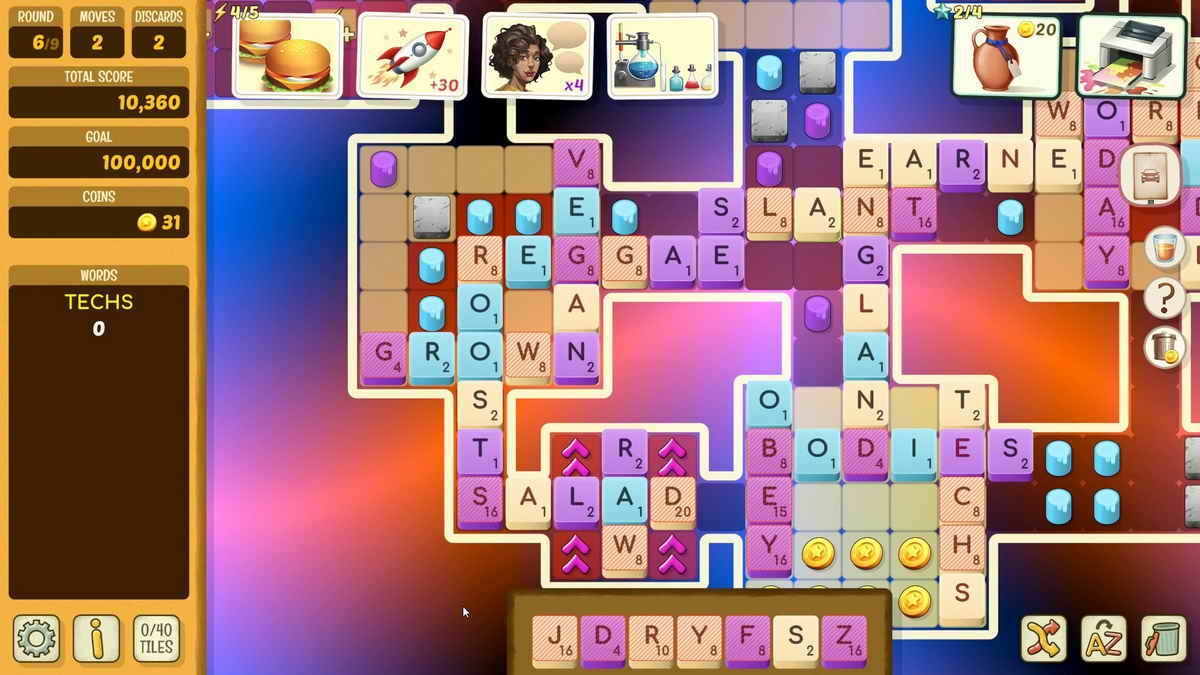
Beyond Words on PlayStation 5 is a new hybrid that merges word-building mechanics with roguelike progression systems, placing it in a relatively unexplored niche. Developed by MindFuel Games and published by PQube, it leans heavily into the idea of turning vocabulary into a strategic toolset rather than a passive puzzle mechanic. The result is a game that feels immediately familiar and Scrabble-like on the surface, yet steadily reveals layers of systemic depth as runs unfold. Its premise is light on traditional narrative framing, instead focusing on the evolving challenge structure and the player’s personal journey through increasingly complex boards and modifiers, which works well for its design but may leave those looking for a “campaign” somewhat underwhelmed.
At its core, gameplay revolves around constructing words from a shifting pool of letters, but the twist lies in how those letters interact with an ever-growing list of modifiers, bonuses, and board conditions. Runs quickly evolve into intricate exercises in optimization, where stacking multipliers, chaining effects, and planning ahead become essential. This creates a satisfying sense of escalation, especially when a carefully orchestrated play results in massive point swings. However, that same complexity can occasionally tip into overwhelm, particularly early on when the game introduces new systems at a brisk pace without always fully contextualizing their long-term value.
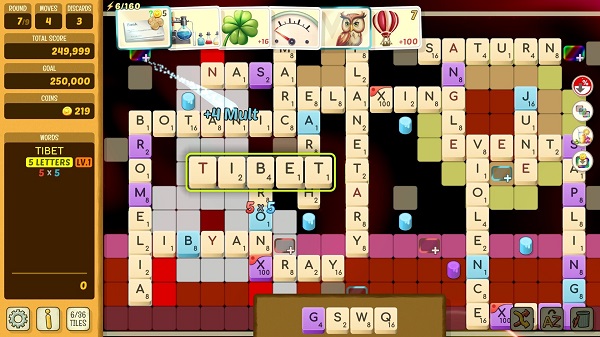
The roguelike structure gives Beyond Words strong replayability, with each run offering different combinations of upgrades, board layouts, and objectives. The sheer volume of modifiers ensures that no two sessions feel identical, and there’s a clear emphasis on experimentation and discovery. That said, the randomness inherent to the format can sometimes lead to uneven runs, where success hinges more on favorable draws than pure strategic planning. While skilled players can mitigate this to a degree, there are moments where the balance feels slightly skewed, especially during tougher boss encounters that dramatically alter the rules mid-run.
Controls are clean and functional on PS5, translating the traditional word-game interface effectively to a controller. Navigating tiles, selecting letters, and confirming words all feel responsive, though there are occasional instances where menu navigation or modifier management becomes slightly cumbersome due to the sheer number of systems layered on top. It rarely becomes a major obstacle, but it does highlight the challenge of adapting what is fundamentally a text-heavy experience into a console-friendly format.
Visually, the game opts for a clean and readable presentation that prioritizes clarity over flair. The interface is designed to keep information accessible, which is crucial given how much data players need to process during a run. While this approach serves the gameplay well, it does result in an aesthetic that can feel somewhat sterile over extended sessions. There are flashes of personality in certain effects and board variations, but overall, the visual design leans more toward function than memorability.
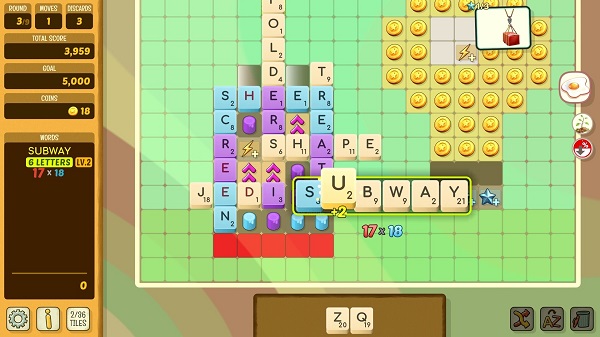
Audio follows a similar trajectory, offering a subdued backdrop that complements the thoughtful pace of play without drawing too much attention to itself. The soundtrack supports the flow of decision-making, particularly during longer runs, though it lacks standout moments that leave a lasting impression. Sound effects tied to scoring and combo-building do add a layer of feedback that reinforces satisfying plays, even if the overall audio design remains understated.
Ultimately, Beyond Words succeeds in carving out a distinctive identity by blending word puzzles with roguelike mechanics in a way that feels both fresh and demanding. It rewards patience, planning, and creativity, offering a deep well of systems to explore for those willing to engage with its intricacies. At the same time, its steep learning curve, occasional balance inconsistencies, and relatively minimal presentation may limit its broader appeal. For players who enjoy dissecting systems and chasing high-score optimization, however, this is a compelling and surprisingly strategic take on a familiar formula, and a must-play for anyone who enjoys wordplay.
Score: 8.5/10
 Press Play Media