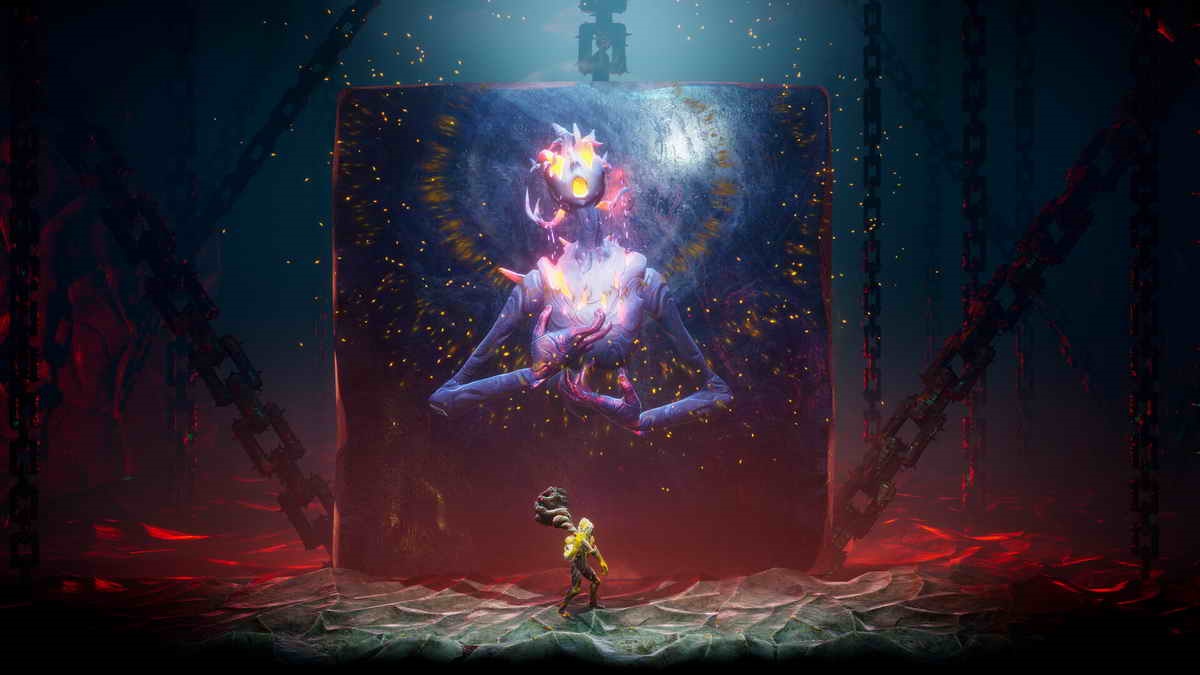
Grime II builds on the foundations of its predecessor with a clearer sense of identity, refining its blend of methodical combat and surreal worldbuilding into something that feels both more accessible and more ambitious. Clover Bite’s follow-up again casts players as a shape-shifting entity, but this time leans harder into the idea of absorbing enemies and repurposing their forms, creating a gameplay loop that ties narrative concept and mechanical execution together in a more cohesive way than before. The result is a sequel that feels less opaque in its opening hours, though it still embraces a deliberately alien tone that won’t resonate with everyone.
The narrative remains intentionally abstract, presenting a world defined more by texture and implication than direct exposition. Civilizations formed around strange materials and organic structures hint at deeper lore, but much of it is left for players to interpret through exploration and fragmented encounters. This approach enhances the sense of mystery, but it also risks emotional detachment, as the lack of strong narrative anchors can make it harder to stay invested in the broader journey. Even so, the environmental storytelling is markedly richer than before, and the world feels more “lived-in” despite its inherent strangeness.
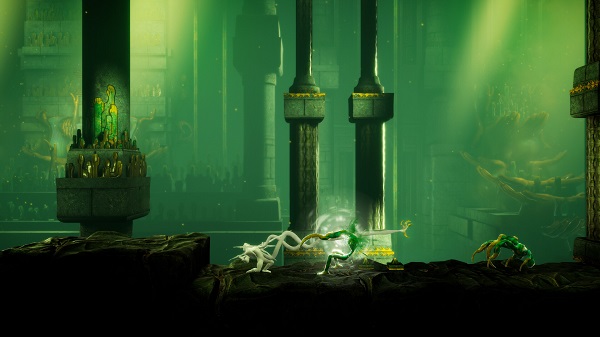
Combat is where Grime II makes its strongest case for improvement. The returning parry-and-absorb mechanics are now complemented by the mold system, allowing players to weaponize defeated enemies in versatile ways. This adds a layer of tactical flexibility, letting players adapt to encounters by mixing melee combat with ranged abilities or situational summons. Encounters feel more dynamic as a result, although the system can occasionally become unwieldy, especially when juggling multiple abilities in fast-paced fights. There’s also a noticeable learning curve, with some mechanics taking time to fully click.
Level design reinforces this combat depth by encouraging environmental interaction. Traps, hazards, and terrain are frequently integrated into encounters, rewarding players who can read the battlefield effectively. This adds a strategic dimension that goes beyond simple reflex-based combat, though it can also lead to moments of frustration when the same environmental dangers are turned against the player. Exploration follows the expected metroidvania structure, with branching paths and ability-gated progression, but the increased variety in traversal options helps keep backtracking from becoming overly repetitive.
On a technical level, the controls are generally responsive, particularly when it comes to movement and parrying, which are critical to surviving tougher encounters. However, some may find the input demands a bit too strict during more chaotic fights, where precision is essential and mistakes are punished heavily. This can create a satisfying sense of mastery over time, but it may also alienate those who prefer a more forgiving approach. Performance on PlayStation 5 is largely stable, supporting the game’s fluid combat, with only occasional minor inconsistencies.
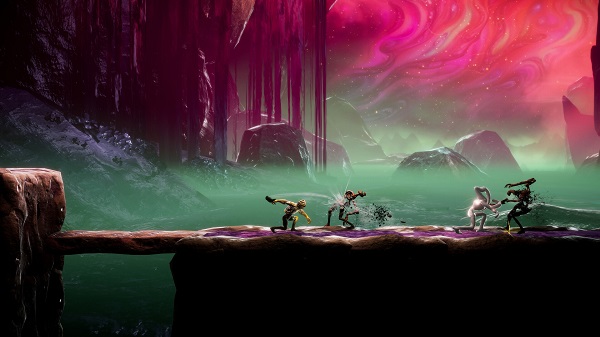
Visually, Grime II continues to stand out with its distinct art direction. The world is grotesque yet captivating, filled with unusual materials and organic forms that give each area a strong identity. The sequel expands on this with more varied environments, making exploration feel less visually monotonous than in the original. That said, the heavy reliance on its signature aesthetic can sometimes blur readability during combat, especially when enemies and backgrounds share similar visual motifs. The audio design complements this well, with an atmospheric soundtrack that reinforces the game’s unsettling tone, even if it doesn’t always leave a lasting melodic impression.
Ultimately, Grime II is a confident evolution rather than a radical reinvention. It refines key systems, expands player expression, and delivers a more cohesive experience, but it also doubles down on design choices that may not appeal to everyone. Its abstract storytelling, demanding combat, and unconventional presentation remain defining traits, for better and for worse. For those willing to engage with its systems and embrace its strangeness, it offers a rewarding and distinctive metroidvania experience, even if it occasionally struggles to balance accessibility with depth.
Score: 8.2/10
 Press Play Media