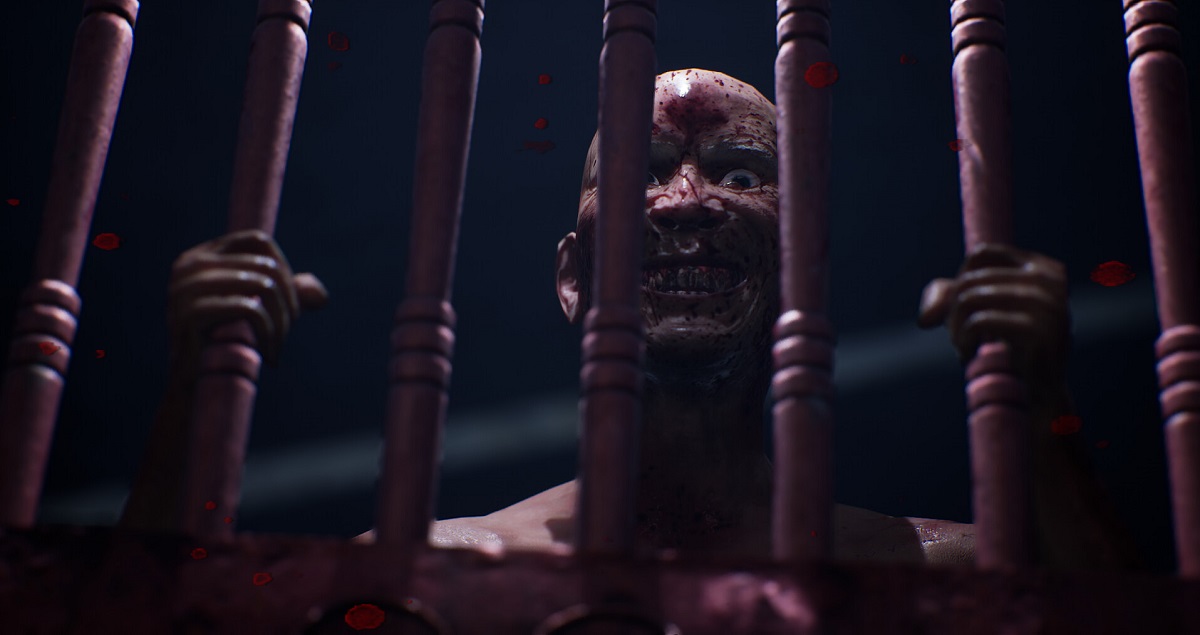
There’s something quietly reassuring about seeing niche titles make the jump to new hardware, and this latest batch of PlayStation 5 ports highlights just how diverse that landscape can be. From slow-burning psychological horror to structurally experimental roguelikes and offbeat point-and-click adventures, these releases don’t chase mainstream appeal so much as they double down on their original identities. The result is a trio of experiences that feel distinctly uncompromised, for better and for worse, offering everything from oppressive atmosphere to surreal storytelling and genre throwbacks that aren’t afraid to show their rough edges.
Incantation review (PS5)
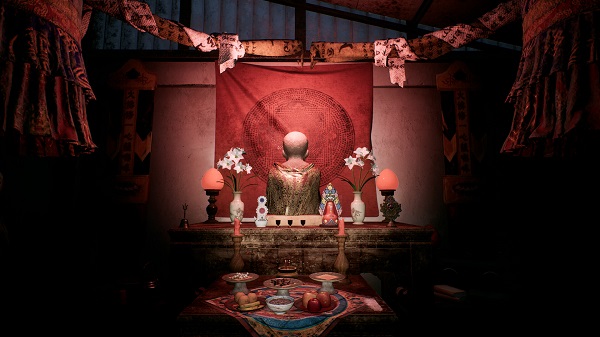
Incantation brings its psychological horror roots to PS5 with a premise that leans heavily on unease rather than spectacle, following a mother’s search for her missing daughter into the remote and deeply unsettling Chen Village. The narrative thrives on ambiguity, slowly unraveling through environmental clues, notes, and fragmented encounters that blur the line between reality and hallucination. This slow-burn approach works in its favor when building dread, particularly through its cult-driven imagery and recurring motifs, though its pacing can occasionally feel drawn out, with key revelations spaced a bit too thinly to maintain consistent momentum.
Gameplay sticks closely to genre conventions, focusing on exploration, light puzzle solving, and stealth in place of combat. The absence of direct confrontation reinforces the vulnerability of the protagonist, and sneaking past threats or avoiding detection adds tension to even simple traversal. Puzzles are generally intuitive and integrated well into the environment, though they rarely escalate in complexity, which may leave seasoned players wanting more challenge. The game’s occasional use of looping spaces and subtle environmental changes adds a layer of psychological disorientation that keeps exploration engaging, even when mechanical variety is limited.
Controls on PS5 are functional and rarely intrusive, supporting the experience without drawing attention to themselves, though stealth interactions can feel a bit rigid at times. This occasionally undermines moments that rely on precision or timing, especially when navigating tight spaces or evading enemies. Still, the overall design prioritizes accessibility over complexity, which aligns with its narrative-driven focus, even if it comes at the cost of depth in moment-to-moment gameplay.
Visually, Incantation succeeds in crafting a deeply oppressive atmosphere, with Chen Village feeling both abandoned and disturbingly alive through its use of lighting, symbolism, and environmental detail. The audio design plays a crucial role here, leaning on ambient soundscapes, distant chanting, and subtle cues rather than excessive jump scares to maintain tension. Technical performance is mostly stable on PS5, though minor hiccups suggest some underlying optimization inconsistencies. Despite these issues, Incantation stands out for its commitment to mood and psychological horror, offering something different even if its modest gameplay systems don’t always evolve at the same pace as its narrative ambitions.
NO-SKIN review (PS5)
NO-SKIN arrives on PlayStation 5 as a deeply unsettling hybrid of roguelike structure and psychological horror, leaning heavily into themes that are often disturbing and provocative. Developed by NoEye-Soft and published by Feardemic, the game centers around a fractured narrative involving substance abuse, violence, and the haunting presence of the titular No Skin Man. Its story unfolds in a deliberately fragmented, almost noir-inspired fashion, leaving much of its lore open to interpretation. That ambiguity works both for and against it – while it enhances the surreal tone, it can also make the narrative feel frustratingly opaque, particularly when key relationships and motivations remain unclear.
Gameplay blends turn-based combat with exploration mechanics that are governed by a persistent timer, forcing players to make calculated decisions rather than grind or wander aimlessly. Early encounters feel relatively simple, but the system gradually introduces more nuanced options like trading or interacting with enemies in unexpected ways, adding strategic layers that reward experimentation. Upgrades further complicate this loop, sometimes subverting expectations in clever ways, although not all systems feel equally refined. The inclusion of a secondary prequel mode adds variety through puzzle-focused gameplay, but some of its mechanics – particularly those tied to chance – can feel inconsistent and underdeveloped.
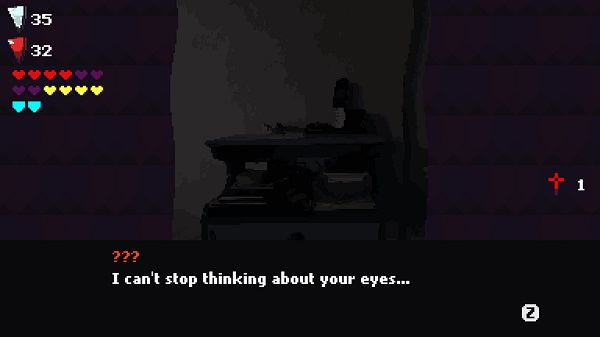
The game’s audiovisual presentation is where NO-SKIN makes its strongest impression. Its distinctive mix of photographic backdrops and hand-drawn pixel art creates an uncanny visual identity that reinforces the discomfort at its core. Enemy designs stand out in particular, with clear visual differentiation that avoids common genre pitfalls and helps maintain readability even as encounters grow more complex. The soundtrack complements this effectively, delivering an eerie and memorable audio layer that elevates the overall atmosphere. However, the same oppressive tone that defines its identity can also become exhausting over longer sessions, especially when paired with the game’s more punishing or opaque elements.
Ultimately, NO-SKIN is not designed for broad appeal, but for players willing to engage with its unsettling themes and unconventional structure, it offers a uniquely memorable experience. Its combination of strategic gameplay, striking presentation, and deeply uncomfortable narrative makes it stand out, even if some mechanical inconsistencies and narrative ambiguity hold it back from broader acclaim. It’s the kind of game that lingers – not always pleasantly – but with enough distinctiveness to justify the journey for those curious enough to step inside its warped world.
NubiaPhobia review (PS5)
Nubiaphobia continues Tonguç Bodur’s streak of offbeat narrative experiments, this time leaning into a point-and-click framework layered with horror aesthetics and an irreverent comedic tone. The premise is deceptively simple – what starts as a mundane errand spirals into a rescue mission involving witches, sacred keys, and a village under threat – but the storytelling quickly reveals a taste for absurdity. The game’s writing thrives on contrast, juxtaposing gore and demonic imagery with playful, often silly humor. While this tonal blend gives the adventure a distinctive identity, it also dilutes any real sense of tension, making the horror elements feel more like window dressing than a driving force.
Gameplay sticks closely to genre conventions, tasking players with solving inventory-based puzzles across a handful of compact regions. There’s a clear affection for classic adventure design here, with solutions that sometimes reward lateral thinking rather than strict logic. At its best, this results in satisfying “aha” moments, but the lack of clarity in certain puzzle chains can just as easily lead to trial-and-error frustration. The relatively short runtime – roughly a couple of hours – means these rough edges don’t overstay their welcome, yet they’re noticeable enough to disrupt the pacing.
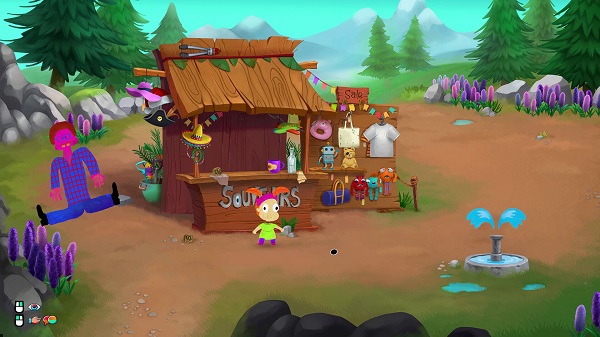
Visually, Nubiaphobia stands out thanks to its hand-drawn presentation, which pairs colorful, almost storybook-like environments with bursts of exaggerated violence. The art direction reinforces the game’s tonal duality, though the limited animation and static scene design can make the world feel less dynamic than it first appears. Audio design follows a similar pattern: the soundtrack complements the whimsical horror vibe effectively, but it rarely leaves a lasting impression. Voice work is absent, placing the burden of delivery entirely on text, which fortunately carries enough personality to keep interactions engaging.
Ultimately, Nubiaphobia is a niche but earnest throwback that will resonate most with players who appreciate old-school point-and-click sensibilities wrapped in a deliberately odd package. Its humor, distinctive art style, and willingness to embrace absurdity give it charm, but uneven puzzle design and a lack of modern conveniences hold it back from broader appeal. For its modest scope and price point, it delivers a brief but memorable diversion – just one that requires patience and a tolerance for the genre’s more archaic quirks.
 Press Play Media