
Sigma Star Saga DX arrives on PlayStation 5 through WayForward, reviving Mighty Rabbit’s unusual genre hybrid with a modernized edge that leans heavily on refinement rather than reinvention. Its premise remains as distinctive as it was in 2005: a spacefaring double-agent narrative where pilot Ian Recker infiltrates an alien empire while navigating divided loyalties. That setup still carries intrigue, but the storytelling tends to oscillate between engaging twists and somewhat uneven pacing, with dialogue and character beats that feel sharper in this updated version yet still rooted in older design sensibilities.
What continues to set Sigma Star Saga apart is its structural duality. On-foot exploration unfolds from a top-down perspective, evoking classic action RPG conventions, while random encounters shift abruptly into horizontal shoot-’em-up battles. This fusion is undeniably novel and remains compelling in bursts, especially as the shooting segments introduce a surprising degree of customization through the Gun Data system. With dozens of weapon modifiers to experiment with, combat becomes a playground for building personalized loadouts, though the frequency of transitions between exploration and combat can still disrupt the overall flow.
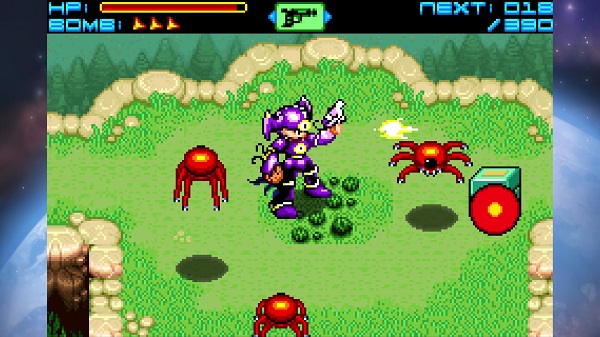
The DX revisions do meaningful work in smoothing out some of the original’s rougher edges. A reduced encounter rate makes planetary traversal less intrusive, while adjustments to progression systems help alleviate grinding. Navigation benefits from an improved map, addressing one of the more persistent frustrations of the original release. These changes collectively make the experience more approachable, although traces of repetition remain, particularly when revisiting similar environments or engaging in extended stretches of combat.
Control responsiveness is generally solid across both gameplay modes, though the shift between genres can feel slightly disjointed at times. Movement during exploration is straightforward, but not especially dynamic, while the shooting segments offer tighter, more responsive handling that better complements the action-heavy design. That contrast highlights one of the game’s ongoing tensions: its two halves don’t always feel equally refined, even if they’re conceptually well integrated.
Visually, Sigma Star Saga DX leans into its retro roots with detailed pixel art that holds up well, particularly in ship designs and environmental variety across its planetary settings. The aesthetic benefits from the cleaner presentation on modern hardware, though it remains stylistically tied to its handheld origins. Audio design follows a similar trajectory, with a soundtrack that enhances the sci-fi tone effectively, even if it doesn’t consistently leave a lasting impression outside of key moments.
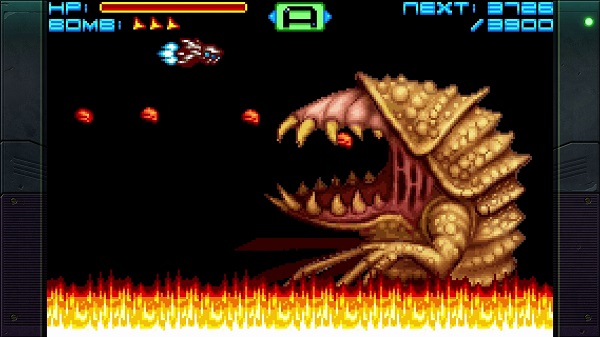
Where the experience occasionally falters is in its pacing and structural repetition. Despite the improvements, the loop of exploration and frequent combat encounters can still feel cyclical over time, and narrative momentum doesn’t always keep pace with the gameplay. The branching story paths and multiple endings add replay value, but they don’t entirely offset the sense that the journey can stretch longer than its strongest ideas comfortably support.
Even so, Sigma Star Saga DX remains a fascinating example of genre blending that feels more confident today thanks to its refinements. It doesn’t fully escape the limitations of its original design, but the updated systems and quality-of-life improvements make it far more accessible and enjoyable than before. For players willing to embrace its hybrid identity, there’s a distinctive and often rewarding experience here – one that still stands apart in a landscape where few games attempt this kind of mechanical crossover.
Score: 7.4/10
 Press Play Media