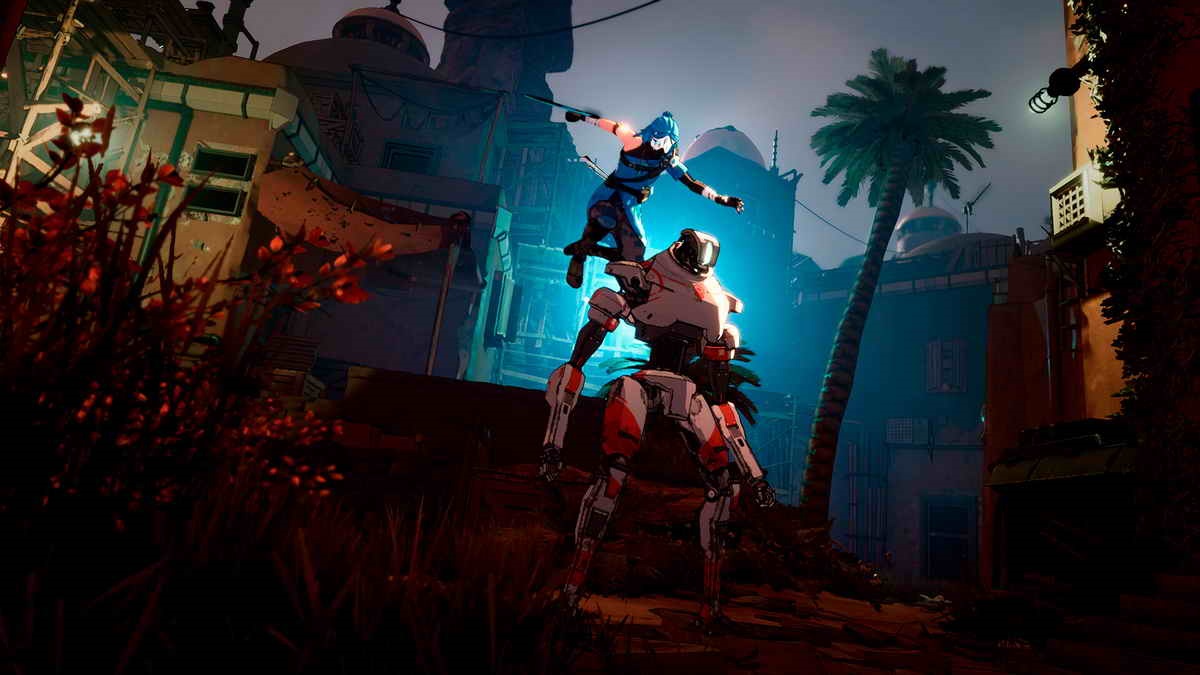
Ereban: Shadow Legacy arrives on PlayStation 5 as a stealth-focused platformer from Baby Robot Games, blending high-tech sci-fi aesthetics with mystical abilities rooted in shadow manipulation. At its core is Ayana, the last of a forgotten people, navigating a collapsing world dominated by corporate exploitation and environmental decay. The premise carries a familiar “last survivor” weight, but its moral ambiguity and emphasis on personal choice give it a slightly sharper edge than expected. Still, while the narrative sets up intriguing questions about identity and legacy, its delivery can feel uneven, with exposition occasionally taking a backseat to momentum, leaving parts of its world underdeveloped.
What consistently stands out is the central gameplay hook: the Shadow Merge ability. This mechanic allows Ayana to slip into shadows and traverse environments in ways that feel both fluid and empowering. It’s an elegant system that encourages creative navigation, whether you’re bypassing patrols or scaling vertical spaces that would otherwise be inaccessible. The result is a stealth experience that feels faster and more dynamic than genre norms, rewarding players who think spatially and move decisively. However, that same speed can occasionally undermine precision, especially in more demanding sections where timing and positioning become critical.
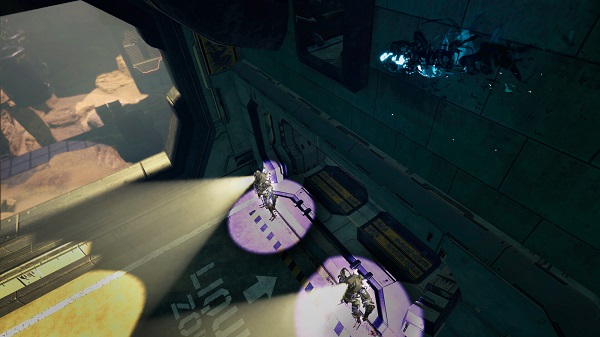
The game’s approach to player agency is another defining feature. Ereban doesn’t force a single playstyle; instead, it lets players decide whether to remain unseen or engage lethally. This flexibility adds replay value and supports different interpretations of Ayana’s role in the world, but the balance isn’t always perfect. Non-lethal approaches can feel more restrictive or less impactful compared to aggressive tactics, subtly nudging players toward confrontation despite the stealth-centric design. As a result, the “play your way” philosophy is present, but not entirely frictionless in execution.
Level design plays a crucial role in supporting these systems, and for the most part, it succeeds. Environments are structured to encourage verticality and experimentation, with multiple paths and hidden routes that reward exploration. There’s a satisfying rhythm to learning enemy patterns and threading through spaces undetected, especially when chaining shadow-based movements together. That said, some sections lean toward repetition, and enemy AI doesn’t always evolve enough to keep pace with the player’s growing toolkit, which can reduce tension over time.
On a technical level, the PS5 version delivers a smooth experience, with responsive controls that generally complement the game’s emphasis on agility. Movement feels tight and immediate, particularly when transitioning in and out of shadows, though occasional camera quirks and minor control inconsistencies can disrupt the flow during more complex sequences. These moments don’t define the experience, but they do stand out in a game so heavily reliant on precision and timing.
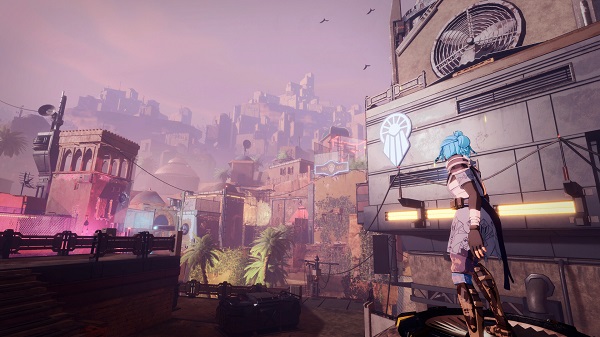
Visually, Ereban presents a striking contrast between its natural and industrial elements. The blend of ancient ruins and futuristic facilities creates a distinct atmosphere, reinforced by strong lighting that makes the shadow mechanics visually intuitive. While the art direction is cohesive and often striking, some environmental textures and details lack the same level of polish, occasionally breaking immersion. The audio design supports the mood effectively, with a subdued soundtrack that emphasizes tension and isolation, though it rarely elevates key moments in a memorable way.
Ultimately, Ereban: Shadow Legacy is a compelling take on stealth platforming that distinguishes itself through its shadow-based traversal and emphasis on player freedom. Its strengths lie in its core mechanics and the sense of fluidity they enable, even if its narrative and systemic balance don’t always reach the same heights. For players willing to engage with its systems and experiment with its possibilities, it offers a unique and often satisfying experience – one that doesn’t fully escape its rough edges, but still leaves a lasting impression through its ambition and identity.
Score: 7.3/10
 Press Play Media