It’s always nice to see games reach new audiences by getting ported to different platforms. We’re taking a look at Pestersim (a bundle of Hiveswap Friendsim and Pesterquest), Anthology of Fear, Slipstream and Ravva and the Phantom Library today – which all made it onto (new) consoles recently.
Pestersim review (PS5)
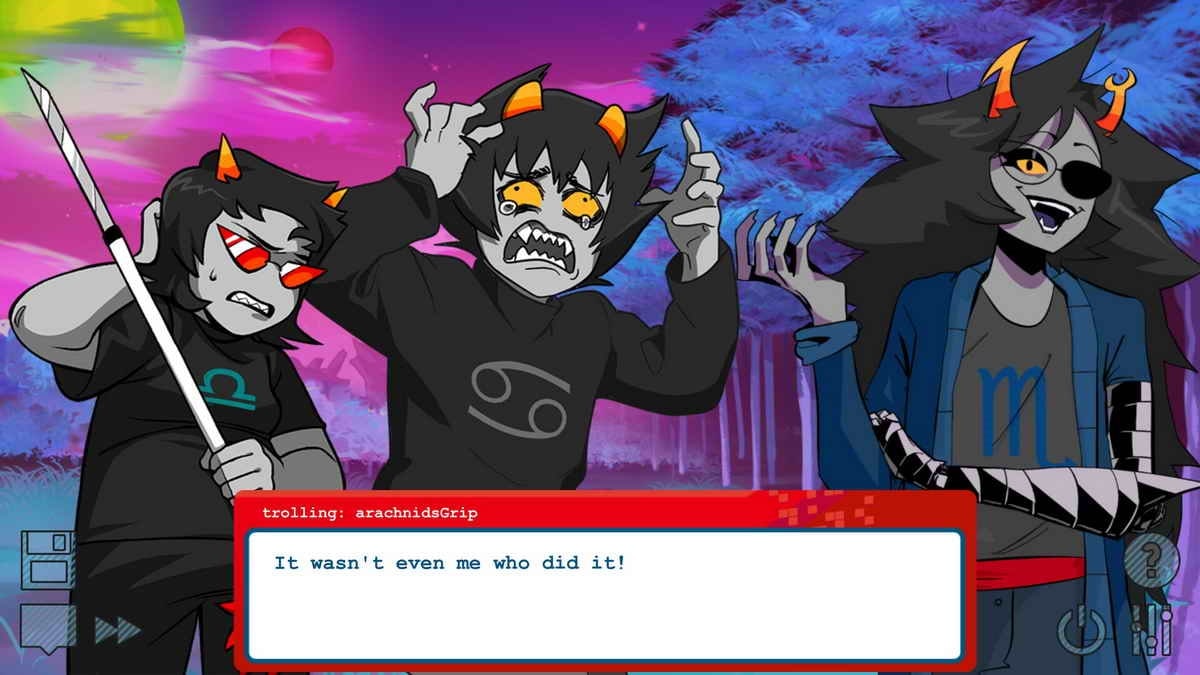
Pestersim isn’t a game in and of itself, but rather a compilation of two visual novels: Hiveswap Friendsim and Pesterquest, which both take place in a darkly humorous universe created by Andrew Hussie. Developed by What Pumpkin Games and published by Fellow Traveller, this PlayStation 5 release comes a few years after the PC original.
Starting with Hiveswap Friendsim, the game introduces players to an episodic visual novel adventure set in the harsh landscape of Alternia. As an unnamed protagonist, players navigate decision points in the story that can lead to either abrupt endings or progression in relationships with characters from Hiveswap Act 2 – a game that isn’t included in this bundle but was well-received on PC. The game’s format, while entertaining, feels a little shallow compared to other visual novels, with friendships wrapped up quickly in short chapters. The cast of characters, comprised of trolls and vampires, adds variety, and the narrative, although humorous, lacks an overarching plot, resulting in narrowly defined and somewhat hollow relationships.
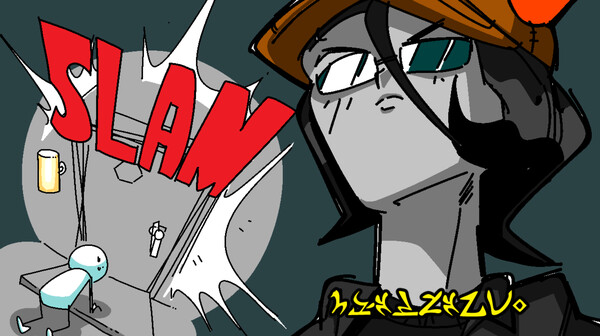
Moving on to Pesterquest, the sequel explores a time-travel twist, picking up where Hiveswap Friendsim left off. The game introduces human children to the cast, alongside more mature themes. Chapters remain short and the game structure encourages short gameplay sessions, and the overall experience feels shorter than its predecessor. The narrative still unfolds with binary decision points, occasionally branching but primarily leading to success or failure in befriending characters. The writing maintains a cheeky and humorous tone, so if Hiveswap Friendsim appealed to you you’ll have a good time with this one as well.
Visually, both games feature charming and cohesive art, portraying a variety of characters and settings. The backgrounds, while detailed, lack animation, and character entrances/exits may appear all a bit sudden as a consequence. The soundtrack stands out as a highlight though, offering light-hearted and catchy melodic tunes that complement the overall tone.
In summary, Pestersim presents a reasonably competent compilation of visual novels within the Homestuck universe. The humor, while enjoyable in moderation, can feel a little forced, and the adult themes in the second game may clash a little with the overall tone of the bundle. The charming visuals and stellar soundtrack contribute to a relaxed and upbeat atmosphere though, making it a decent addition to the genre without significantly raising the bar.
Anthology of Fear review (PS5)
Anthology of Fear, a collaborative effort by OhDeer Studio and 100 GAMES, brings players to the forefront of a one-man investigation, immersing them in unsettling locations on the PlayStation 5 as they strive to unravel the mystery behind a missing brother. The game’s narrative, marked by a lack of clarity and a relatively short duration, introduces a dream-like world where the absence of a clear antagonist adds to the overall unnerving atmosphere. And while the somewhat disjointed plot and brevity of the story may deter those seeking a more substantial narrative, it contributes to a sense of desperation and dread that propels the player forward.
In terms of gameplay, Anthology of Fear adopts a walking simulator framework interspersed with basic puzzles that temporarily halt your progress. This simplicity might appeal to some, but the maze-like nature of the maps and the abundance of empty rooms in the early game may frustrate players. However, the intentional dream-like confusion you experience is also acknowledged in the story, making it a matter of taste. The game’s second half features more variety in settings, thus offering a more engaging experience for players.
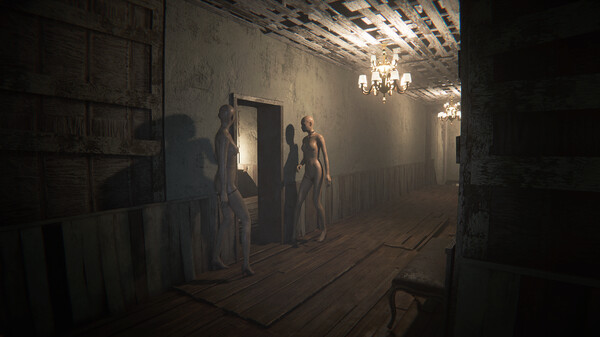
Visually, Anthology of Fear presents a mix of suitably weird and realistically crafted environments. While some maps effectively convey the sense of something being profoundly wrong, the appearance of odd human models that could use a lot more detail is less impressive, falling short in the scare department. The standout feature lies in the audio work, with chilling sounds such as creaks, moans, and groans enhancing the overall horror experience and making it a good game to play with headphones.
Despite the atmospheric successes, Anthology of Fear features inconsistent and occasionally even predictable scares. Some sequences manage to build tension effectively, but the game rarely capitalizes on this, leading to an overemphasis on an eerie atmosphere. While things like mannequins contribute to the creepy ambiance, other elements can fall a little short. The game’s brevity, unresolved narrative, and occasional control issues contribute to a mixed experience. Ultimately, Anthology of Fear offers an intriguing premise and atmospheric qualities but may leave players craving a more substantial and polished horror experience. Horror fans will find this one to be a nice short diversion though.
Slipstream review (PS5)
BlitWorks Games, in collaboration with developer ansdor, has brought the nostalgic arcade racing experience of Slipstream to the PlayStation 5, following its PC debut in 2018. Crafted by Brazilian creator Sandro Luiz de Paula as a homage to classics like OutRun and the home computer gems that followed it (like the Lotus series), Slipstream endeavors to capture the essence of late 80s and early 90s visuals, music, and gameplay. Boasting a custom game engine, Slipstream presents authentic pseudo-3D graphics reminiscent of the age that inspired it, offering an appealing blend of retro aesthetics and unique design.
The core gameplay of Slipstream mirrors the iconic OutRun formula, challenging players to navigate through five stages with branching paths and a ticking clock, challenging you to make it to each checkpoint in time. Introducing innovative mechanics, Slipstream does away with gear shifts, replacing them with a drifting system activated by precise button inputs. Slipstreaming allows players to strategically tail opponents for a speed boost as well, which is a great touch. Beyond the generic rivals, special opponents in each stage add a layer of challenge and pay homage to classic arcade traditions as well – reminding us of games like Chase H.Q.
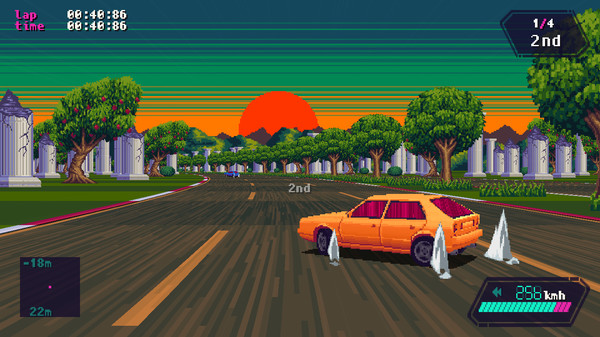
Accessibility is a key focus in Slipstream, offering features like a rewind mechanic that comes with a cool VHS-like effect and various customization options. Players can tailor the experience with settings such as automatic or manual drifting, opponent speed adjustments, and even a CRT filter for that authentic retro feel of playing on an arcade monitor. With a diverse range of game modes, including the Grand Prix championship with upgradable cars and the customizable Cannonball mode, Slipstream provides a well-rounded gaming experience that goes well beyond a simple arcade mode.
While Slipstream’s pixelated graphics contribute to its retro charm, occasional inconsistencies and asset recycling in certain tracks may be noted – even though this was of course a regular occurrence back in the day. The synth-pop and jazz fusion-inspired soundtrack enhances the overall racing atmosphere, complementing the pixelated visuals. Slipstream’s standout features lie in its genuine sense of speed, precise controls, and engaging gameplay. Having a local split-screen multiplayer accommodating up to four players is also great, making Slipsteam a compelling choice for enthusiasts yearning for the classic arcade era.
Ravva and the Phantom Library review (PS5)
Ravva and the Phantom Library, a collaborative effort between Galope Studios and Eastasiasoft for the PlayStation 5, invites players to embark on another pixelated journey with Ravva. Building upon the success of its predecessor, the game once again features Ravva, a summoner owl armed with magical companions, each bringing unique powers to aid in escaping the titular Phantom Library. The narrative unfolds within a structure in which time and space are lost, drifting between worlds and offering players a chance to explore all kinds of haunted books, each presenting its own set of challenges.
The game’s seven large and diverse stages are a testament to the developer’s commitment to diverse mechanics and challenging bosses. Players are given the freedom to choose their path through these stages, creating an open-world feel with varying difficulty levels. The introduction of difficulty settings, including Easy, Normal, and Master modes, ensures an inclusive experience for players of different skill levels.
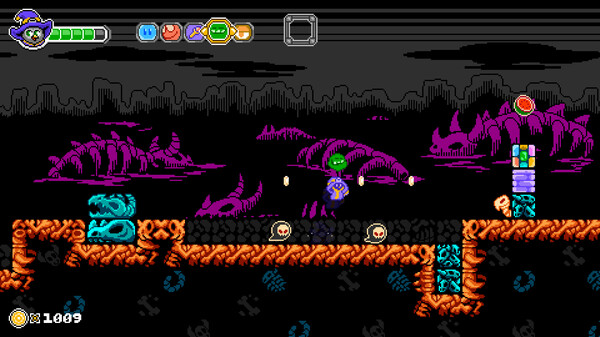
Ravva’s companions stand out as a key feature in making the experience distinct, with each possessing unique powers crucial for overcoming obstacles. The game introduces optional missions within stages as well, providing completionists with the opportunity to unlock a secret ending by achieving 100% completion across all levels. However, switching between weapons can be cumbersome, impacting the game’s pacing and flow.
Despite its small imperfections, Ravva and the Phantom Library succeeds in delivering an engaging puzzle-platformer with substantial improvements over its predecessor. The game’s effective retro aesthetic, varied themes, and intricate level designs contribute to a visually appealing experience. While certain elements may feel repetitive, Ravva and the Phantom Library manages to carve out its own space in the indie game landscape, capturing the essence of classic platformers with its enchanting worlds and engaging gameplay – an easy recommendation at its price point.
 Press Play Media