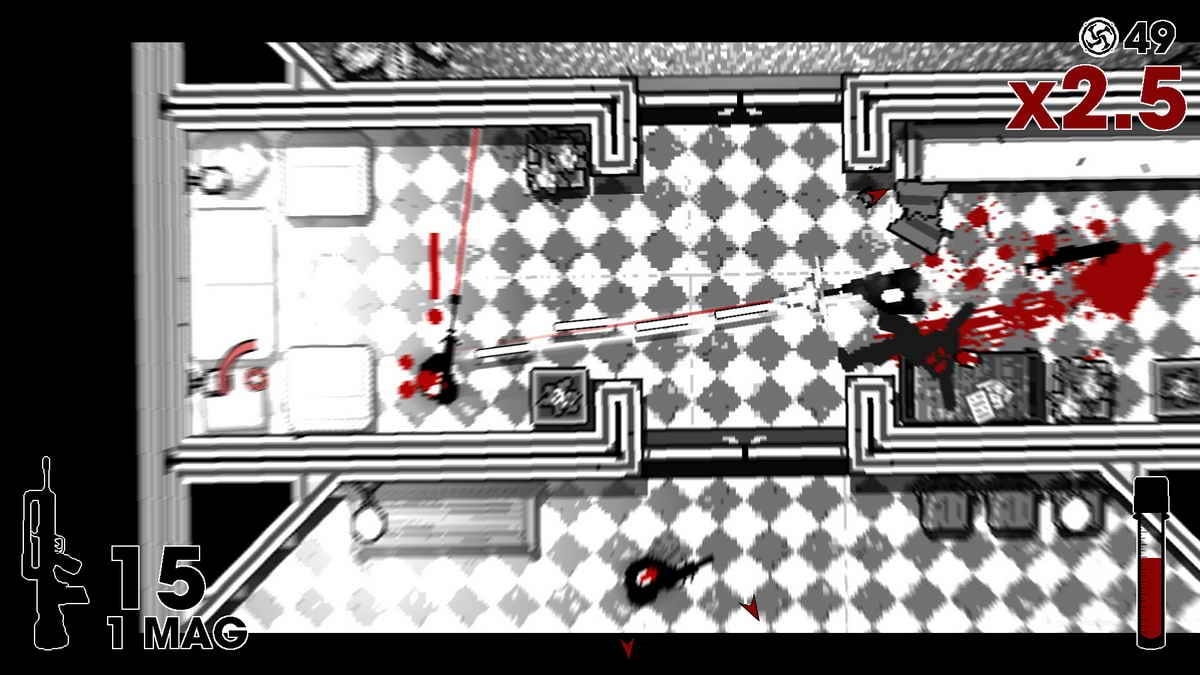
In the realm of top-down shooters, OTXO emerges as a gritty contender that wears its influences proudly on its pixelated sleeve. Developed by Lateralis Heavy Industries and published by Super Rare Originals, OTXO plunges players into a violent, roguelite experience that echoes the adrenaline-fueled chaos of the celebrated Hotline Miami games that came out about a decade ago. While it shares the same DNA as its predecessor in terms of visceral combat and minimalist visuals, OTXO introduces its own twists and turns to the formula, though not without stumbling a little along the way. Here’s our take on the PlayStation 5 version, after the PC version launched last year.
Set in a mysterious mansion, OTXO places you in the shoes of an unnamed protagonist driven by an unrelenting desire to reunite with a lost love. This premise, though minimalistic, serves as a sufficient backdrop for the relentless bloodshed that ensues. The game wastes no time in inundating players with action, punctuating brief respites at the bar with frenzied encounters against waves of enemies. The lack of an intricate narrative may disappoint those seeking a deeper story, but for enthusiasts of pure, unadulterated mayhem, OTXO delivers in spades.
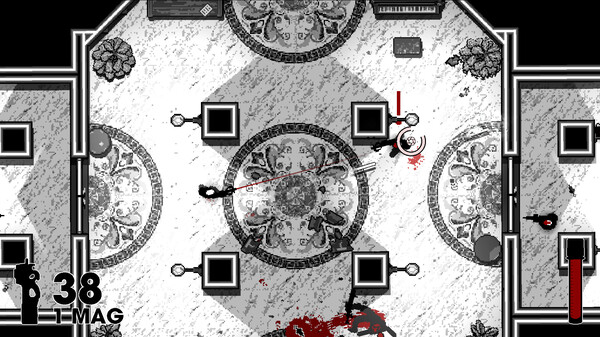
Where OTXO truly shines is in its core gameplay mechanics. Much like Hotline Miami, the controls are simple yet effective, allowing for seamless movement and precise aiming as you navigate through procedurally generated rooms. The addition of the Focus mechanic adds a layer of strategy, empowering players to briefly slow down time and execute flawless maneuvers amidst the chaos. This not only enhances the sense of empowerment but also serves as a lifeline in the face of overwhelming odds. What worked in Max Payne still works two decades later.
However, despite its solid foundation, OTXO falters in its execution of roguelike elements. While the randomization of rooms injects a degree of unpredictability, it also leads to a sense of repetition as you traverse through similar environments in each run. The lack of meaningful permanent progression exacerbates this issue, leaving players feeling like they’re treading water rather than making tangible strides forward. Additionally, the dearth of enemy variety further exacerbates the monotony, with standard grunts comprising the bulk of adversaries encountered. At the end of the day, you’ll probably miss Hotline Miami’s carefully designed levels.
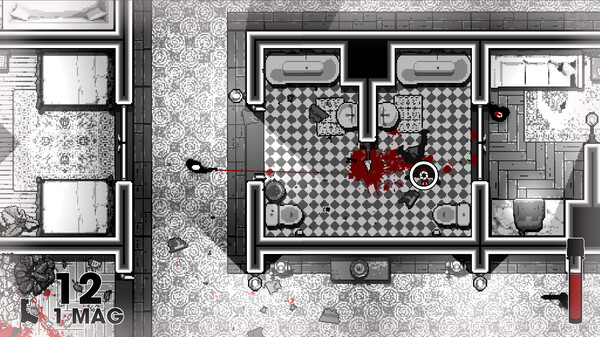
Visually, OTXO embraces a simplistic pixel art style reminiscent of its predecessors. While effective in conveying the frenetic action on-screen, the black-and-white visuals can occasionally make it difficult to discern certain elements amidst the chaos as well due to a lack of contrast. Furthermore, occasional camera issues detract from the overall experience, causing disorientation during crucial moments of combat.
On the auditory front, OTXO fares better, with a pulse-pounding soundtrack that underscores the intensity of each encounter. Composed by the developer himself, the gritty noir-esque score further immerses players in the brutal ballet of murder that unfolds within the confines of the mansion. Hotline Miami’s soundtrack was equally memorable, and OTXO has taken it to heart as a source of inspiration.
In conclusion, OTXO serves as a worthy spiritual successor to Hotline Miami, offering frenzied arcade action and satisfying gameplay mechanics. While its roguelike structure may lead to moments of repetition and its visuals occasionally falter, the heart-pounding combat and adrenaline-fueled gameplay make it a compelling experience for fans of the genre. OTXO captures the essence of what came before while carving out its own identity in the crowded landscape of top-down shooters, and makes a worthy addition to any enthusiast’s library.
Score: 8.0/10
 Press Play Media