With Frogue, Go Go Jump!! and Stellar Interface, we are reviewing three indie titles that were first released on Steam and recently made the jump to consoles.
Frogue review (PS5)
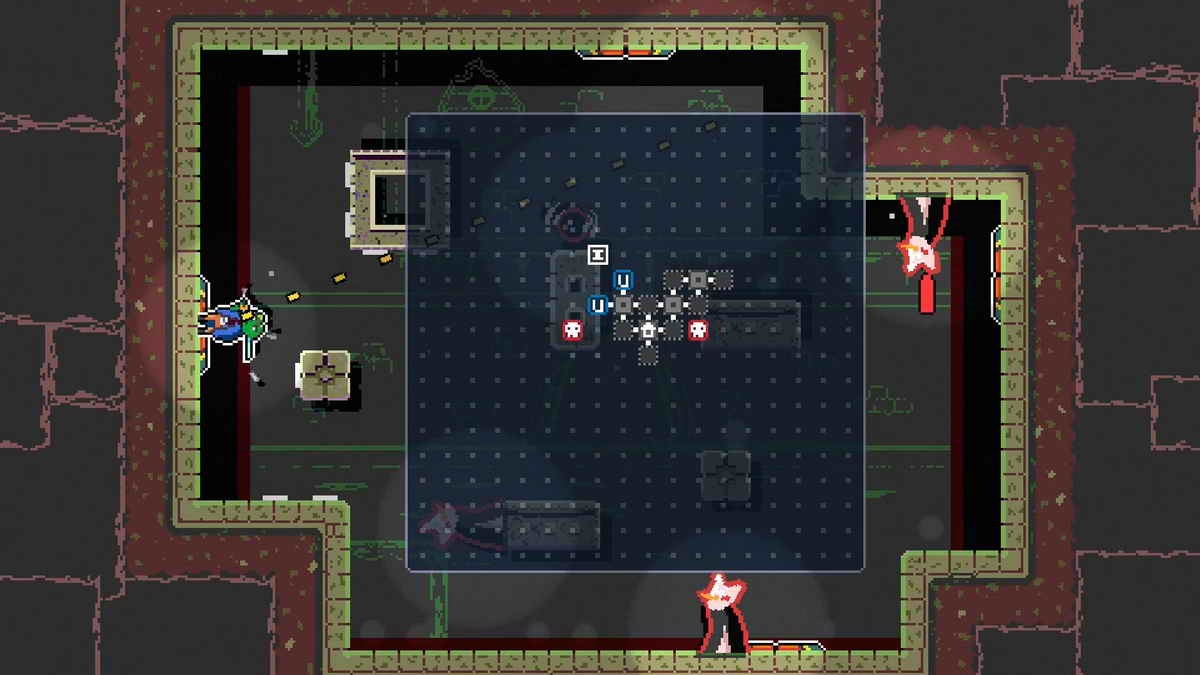
Frogue, originally developed by Wired Dreams Studio and published on consoles by Qubyte Interactive, brings a rather unique blend of roguelike mechanics and bullet hell platforming from PC to consoles. Players control a samurai frog as you go through procedurally generated arenas filled with enemies and projectiles. The combat system stands out, particularly because of the dash mechanic that allows the frog to teleport and kill enemies in its path. It’s a combination of locomotion and combat that provides a smooth and fun experience.
The gameplay is more complex than you’d imagine though, requiring strategic thinking due to a movement system where the frog sticks to surfaces and can only hop diagonally. Things happen turn-based as well, adding a puzzle-like element to each encounter, demanding a degree of planning to avoid projectiles and set up your next attack. However, this also comes with a high difficulty level that can be daunting for some players.
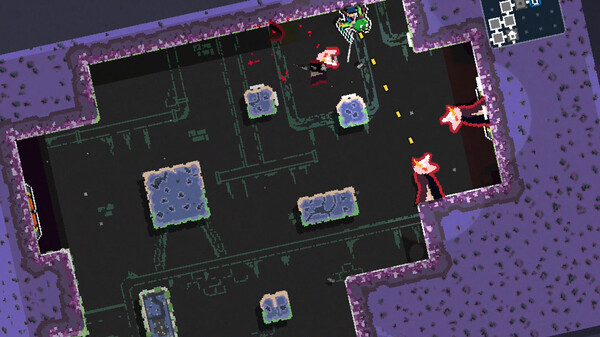
While the procedural generation ensures varied runs, the limited variety in upgrades can make the gameplay feel repetitive once the novelty of the core mechanics wears off. As with many roguelikes, it can also be hit and miss what you get, as you might not get your favorite power-ups in a run. Despite these drawbacks, the audio enhances the frenetic action, and the clean and attractive pixel art effectively conveys the intense moments.
In conclusion, Frogue offers an engaging and relatively unique gameplay experience that blends platforming action, roguelike mechanics and strategy elements well. Its high difficulty might not appeal to everyone, but for those who enjoy a challenge and appreciate innovative mechanics, it’s a worthwhile adventure.
Go Go Jump!! review (PS5)
Go Go Jump!!, developed by Dexter Manning and published by Eastasiasoft for consoles, is a ‘survival platforming adventure’ that has a simple concept and a charming look and feel. The game’s premise revolves around conquering the Jump Masters and mastering various Survival and Challenge scenarios, all with basic controls that just involve moving left, right, and jumping. And while the premise is straightforward, the challenge lies in dodging obstacles and navigating increasingly difficult levels as you’re doing that.
The gameplay mechanics are designed to be accessible, but prove demanding before too long. Players must navigate through a series of stages, each divided into three parts, where a single hit results in restarting the stage. The game cleverly uses visual cues to signal upcoming attacks, adding a rhythm-like element to the platforming action. This mechanic can be both a strength and a drawback; while it offers a predictable challenge that rewards observation and memory, it might also feel repetitive over time as it’s pretty much the same formula through the entire game.
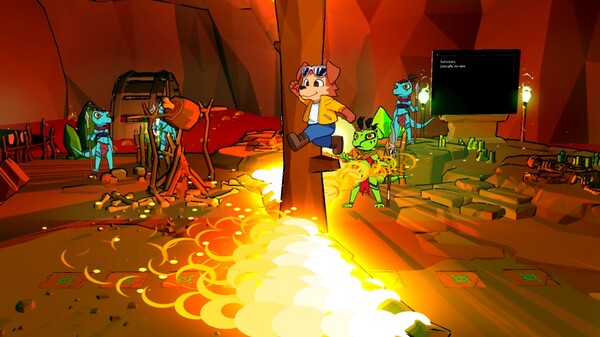
In terms of graphics, Go Go Jump!! uses 3D cell-shaded environments that give the game a vibrant and colorful feel. The game compensates for its budget limitations with lots of fouth wall-breaking humor, and features characters that are fully voice-acted. They frequently make comments about the game’s design constraints, adding a meta layer of charm that sets it apart from other indies. It might not be enough to sustain interest for all players in the long run though, particularly those seeking more depth and variety in the core gameplay.
The audio complements the visual and narrative style, with the voice acting adding to the overall quirky atmosphere. Ultimately, despite its simplicity and occasional repetitiveness, this makes Go Go Jump!! a fun and engaging experience, especially for those who appreciate a blend of humor and enjoy playing in short bursts. While it may not revolutionize the platforming genre, its unique personality and straightforward mechanics offer a pleasant diversion for players looking for an easy-to-pick-up, hard-to-master adventure at a budget price point.
Stellar Interface review (PS5)
Stellar Interface recently launched for the PlayStation 5 (and other consoles) by ImaginationOverflow, is a dynamic space shooter that takes the classic shoot ’em up genre and adds modern roguelike elements. Originally released on PC way back in 2016, it’s out now on consoles and takes players on an ever-changing journey through a randomly generated universe. You can unlock different spacecraft, gather perks, and face off against various galactic overlords, all while striving to conquer the formidable Last Overlord. And while that sounds like an epic narrative-driven tale, Stellar Interface sticks to the shoot ’em up formula pretty well.
The gameplay in Stellar Interface is fast-paced, with a rich variety of over 100 perks and consumables to pick up and use. These can also be combined to match your playstyle, keeping each run unique and compelling and adding plenty of replay value. Together with the game’s randomized levels, this ensures no two experiences are the same. Each spacecraft that you start out with offers unique starting perks and can be outfitted with a diverse array of weapons, including cannons, missiles, and lasers. It’s a challenging shooter no matter your loadout though, so it’s satisfying when you finally overcome the game’s bosses after battling through a tough level to get there.
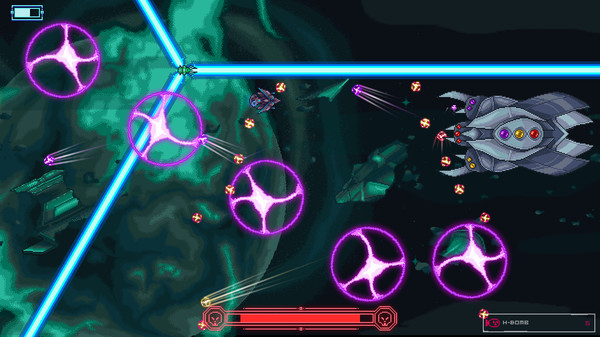
Visually, Stellar Interface features retro-inspired pixel art. The various spacecraft, enemies, and environments are all crafted with a good amount of detail, creating a visually appealing experience without becoming too overwhelming or distracting. The energetic soundtrack and sound effects further enhance the game’s intense space battles, while the user interface is simple and intuitive, making it easy to manage the numerous customization options. These elements combine to create an audiovisually engaging package for an indie production
However, the heavy reliance on randomization can sometimes result in frustratingly difficult runs, especially when the perks and consumables don’t synergize well and you’re dealing with an already challenging game. Additionally, the narrative elements never quite live up to the premise, but that’s easy enough to overlook in a shooter. Despite these minor shortcomings, Stellar Interface shines with its replayability and enjoyable gameplay, making it a noteworthy addition to the PS5’s indie game lineup – especially if you enjoy shoot-’em ups and roguelikes mechanics.
 Press Play Media