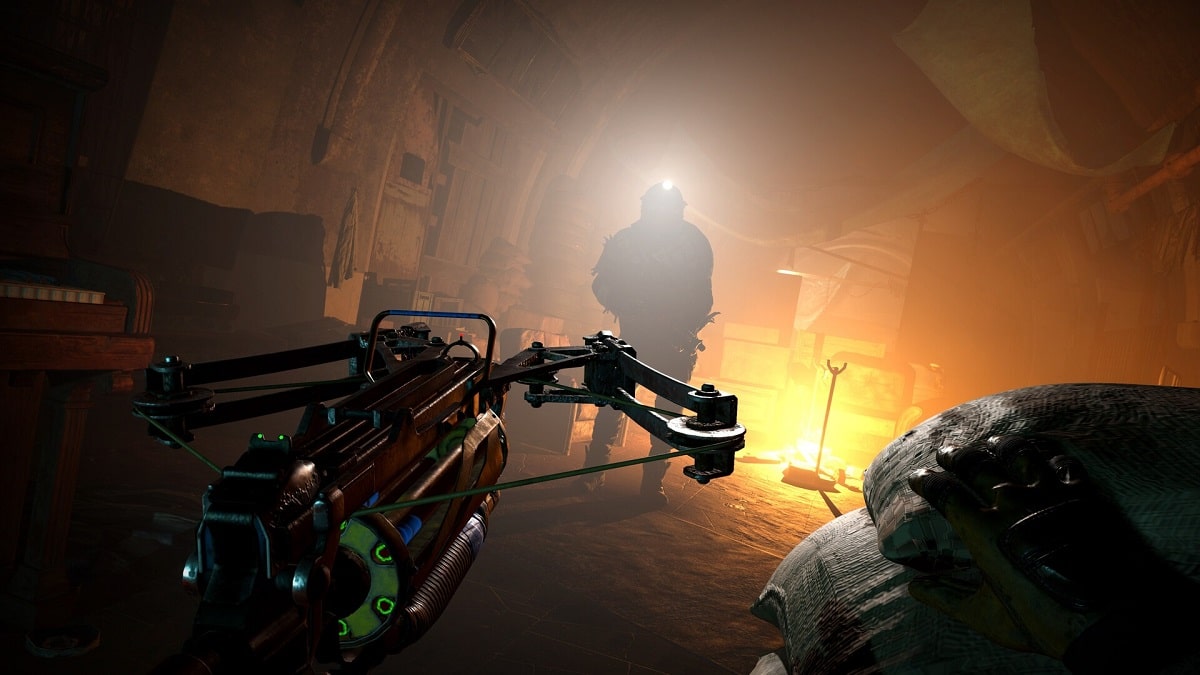
The Metro series has long been known for its tense atmosphere, gripping storytelling, and immersive world, all stemming from the post-apocalyptic vision of Dmitry Glukhovsky. With Metro Awakening, the franchise ventures into virtual reality for the first time, offering players a whole new level of immersion. Developed exclusively for VR, Metro Awakening promises to be a unique blend of exploration, stealth, and combat, set within the haunting depths of the Moscow Metro. After going hands-on with the PSVR2 version at Gamescom, we were eager to dive deeper into this thrilling virtual experience.
What we know
Metro Awakening takes place in the year 2028, after nuclear Armageddon has ravaged the surface, forcing humanity to seek refuge underground in the Moscow Metro. The story follows Serdar, a doctor searching for his missing wife while battling the environmental horrors and threats lurking within the Metro. The game is built from the ground up for VR and focuses heavily on immersive exploration, blending stealth mechanics with intense combat scenarios. Players will utilize a range of handmade weapons and the signature gas mask as they navigate dark tunnels, fight off mutants, and encounter supernatural elements. It’s a supernatural origins story set in Glukhovsky’s chilling universe, with all the atmospheric tension and survival elements Metro fans have come to expect.

What we saw
At Gamescom, we had the opportunity to try a hands-on demo of Metro Awakening on the PSVR2. During our session, we played through a tense mission, interacting with the game’s environments through motion controls and experimenting with the combat mechanics. Vertigo Games’ demo gave us a chance to test the VR immersion firsthand, particularly how the game handles interactions with objects and enemies.
What we thought
The first thing that strikes you about Metro Awakening is how well the game translates the core Metro atmosphere into VR. The darker visuals work incredibly well, using shadows and minimal light sources to heighten tension without needing to overwhelm the player with too much detail. Instead, the ambiance of the Metro’s creepy, dimly lit tunnels takes center stage, and it’s impressive how the PSVR2 captures that claustrophobic, foreboding feel.
On the gameplay side, Metro Awakening succeeds in offering the same intense action fans of the series are familiar with. However, the addition of motion controls brings a new layer of challenge, especially during combat. While gunplay feels satisfying when executed correctly, the extra steps needed to handle reloading and aiming in VR can lead to some fumbles, especially in high-pressure scenarios where time is of the essence. It’s a double-edged sword: the physicality of the controls enhances immersion but might frustrate some players in more frantic moments.

The game’s narrative, which we only got a glimpse of during the demo, looks like it’s shaping up to be an intriguing part of the experience. As Serdar, you’re not just fighting for survival but also navigating a personal quest for answers, which adds emotional weight to the usual Metro survival formula. With the inclusion of spiritual elements and supernatural phenomena, Metro Awakening seems poised to expand on the series’ lore in exciting ways.
Overall, Metro Awakening looks like it could be a standout title for VR headsets, combining the signature Metro elements with immersive VR gameplay. There’s a lot to look forward to, but some fine-tuning (or a smooth learning curve) with the controls might be necessary to ensure the experience is as smooth as possible for a broader audience. Fans of the series, especially those with a VR setup, should definitely keep this one on their radar.
 Press Play Media