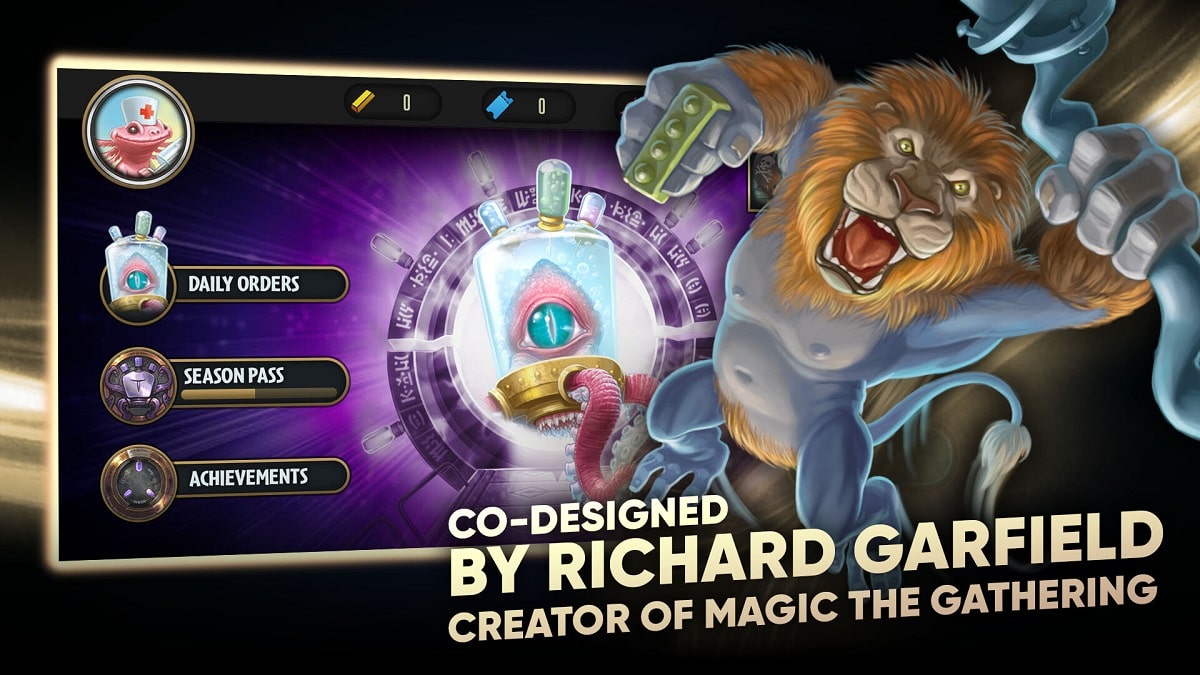
Card game fans will recognize the name Mindbug, which has been a bit of a runaway success since it launched. During Gamescom, we caught up with Kissaki Studios, who are currently working on Mindbug Online – the digital version of the game that was co-developed with Richard Garfield of Magic: The Gathering fame. We caught up with them to find out more.
What inspired you to bring Mindbug from a physical card game to a digital platform and what can you share about the development process?
When we founded Kissaki Studios, our individual tastes in video games were quite diverse. Some of us preferred entertaining mobile games, while others leaned towards complex strategy games, classic trading card games, 4X titles, and rogue-likes. Everyone had their own preferences. However, when Marvin introduced the first Print & Play version of Mindbug, we were all instantly captivated, which inspired us to explore how to bring it to life digitally.
Mindbug Online is our first game, and none of us on the founding team had prior experience in the video game industry. Essentially, everything was a challenge as we pursued our dream of developing our first video game. We quickly discovered that we excelled at creating new game modes and implementing the game mechanics. However, we faced challenges with designing a cohesive user interface, producing the necessary assets, and integrating animations into the client. At the start of the project, we made the decision to prioritize the physical version of the game, which turned out to be the best choice we could have made. The board game community provided valuable feedback that not only improved the physical game but also helped refine our digital prototype. This gave us both the time and opportunity to build the skills our team needed.
Can you share more about how Richard Garfield’s experience as the creator of Magic: The Gathering influenced the development of Mindbug?
Richard and Skaff had a huge impact on the game. Not only did they help us design individual cards, but they also had a huge impact on the overall game design. Here’s an example: The final rule of having a deck of 5 cards and drawing regularly from it was called “Richard Mode” during the entire design phase because we started with a completely different mechanic in the game before.
One of the most exciting aspects of Mindbug is its “Mindbug mechanic,” can you elaborate on this mechanic?
It was inspired by a really nerdy problem in theoretical computer science called https://en.wikipedia.org/wiki/Secretary_problem which has a single player interviewing a bunch of candidates for a position. When they see each candidate, they have to pick to stop and hire that one or let them go and see the next. This is essentially how the mindbugs work (except with weird creatures instead of secretaries. They were always a part of the game. In the beginning, they were just called diamonds (where each player had two diamonds). It was Marvin’s idea to call them Mindbug and to make this the name of the game. This was a really good idea as it highlights the area where we are different than all the other card battling games.
The Mindbugs affect the dynamics and the perception of a battle in multiple ways. When you lose a Mindbug battle, you always know which of your decisions made you lose the game. With the Mindbugs you always have the chance to actively change the outcome of the battle, and take away the winning move from your opponent. Furthermore, the fact that the opponent also has Mindbugs at his disposal, pushes you to take the position of your opponent and think about his strategy and what happens when the opponent mindbugs your card. Do you have an answer to your own creatures? These Mindgames give a battle the ‘tickle’, and gives purpose to every decision you take. In combination with the timer running down, this gets even more tense.

Mindbug is known for having no weak cards, and each card feels incredibly powerful. How do you balance the game when every card seems “overpowered,” ensuring that matches remain fair but challenging?
Two answers here: The Mindbugs and creatures countering other creatures. Usually when an opponent plays, e.g. a power 10 creature, the answer is to play a poisonous card which will usually also be defeated in the battle, but it will also defeat the Power 10 creature. The Answer to a poisonous creature is a tough creature, as it will stay in game if it is defeated once. If it is defeated a second time it goes to the discard pile. Usually an answer to a tough creature is a creature with a higher Power Value. Analogue is the Sneaky and the Hunter abilities. So on the one hand you use creatures you have in your hand to counter your opponents’ creatures, but if you don’t have one, you still can use one of your two Mindbugs, to steal the creature from your opponent and bring it into play on your side of the battle.
The art style in Mindbug is quirky and unique, complementing the powerful abilities of each card. How did the visual design evolve?
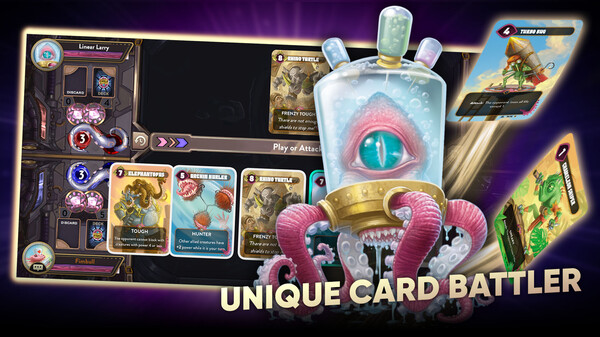
When we started the implementation of Mindbug Online, we thought about whether to stay with using cards to display the creatures or to transform them into 3D Models of the respective creature. As we wanted to stay close to the mechanics of the physical game, and as our Mindbug Community originates from the physical game we decided to stick with the cards. After that decision, our main target was to realize a consistent User Experience in the Arena, and to adapt the cards visually to the context of the arena. Therefore we started to provide alternate card frames and to provide visual upgrades to the cards, like the foil effect or the 3D effect on the card. We had the most fun creating the animations and sounds when a card effect triggers, but the effects not only look nice – they also help the players to understand what just happened in the arena. The playtesters and the closed beta community really helped us here and gave as valuable feedback about which animations we need to implement to make the actions transparent without killing the Mindbug experience from the pyhsical game (where you don’t have a visual update of the Power level of a card which receives a +1 Power boost from an allied shield bug in play).

How has the reception been for Mindbug Online so far from those who have played the game?
We received very positive feedback from the Mindbug Community. We have players interested in competitive play and therefore we worked hard to provide a ranked mode and to support tournaments and organized play. The casual gamers helped us to identify the right animations we should implement, so the player can understand what just happened in the game when effects trigger and the board state changes. With our limited capacities, the feedback from the community really helped us to focus on the right features to implement, like e.g. the indicator to visualize which player has to take a decision at the moment.
Since Mindbug isn’t a collectible card game, how do you plan to keep players engaged long-term in the digital version?
A Set-Based Model, inspired by the Physical Game, as a core value we hold is transparency and fairness. While Mindbug might feel like a trading card game, we have worked hard to avoid the pitfalls of typical trading card game monetization. There are no random booster packs, and we don’t believe players should have to spend excessive amounts of money chasing rare cards or luck-based loot boxes. Instead, we’ve mirrored the business model of the physical Mindbug game. In Mindbug Online, when you buy a set of cards, you own all the cards in that set. You don’t have to worry about incomplete collections or spending more just to stay competitive. In Competitive Seasons, each set forms the foundation of the competitive environment for about three months, aligning with a seasonal structure. During this time, players who purchase the set can play as much as they like and participate in ranked play. If you choose not to purchase the newest set, you can still enjoy Mindbug Online by challenging friends or playing against the AI with your existing sets. If you want to climb the ranked ladder in a new season, you can test the new set with your free games first. If you like it and want to continue competing with it, you can purchase the new set, but again, you only buy it once for a fixed price of €9.99. No hidden fees, no ongoing subscriptions, just one purchase for full access. For those who enjoy unlocking cosmetics and other customization options, we also offer a special Mindbug purchase. Think of it as a kind of season pass, but without any time pressure or expiration date. Once you purchase a Mindbug, you can continue progressing with it as long as you want, unlocking exclusive cosmetics and showing off your style. It’s entirely optional and has no impact on gameplay or your competitive edge, keeping the experience fair for everyone.
 Press Play Media