
In our first roundup of indiegames of 2025, we’re looking at the recent console release of The Tale of Bistun as well as The Legend of Cyber Cowboy and Rivenaar’s Grove.
The Tale of Bistun review (PS5)
Based on the ancient Persian tale of Khosrow and Shirin, The Tale of Bistun is a narrative-driven adventure that blends myth and magic with fast-paced combat and exploration. Released on PC back in 2022 and set against the majestic but sometimes dangerous slopes of Mount Bistun, the story follows an amnesiac stone-carver who must uncover his identity while battling strange creatures across both physical and mystical realms. The intriguing premise, rooted in Persian folklore, is a refreshing departure from more familiar Western fantasy tropes and is part of why we talked to the developer about the game a few years ago.
The storytelling stands out as the game’s strongest feature. A narrator recounts the protagonist’s journey with a poetic flair that draws players into the world’s rich mythology. This voiceover approach adds a unique charm, though it can feel overused at times, especially during slower gameplay sections. The game immerses players in its setting through visually striking environments inspired by Mesopotamian landscapes, with Mount Bistun towering as both a literal and metaphorical challenge. But while the art style evokes a sense of wonder, some environments feel a bit too repetitive, reducing the sense of discovery as the adventure progresses.
Combat plays a significant role in the experience, featuring a mix of melee attacks and magical abilities to help you fend off enemies. The mechanics are straightforward, making combat accessible, but they lack depth, resulting in encounters that can become predictable and repetitive over time as you mash buttons on your way to victory. Boss fights provide a welcome change of pace but aren’t quite as memorable as the game’s narrative moments.
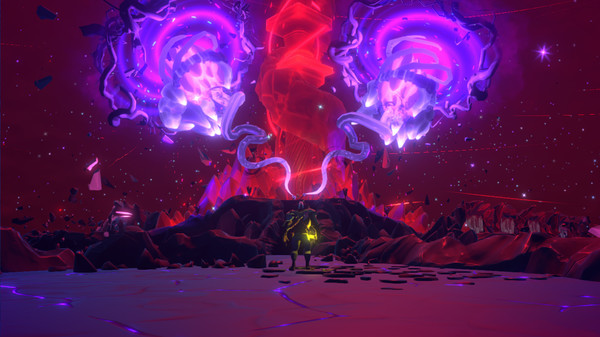
The controls are generally responsive, which is essential for combat-focused sections, but there are instances where movement and combat interactions feel clunky, especially during more intense battles. However, the game’s overall presentation makes up for these shortcomings. The soundtrack, which blends traditional Persian music with more atmospheric tracks, enhances the game’s immersive qualities, while the narrator’s performance adds emotional weight to key moments.
While The Tale of Bistun may not stand out for its gameplay mechanics, it shines as a story-driven experience. Its focus on Persian folklore offers a fresh perspective in the action-adventure genre, and its narrative is both heartfelt and thought-provoking. Though combat and pacing issues may hinder its broader appeal, those who appreciate culturally rich storytelling will find plenty to enjoy here.
The Legend of Cyber Cowboy review (PS5)
The Legend of Cyber Cowboy takes the twin-stick shooter genre and mixes it with a Wild West theme and steampunk-inspired cybernetics. As a gunslinger equipped with a mechanical arm, players battle waves of robotic enemies across procedurally generated levels. The game’s quirky pixel art style immediately stands out, with vibrant visuals that give the world a distinctive indie charm. However, while the aesthetic is appealing, the level designs often feel repetitive, which over time lessens the impact of the otherwise fun premise.
Combat is fast-paced, with chaotic bullet-hell sequences that require quick reflexes and strategic dashes to avoid projectiles. The twin-stick controls generally work well, but during boss battles, the sheer number of enemies and projectiles can make things feel overwhelming. While the core mechanics are solid, there’s a noticeable difficulty spike that might frustrate some players, especially given the limited guidance on how to best approach each encounter without resorting to trial and error.

Collecting energy tokens to purchase new weapons adds some progression to each run, but the variety of upgrades is underwhelming, and they don’t always feel all that impactful either. The procedural structure keeps things fresh to some extent, but it can also make runs feel repetitive, as the game lacks a stronger narrative or incentive to keep pushing forward. This hurts the game’s long-term appeal, especially in comparison to other roguelike shooters.
Despite its shortcomings, The Legend of Cyber Cowboy delivers an enjoyable budget-priced experience for fans of twin-stick shooters. Its charming visual style and fast-paced action stand out, but inconsistent difficulty and repetitive elements hold it back from reaching its full potential. Those looking for a fun, quick arcade-style experience will find enjoyment here, but it may fall short for those seeking more depth.
Rivenaar’s Grove review (PS5)
Rivenaar’s Grove features a new take on sliding puzzles by blending familiar mechanics with fantasy themes. As a magician’s apprentice, your task is to harvest crops across fields using a specific movement system, where you can only move in straight lines until hitting an obstacle. The concept feels familiar yet distinct enough, as the game’s top-down perspective and colorful, whimsical visuals make it a pleasant experience to dive into. The playful presentation works well to set a lighthearted tone, though it lacks the narrative depth that could have made the adventure more engaging.
At its core, the gameplay is easy to grasp but quickly ramps up in complexity as new mechanics like traps, portals, and obstacles are introduced. Navigating through the 50 levels requires careful planning, especially when attempting the more challenging modes that limit your moves or impose time constraints. This progression keeps things interesting, but it can also lead to frustration when solutions aren’t immediately obvious. Fortunately, the game’s forgiving respawn system lets you retry levels quickly and without penalty, making it approachable for puzzle fans of all skill levels.

The controls in Rivenaar’s Grove are simple and responsive, though the relative lack of variety in gameplay can make longer sessions feel repetitive. Once you’ve mastered the core mechanics, the game doesn’t introduce enough fresh ideas to keep the experience evolving. The challenge modes add some replay value, but the overall loop may feel a bit shallow for players looking for more depth in their puzzle-solving adventures – this is one of those games that you play for fifteen minutes at a time and then come back to the next day.
Despite its limitations, Rivenaar’s Grove succeeds as a bite-sized puzzle game with charming visuals and accessible gameplay. Its intuitive mechanics make it easy to pick up, but the gradually increasing difficulty ensures that there’s enough challenge to keep players engaged. It may not stand out in the crowded puzzle genre, but it’s a solid pick for those seeking a relaxing yet occasionally tricky puzzle experience.
 Press Play Media