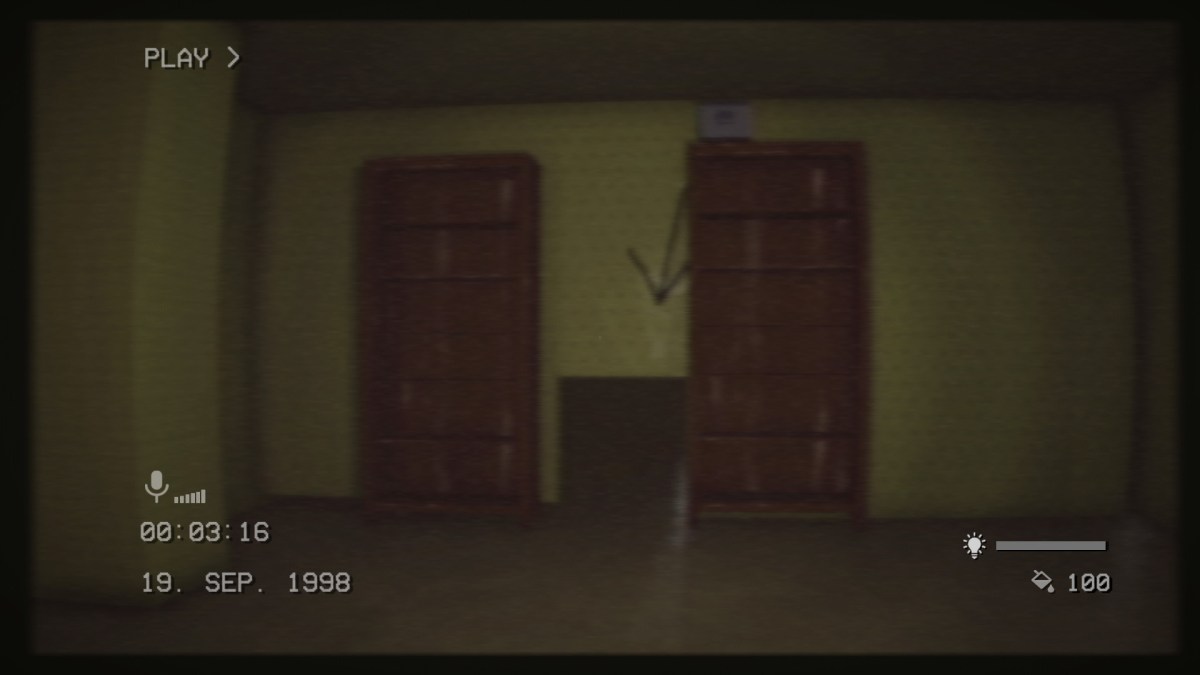
The Backrooms 1998 – Found Footage Survival Horror Game brings the unsettling internet myth of the Backrooms to life through a found-footage lens, creating an oppressive and terrifying experience. Developed by Steelkrill Studio and now released on PlayStation 5 by Feardemic, this indie horror title leans heavily on atmospheric dread, sound design, and psychological tension to keep players on edge. With its use of microphone input and a strong emphasis on stealth mechanics, the game succeeds in delivering heart-pounding moments, but its design choices may not be for everyone.
At its core, The Backrooms 1998 places players in the shoes of a teenager who unwittingly falls into the eerie, maze-like Backrooms. The narrative unfolds through environmental storytelling and disturbing discoveries, slowly unraveling a mystery that becomes increasingly sinister. The game adopts a found-footage presentation, reminiscent of the horror films that suddenly emerged about two decades ago, with VHS-style visual filters that enhance the immersion. While the aesthetic works well to create a disorienting experience, some players may find the frequent visual distortions fatiguing over longer play sessions.
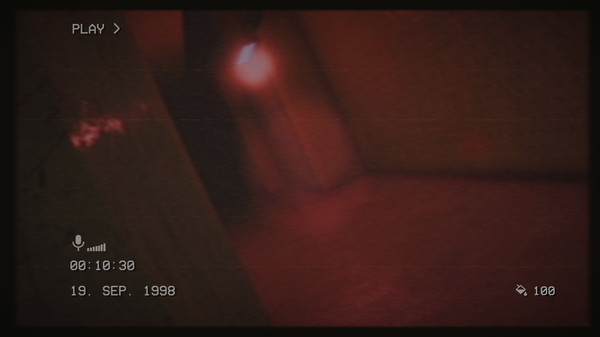
Gameplay is structured around survival and escape mechanics, with the player needing to navigate an ever-changing labyrinth while avoiding an unseen entity. The game’s most unique feature is its microphone sensitivity, which allows enemies to detect player noises in real life. This adds a layer of realism and tension, as even a startled gasp could spell doom. However, this mechanic can sometimes feel more punishing than immersive, especially for players who don’t have a completely silent environment. Managing limited resources, such as batteries for the flashlight and markers for navigation, adds further stress, making each decision feel consequential. While the survival mechanics are effective in building tension, some players may find them restrictive and frustrating, particularly given the limited save system and high difficulty spikes.
Controls are relatively simple but occasionally feel clunky, particularly when interacting with objects or moving through tight spaces. Hiding mechanics, such as crawling under furniture or into lockers, are essential for survival but can sometimes be finicky, leading to moments of unintentional failure. The need for precise movement, combined with the game’s heavy reliance on sound-based mechanics, makes for an experience that rewards patience but can also test player endurance. The inventory system, which requires careful management of healing items and tools, adds an extra layer of challenge but can feel cumbersome at times.

Visually, the game nails its intended aesthetic. The grainy, VHS-inspired graphics contribute to the oppressive atmosphere, making the environment feel genuinely unsettling. However, the repetitiveness of the Backrooms’ design can sometimes work against the game, making exploration feel monotonous. On the audio front, the game excels with an unsettling soundscape that keeps players constantly on edge. Distant footsteps, distorted whispers, and sudden audio distortions heighten the psychological horror, making sound one of the game’s strongest aspects. However, the reliance on jump scares may feel excessive for some players, occasionally breaking the carefully crafted tension in favor of more predictable horror tropes.
Despite its indie origins, The Backrooms 1998 delivers an impressively immersive horror experience that taps into primal fears of the unknown and the unseen. Its found-footage presentation, microphone integration, and intense survival mechanics make for an undeniably terrifying experience, but the high difficulty, repetitive environments, and occasionally frustrating mechanics may limit its appeal. Those who enjoy psychological horror and can handle its unforgiving nature will find plenty to appreciate, while others might find themselves more frustrated than frightened.
Score: 7.0/10
 Press Play Media