
Monster Hunter Wilds takes Capcom’s beloved long-running hunting franchise to new heights with a more dynamic world and a reworked approach to combat. Set in the enigmatic Forbidden Lands, the game introduces a shifting environment where sudden weather changes influence both monster behavior and hunting strategies. The story follows an expedition investigating a mysterious attack that left a lone survivor, weaving a narrative that, while not the central focus, adds depth to the world and its inhabitants. While storytelling has never been the franchise’s strongest suit, Monster Hunter Wilds provides a compelling setup for the thrilling hunts that follow.
One of the most significant innovations is the game’s evolving ecosystem. The Forbidden Lands change drastically depending on the time of day and unpredictable weather cycles. These environmental shifts do more than just alter the scenery in striking ways – they impact monster movements, resource availability, and even the way hunters approach each encounter. The game’s ecosystems feel more alive than ever, with creatures acting naturally within their habitats rather than simply waiting for the player’s arrival. This level of detail enhances the immersion, even if it can sometimes make planning a hunt frustrating, as unexpected changes may disrupt strategies mid-battle.
Combat remains at the heart of the experience, with refinements that make it more accessible without losing the depth longtime fans expect. All fourteen weapon types return, but Monster Hunter Wilds introduces the ability to equip two at once, allowing hunters to swap between them mid-battle. This addition creates more dynamic combat encounters, encouraging experimentation with different playstyles and giving you more tools to cope with those changing conditions. A new targeting system, which highlights weak points on monsters, also makes battles more strategic, though some veteran players may feel it simplifies encounters too much. The introduction of a mount that can be ridden while attacking further speeds up the action, making fights more fluid and intense.
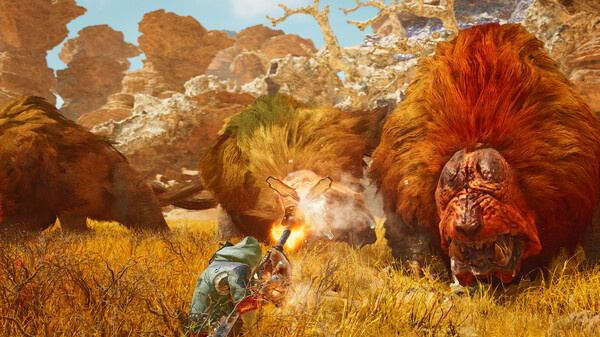
The game’s controls have been fine-tuned to accommodate these new mechanics. Movement is smoother, and the ability to use items while mounted eliminates some of the clunkiness seen in previous entries. However, the sheer number of actions available can still feel overwhelming, especially for newcomers. The game offers tutorials to ease players into the mechanics, but the complexity of the system means it takes time to fully master everything. While these refinements make Monster Hunter Wilds more approachable, it still demands patience and practice, particularly when facing its tougher creatures.
Visually, Monster Hunter Wilds is stunning. The environments showcase a vast range of biomes, from sun-scorched deserts to dense, misty forests, all brought to life with meticulous detail. The lighting and weather effects contribute to the immersion, making the world feel unpredictable and alive. The monster designs are equally impressive, with each creature exhibiting unique behaviors and realistic animations. The audio design complements the visuals perfectly, with an orchestral soundtrack that swells during battles and immersive ambient sounds that bring the world to life. Some minor performance hiccups occur in the busiest moments, but overall, the game runs smoothly – and much better than when we first went hands on with it during the summer at Gamescom.
The multiplayer experience remains one of the franchise’s biggest strengths, allowing up to four players to team up on hunts. Coordinating with other players adds another layer of depth, as different weapon types and strategies can be combined for maximum effectiveness. The matchmaking system is streamlined, making it easier to jump into hunts with others. However, some connectivity issues and occasional lag in co-op sessions can disrupt the experience – though perhaps this was because of the immense player count right after launch. Despite this, the social aspect of Monster Hunter Wilds makes it one of the best cooperative experiences in the genre.
 While the core campaign offers around 16 hours of story-driven content, Monster Hunter Wilds truly shines in its post-game. The challenge ramps up significantly, encouraging players to refine their skills and take on increasingly difficult monsters. The loop of hunting, crafting, and upgrading remains addictive, though the early hours may feel slow for those eager to reach the more demanding content. The game does a better job than previous entries at onboarding new players, but experienced hunters may wish the initial difficulty curve was steeper.
Overall, Monster Hunter Wilds delivers an evolution of the series rather than a complete reinvention. The improvements to combat, the more dynamic world, and the accessibility tweaks make it one of the most polished entries yet. While some changes may not appeal to every veteran hunter, the game successfully balances approachability with the depth that has defined the franchise. With its rich ecosystems, thrilling battles, and rewarding multiplayer, Monster Hunter Wilds is a must-play for both newcomers and longtime fans – and one of the early hits of 2025.
Score: 8.8/10
 Press Play Media
Great review again, very informative and to the point.
Thanks!