
With Carry Onward, Shadow of the Orient and Caligo, we’re checking out three games that all have a relatively short runtime. If you’re looking for something brief to play for an hour or two, read on!
Carry Onward review (PS5)
Carry Onward, developed by Andrey Chudaev, is a brief yet emotionally charged narrative experience that delves into themes of grief and healing. Players accompany Thomas as he prepares to leave the home he once shared with his late wife, engaging with objects that evoke poignant memories. The game encourages self-reflection, resonating deeply with those players who have experienced loss.
The gameplay centers on interacting with household items, each triggering a memory and offering multiple dialogue choices that influence the story’s outcome. This design promotes replayability, as players can explore different facets of Thomas’s past and achieve one of five possible endings. The choices feel meaningful, though the game’s brevity – completable in under an hour – may leave some yearning for a more extended experience.

Visually, Carry Onward employs a minimalist top-down perspective with simple 3D models, reminiscent of titles like Twelve Minutes (which the developer cites as an inspiration). While the art style may not captivate all players, it effectively directs attention to the narrative. The voice acting delivers Thomas’s introspections authentically, though some lines may lack emotional depth. The musical score stands out, with well-timed compositions that enhance the game’s emotional impact.
In essence, Carry Onward offers a touching exploration of love and loss, providing a reflective experience that lingers beyond its short duration. Its combination of interactive storytelling, minimalist visuals, and evocative music creates a memorable journey for those open to more introspective gameplay.
Shadow of the Orient review (PS5)
A side-scrolling action platformer with a martial arts theme, Shadow of the Orient arrives on PlayStation 5 after debuting on PC last year. It channels a retro aesthetic, blending classic beat ’em up mechanics with fast-paced platforming as players take on the role of Xiaolang, a warrior tasked with restoring peace to the land. The premise leans into familiar genre tropes, but the journey is filled with engaging combat encounters, environmental hazards, and hidden secrets. While the narrative is serviceable, it’s the action that takes center stage, with a mix of melee and ranged combat offering some variety in how players approach fights.
The game’s three-chapter structure introduces a range of enemy types and climactic boss battles, keeping the pacing tight across its relatively short runtime. Platforming sections add a layer of challenge, requiring precision to navigate traps and vertical segments. However, the controls occasionally feel unresponsive, particularly when climbing or executing certain attacks, which can lead to frustrating moments during tense encounters. While this doesn’t break the experience, it does hinder the fluidity of movement, especially when facing airborne enemies.

Visually, Shadow of the Orient embraces a pixel art style that draws inspiration from classic arcade-era platformers. The environments are well-crafted, evoking a nostalgic charm, but some character animations can appear stiff, which is particularly noticeable during combat. The soundtrack complements the setting with a digitized score that enhances the game’s martial arts-inspired atmosphere. Despite the occasional lack of polish in animations, the overall presentation succeeds in capturing an old-school aesthetic.
With multiple difficulty settings and additional speed-run challenges, Shadow of the Orient provides some replay value beyond its core adventure. However, its relatively brief playtime and control issues may leave some players wanting a bit more refinement. Still, for fans of retro action-platformers, it offers a solid, if occasionally rough, experience that delivers fast-paced combat and nostalgic visuals in equal measure.
Caligo review (PS5)
A narrative-driven walking simulator with a surreal edge, Caligo arrives on PlayStation 5 after its original PC release in 2017. It’s a brief but atmospheric experience, pulling players into a dreamlike world filled with cryptic dialogue, philosophical musings, and striking environments. The story is abstract, centering on themes of life, death, and self-reflection, with a protagonist seemingly lost in a liminal space between worlds. While this can be thought-provoking, the vague nature of the storytelling means it won’t resonate with everyone, as much of its meaning is left open to interpretation.
Gameplay is minimalistic, in line with the walking simulator genre. Players move through a series of beautifully crafted locations, listening to narration and engaging in occasional interactive moments. There’s no real challenge or puzzle-solving, making this more of a passive experience where the journey is about absorbing the world rather than changing it. This lack of interactivity may disappoint those looking for more engagement, but it fits the game’s introspective tone. However, the slow movement speed can feel frustrating, especially when backtracking through familiar areas.
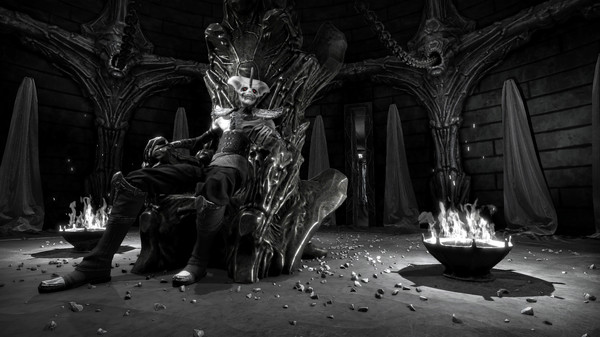
Controls are simple, translating well to the PS5, though they don’t add much beyond basic movement and interaction. The real highlight is the game’s visual presentation, which leans heavily into surrealism, offering dreamlike landscapes filled with eerie structures, shifting colors, and unsettling imagery. The environments are undeniably captivating, often feeling like moving paintings that reinforce the game’s ethereal themes. The audio design complements this, with an atmospheric soundtrack and full voice acting that helps bring the cryptic dialogue to life. However, some performances feel a bit flat, which can lessen the emotional impact of certain moments.
At just around an hour in length, Caligo is a fleeting experience, and whether it leaves a lasting impression depends on the player. Its abstract storytelling, stunning visuals, and moody atmosphere make it a worthwhile journey for those who enjoy introspective narratives. However, the slow pace, minimal gameplay, and occasionally uneven voice acting mean it won’t appeal to everyone. As a PlayStation 5 release, it remains largely unchanged from its PC origins, serving as an opportunity for a new audience to explore its mysterious world rather than a reinvention or significant upgrade.
 Press Play Media