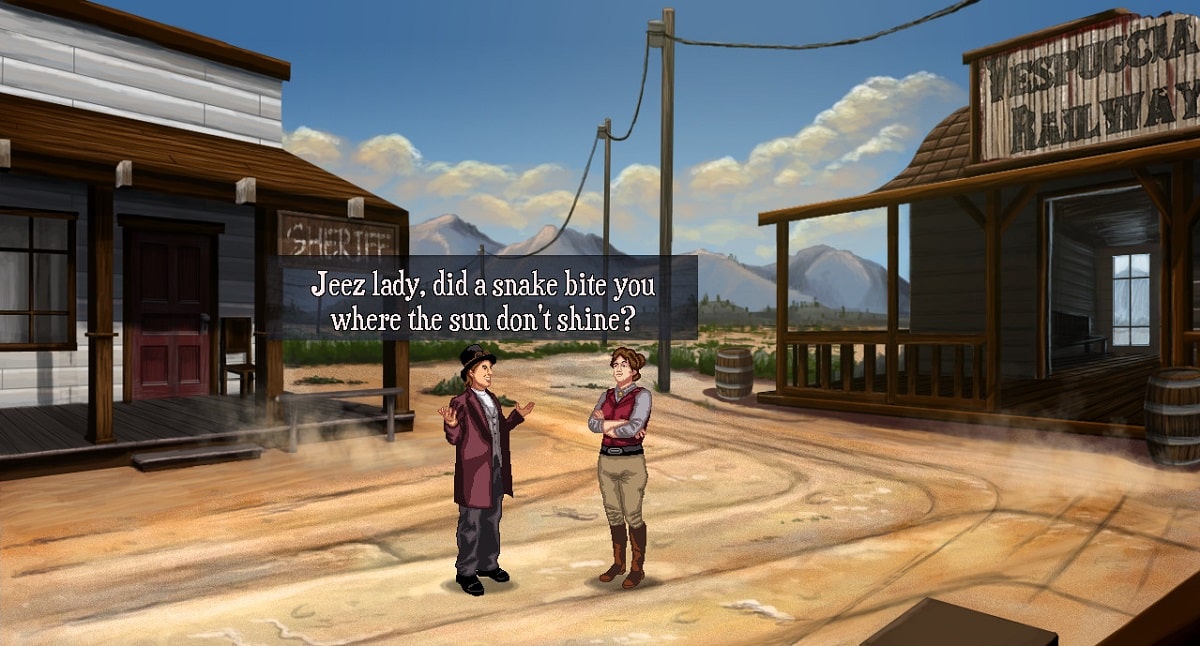
Set in the same universe as Lamplight City, Rosewater transports players to a Western-themed adventure filled with mystery, colorful characters, and narrative-driven gameplay. The story follows Harley Leger, a journalist looking for her big break in the frontier town of Rosewater. What starts as a simple assignment quickly turns into a high-stakes treasure hunt, leading Harley and a band of unlikely allies across the vast expanse of Vespuccia. The game’s narrative is engaging, offering plenty of choice-driven dialogue and character interactions that shape relationships and influence the unfolding events. While the pacing remains steady for most of the experience, some stretches of travel between major story beats can feel a bit drawn out – but in the end this is an adventure that fans of the genre won’t want to miss.
The point-and-click gameplay blends classic adventure mechanics with modern refinements, avoiding the frustrating trial-and-error puzzles that sometimes bog down the genre. Instead, Rosewater opts for logical, multi-solution challenges that reward different approaches, making puzzles feel intuitive rather than arbitrary. This flexibility keeps the journey engaging, but players looking for brain-teasing complexity may find the difficulty level a bit on the easy side. Inventory-based problem-solving is well-implemented, and the addition of randomized encounters along the journey adds variety, even if they don’t drastically alter the core experience.
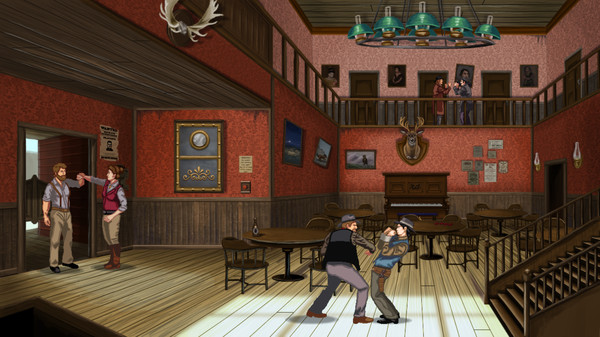
One of Rosewater’s biggest strengths lies in its richly developed cast and branching dialogue options. Harley’s relationships with her five companions evolve based on player choices, allowing for different dynamics within the group. These interactions make the journey feel more personal and relatable, even if some of the character arcs could have benefited from additional development. The writing is sharp and witty, successfully capturing the rugged yet hopeful spirit of the Old West, though at times, the pacing of certain conversations feels longer than necessary, which can slow down momentum.
Visually, Rosewater embraces a nostalgic pixel-art aesthetic, brought to life through impressive animations. Character movements feel fluid and natural, elevating the game’s cinematics beyond typical adventure game fare. The close-up portraits used in dialogue sequences further enhance emotional moments, giving interactions a more intimate feel. While the 720p resolution may seem a tad dated in an era of 4K gaming, they have nostalgic feel to them and the artistry behind the environments and animations ensures that the game maintains a distinct charm.

The game’s soundtrack, composed by Mark Benis, perfectly complements the Western setting, featuring an evocative blend of folk, blues, and orchestral pieces. The voice acting is another highlight, boasting a strong cast that delivers strong performances across the board. Cissy Jones, Dave Fennoy, and Roger Clark lend their voices to key characters, adding a level of polish that makes conversations feel even more immersive. Some secondary characters don’t receive the same level of attention, but overall, the voice direction is excellent, elevating the game’s storytelling to a higher level.
Rosewater successfully builds on the strengths of the developer’s previous work while carving out its own identity as a Western adventure. Its engaging story, well-developed characters, and accessible puzzle design make it a standout entry in the adventure genre. While some pacing issues and relatively easy puzzles may not satisfy those seeking a more intricate challenge, the overall experience remains rewarding. With its blend of compelling storytelling, memorable characters, and excellent presentation, Rosewater is a journey more than worth taking, especially for fans of narrative-driven adventures, for whom this is a must-play.
Score: 8.7/10
 Press Play Media